

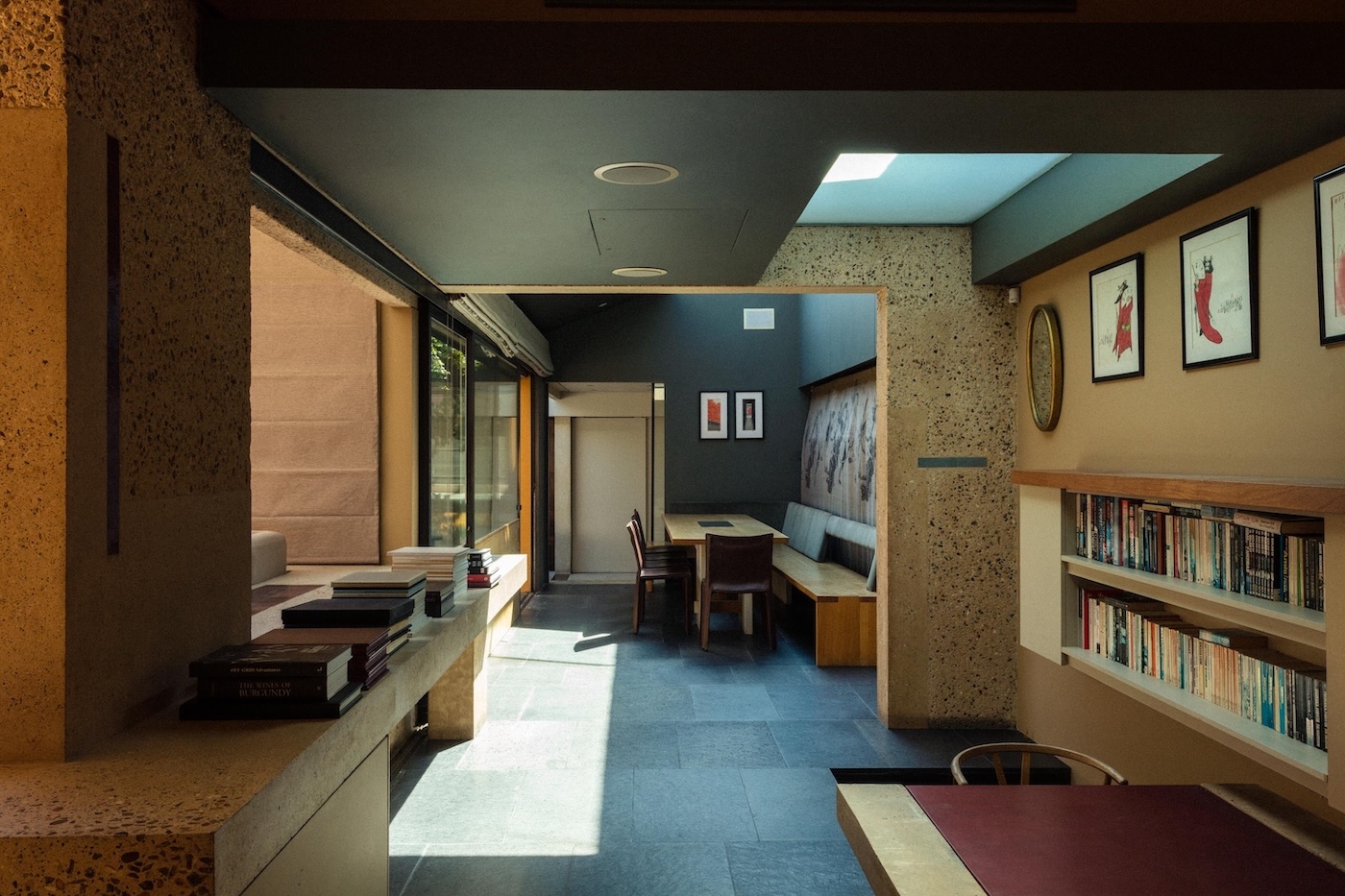
Stone is a natural resource that’s been used in interiors since before the wheel was invented. Though durable and costly—not to mention inimitably patterned and textured—it’s almost never thought of as reusable. But it should be say the eco-minded team behind Retrouvius, a combination salvage company and design studio in London’s Kensal Green that lead by example.
Founded by Maria Speake and Adam Hills, who met in architecture school, these master recyclers approach just about all building materials as worth reclaiming—and all design projects as opportunities for creative reuse. They recognize that reclaimed stone is challenging—supplies are limited, unpredictable, weighty, and often require specialist contractors. But its many appeals and workarounds lead them to salvage all sorts: stone concourse floors, office foyers, fireplaces, dead stock from masons’ yards, and fishmongers’ slabs, among other things. Inspired by Retrouvius, we enlisted them to show us their work and fill us in on ways to consider applying saved stone in our own quarters.
Photography courtesy of Retrouvius (@retrouvius), unless noted.
Sources for Secondhand Stone
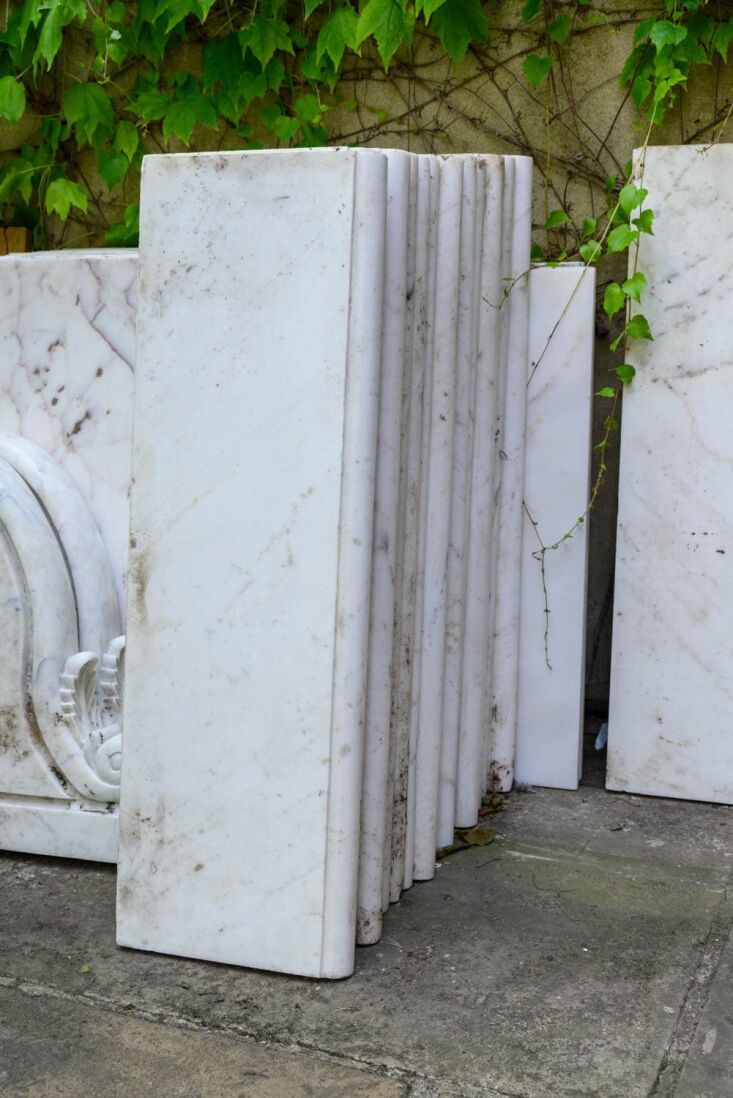
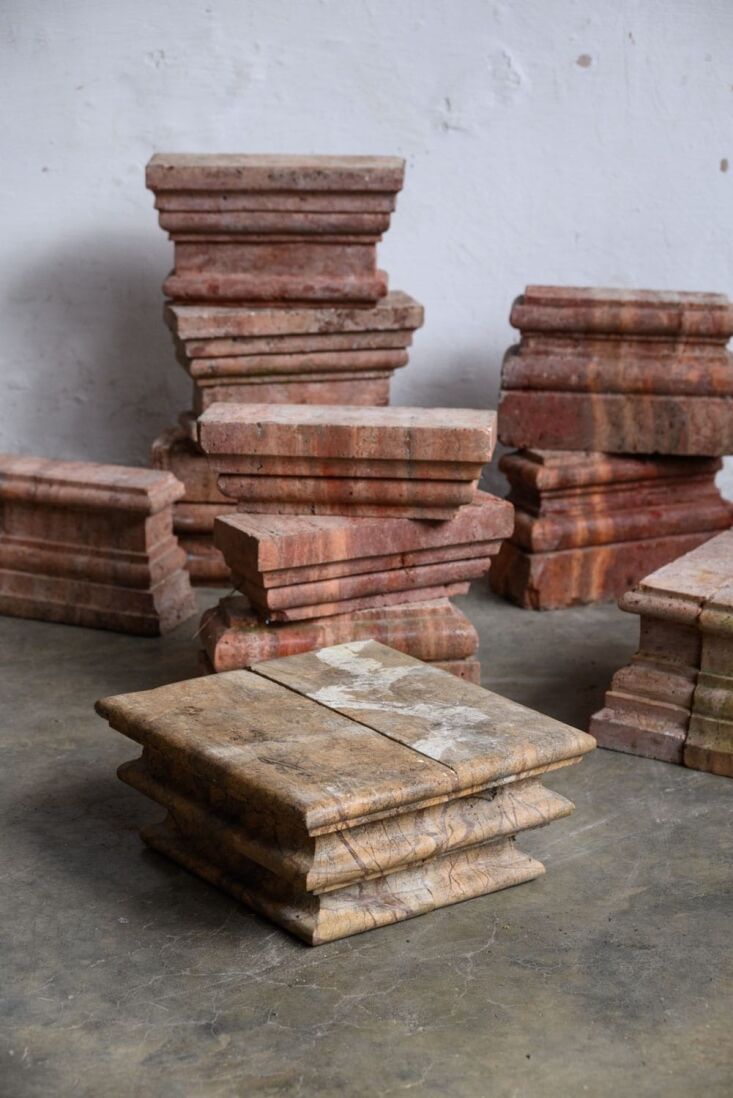
Finding the right materials can take some digging. Search everywhere from architectural findings dealers and salvage yards to Facebook Marketplace, Craig’s List, and Buy Nothing. Stone yards also offer remnants and other discards at a notable discount. And Los Angeles salvage business Unbuilt showcases “luxury leftovers,” unused residential construction goods, including stone slabs and tiles, priced to sell. Adam, who runs Retrouvius’s salvage business, notes that shifting fashions impact stone prices: “Some marbles are relatively affordable and some are pricey depending on current desirability: Rosa Aurora, for example, is not expensive; sought-after onyx, meanwhile, is costly, so we reuse small and broken pieces in resourceful ways.”
The Challenges of Reusing Stone
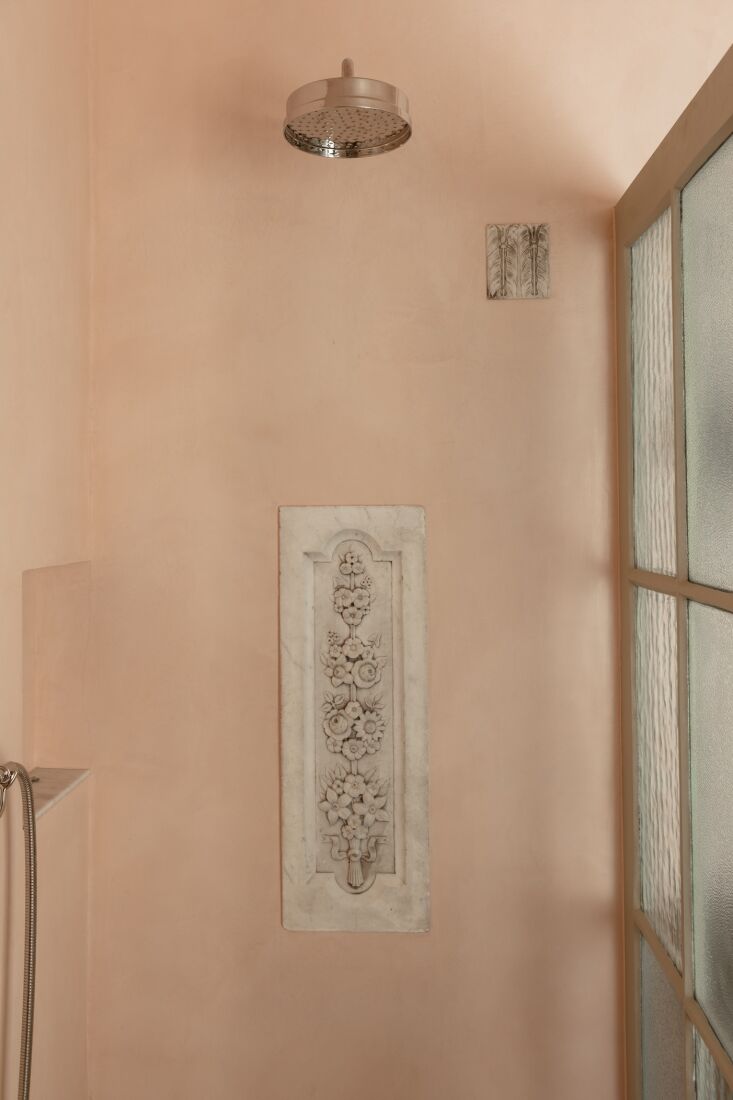
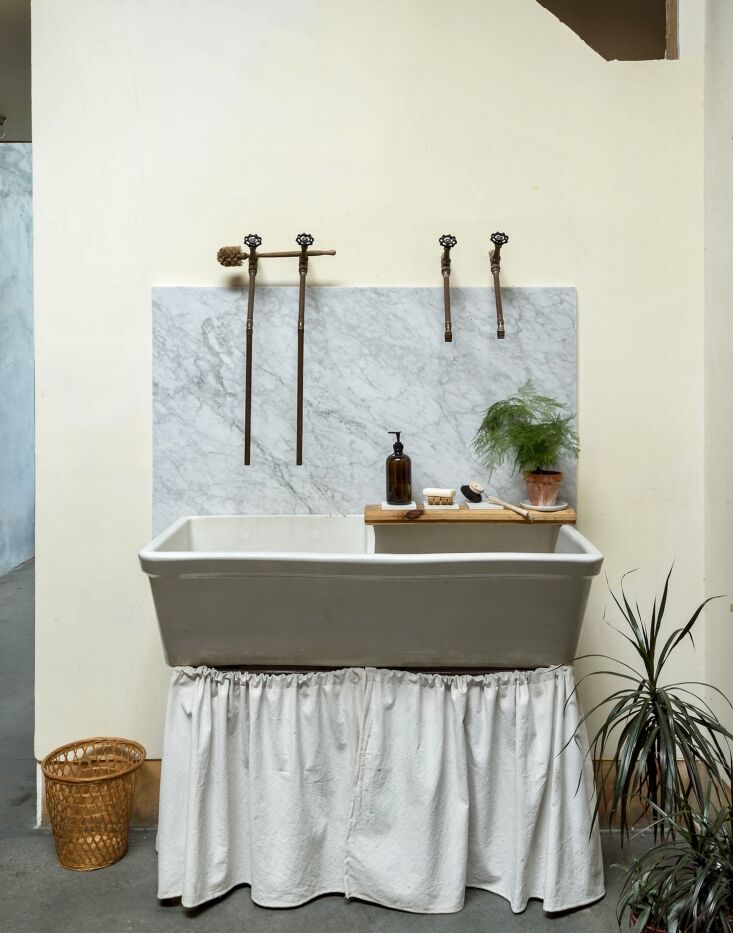
In addition to being incredibly heavy, much salvaged stone requires a stonemason with the right expertise and tools to cut it. That can get complicated and expensive, which is why the Retrouvius team’s top tip is to “work with the salvaged stone in its existing format and dimensions when possible.” A simple approach is to use a slab as found to create a tabletop, shelf, or backsplash (scroll to the end for a prime laundry sink example). When building or remodeling an interior, carved ornamental stone panels can be incorporated into the wall design. And if you sort reclaimed stone into common widths, you can create flooring and wall paneling in patterns that minimize the need for cutting. Examples of all of these approaches below.
Retrouvius spokesperson Nicolas Hughes also mentions that the reverse side of a lot of reclaimed stone is marked by “dots and dabs” or “little metal pegs,” used as positioning marks.”These are easy to scrape off and not a problem. Likewise, for future reuse, it’s responsible to choose an adhesive that is weaker than the stone itself, so the stone doesn’t shatter on removal.”
Walking on Reclaimed Stone
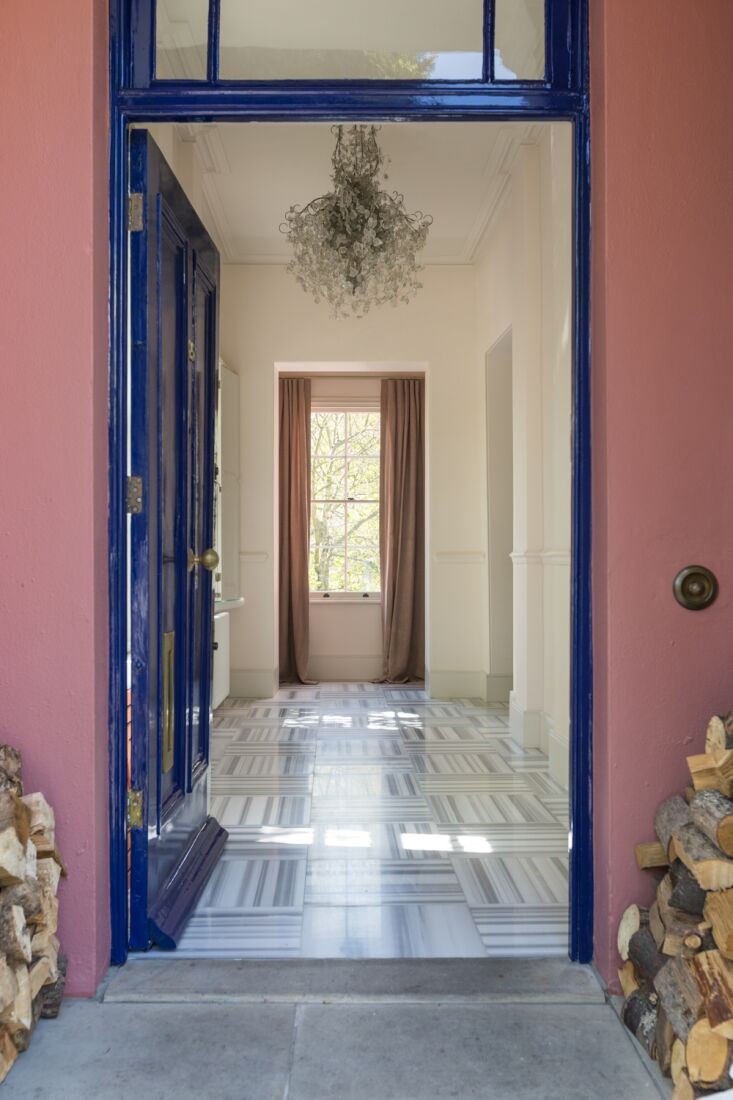
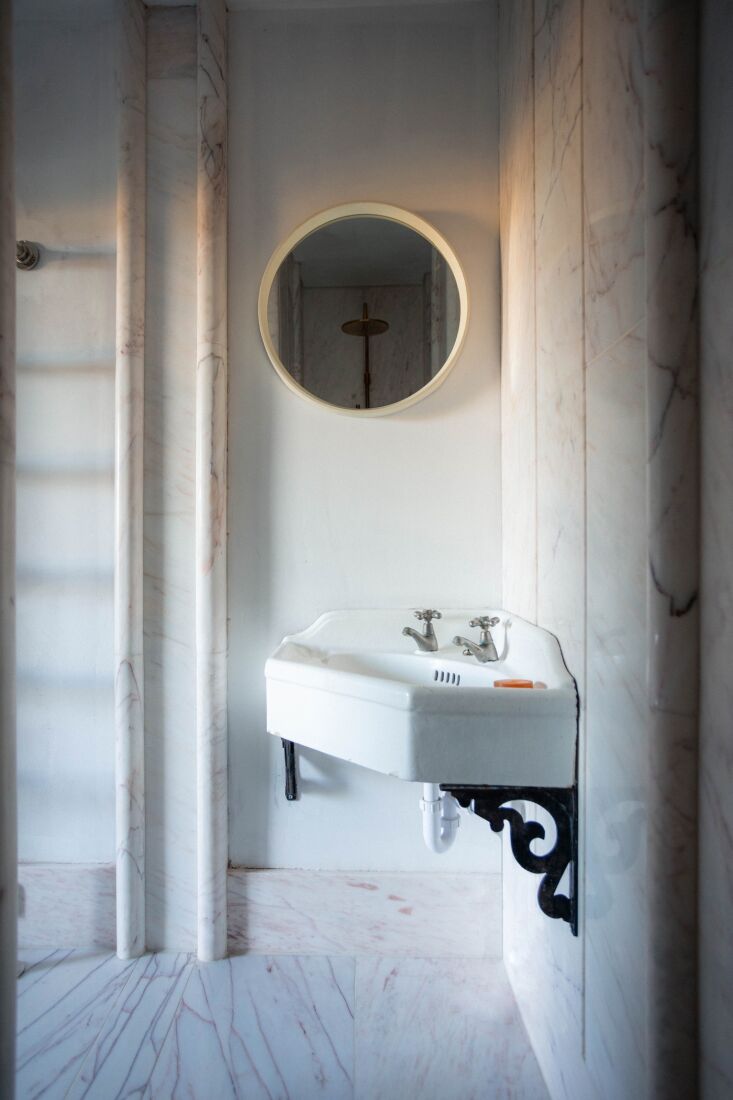
A cautionary note: some polished stone can get slippery: test it before use as flooring, and, if needed, hone it or add a runner.
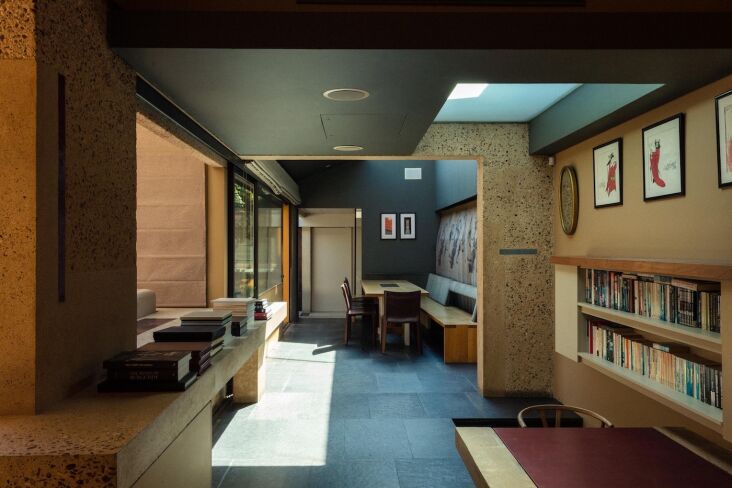
One detail they’d do differently: the walls are cast concrete, a material Retrouvius no longer uses because of its high environmental cost.
Way to Use Reclaimed Stone in the Kitchen
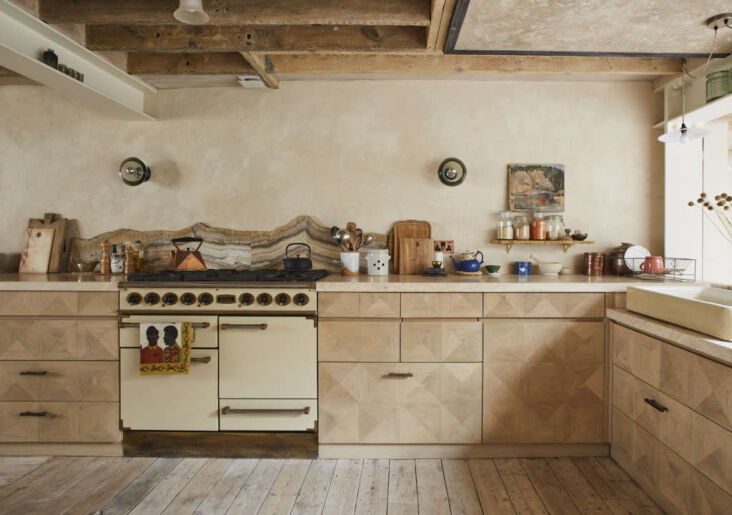
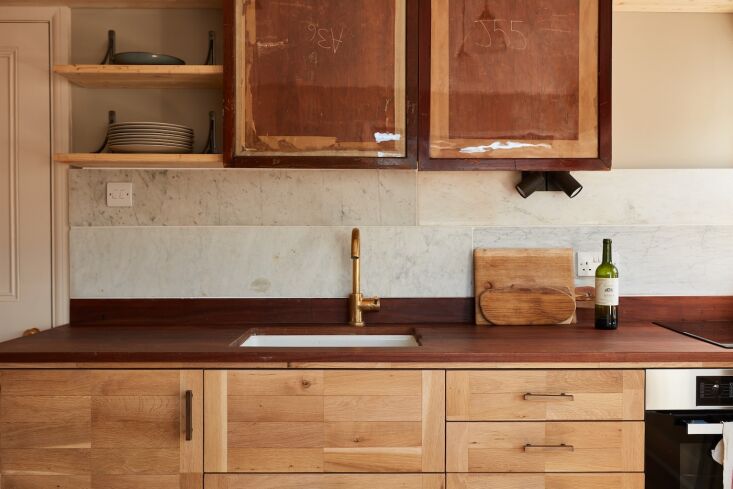
The whole project is a puzzle work of saved materials: the cabinet fronts are faced with 18th-century Viennese marquetry floorboards and the newly restored and raised flooring is a mix of original and reclaimed pine. For a full tour, go to A Country Home in the City By London’s Masters of Salvage. Photograph by Tom Fallon for Retrouvius.
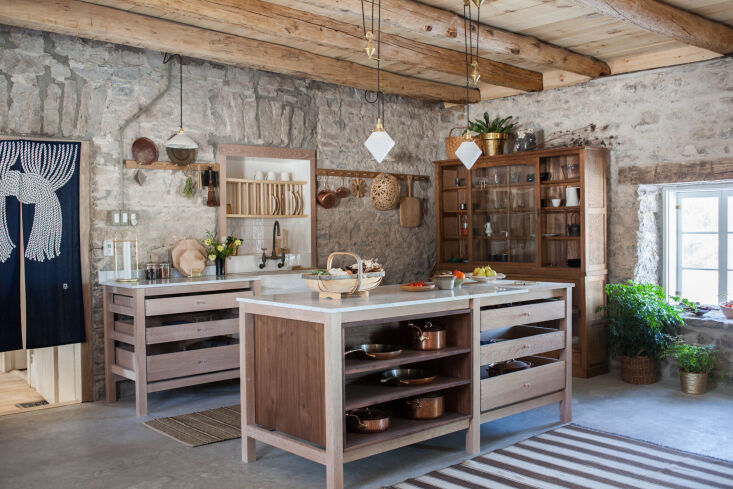
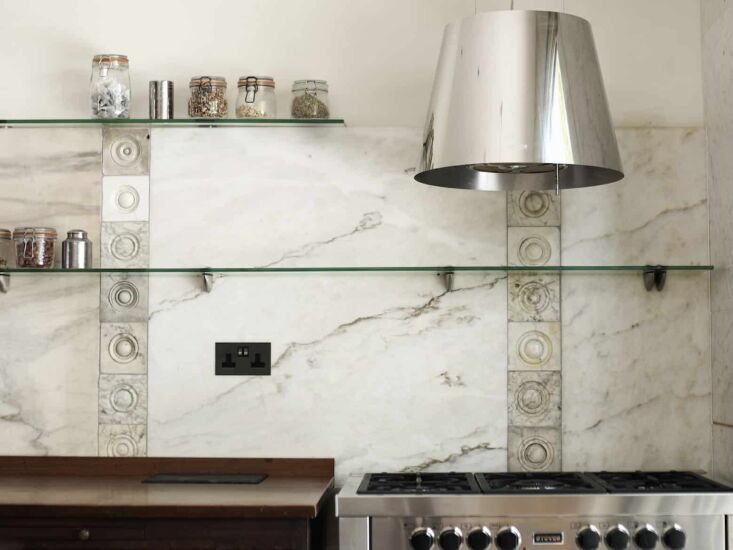
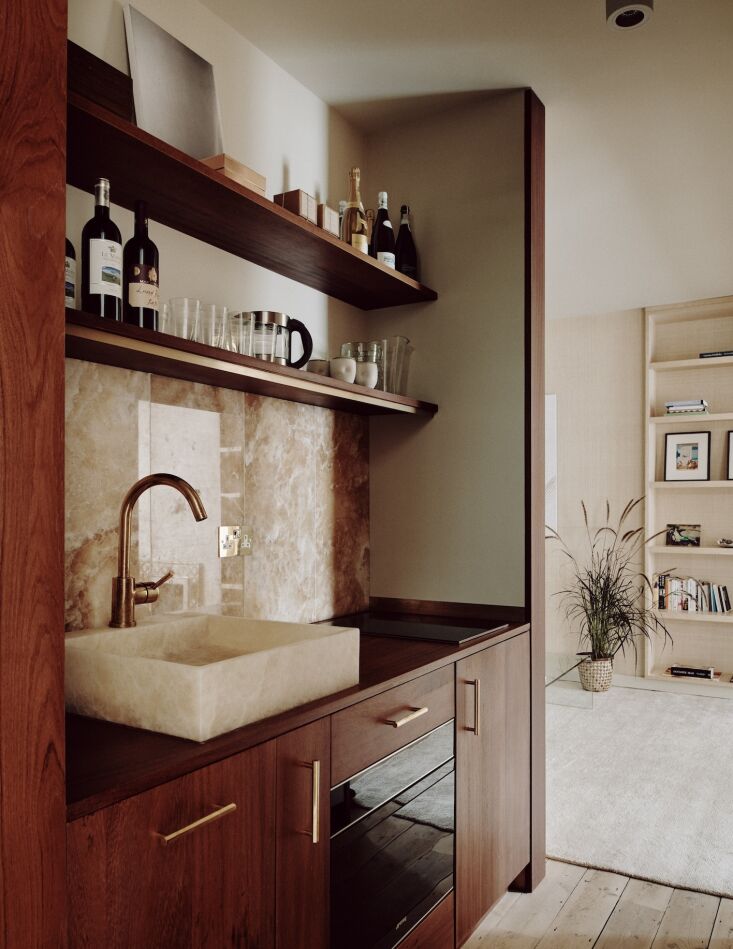
Nicolas, notes that wood and stone pair well, and “since timber is much cheaper and easier to cut, it can be used as a spacer to reduce stone wastage.”
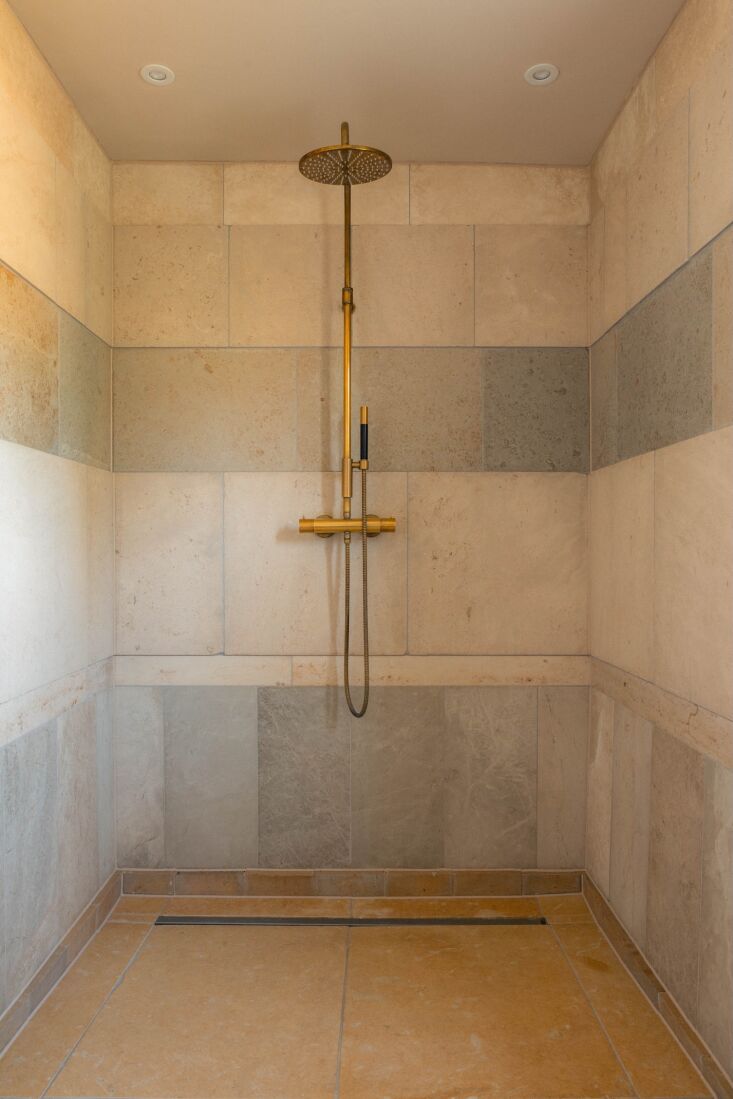
Ways to Use Reclaimed Stone in the Bathroom
A Simple Laundry Sink Backsplash
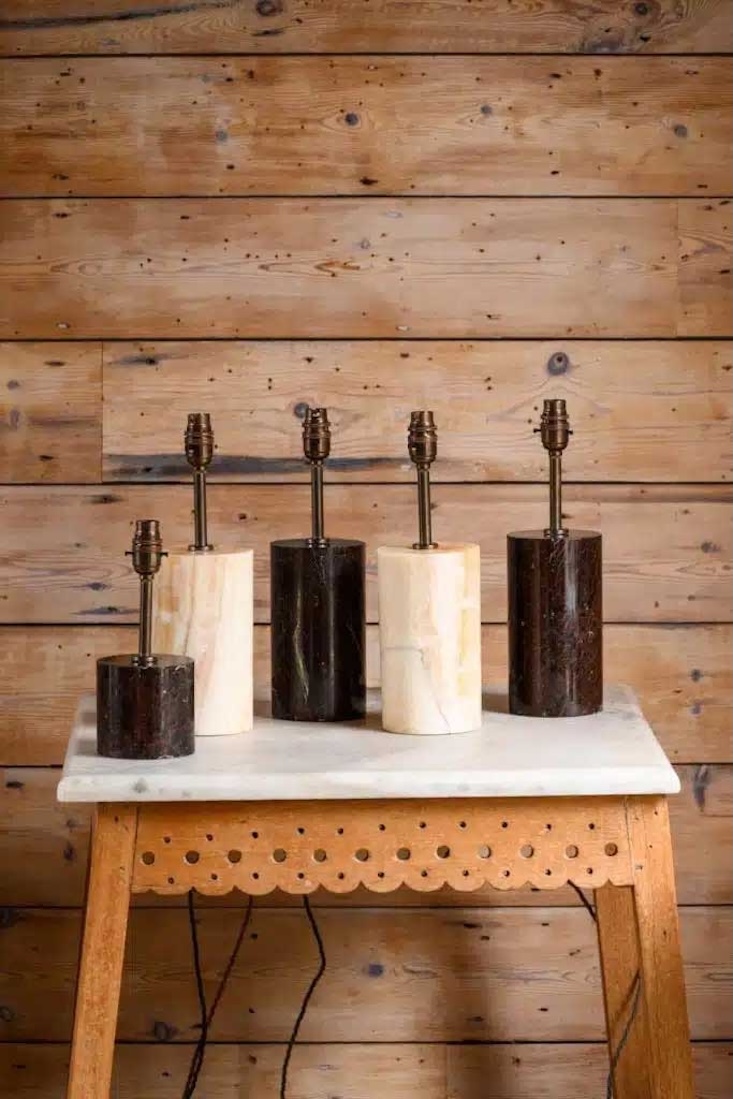
Stone Columns Transformed into Table Lamps
Many of Retrouvius’s featured projects also appear in their recent book, Retrouvius, Designing Houses from a Philosophy of Reuse.
Featured image: Pieced together sections of old Italian onyx, Alabastro Fiorito, form a live-edge kitchen backsplash.
And there’s much more:
- Kitchens of the Week: 5 Retrouvius Designs Composed of Salvaged Parts
- 5 More Retrouvius Kitchens Starring Scrap Materials
- The Reclaimed Bath: 8 Favorite Retrouvius Designs Featuring Vintage Components

Have a Question or Comment About This Post?
Join the conversation