Fans of The Bear know: Seeing a restaurant kitchen in the flow of service is akin to watching a choreographed dance. But making that dance go smoothly requires a high level of organization, smart storage, and fastidious attention to detail.
Since Remodelista’s early days, we’ve loved asking chefs, cookbook authors, and cooks what tips and tricks they’ve borrowed from professional kitchens in their own places. Here are a few of our favorite pointers from over the years.
1. Add an inch.
Above: Above: Find the standard counter height, then add an inch, like food blogger Phyllis Grant did. “Having it one inch higher is just more comfortable on the back. You don’t have to lean over quite as much.” See more in Kitchen of the Week: Practical Magic in Phyllis Grant’s Berkeley Kitchen. Photograph by Thomas Story, courtesy of Phyllis Grant (follow @DashandBella on Instagram).
2. Source an extra-deep sink.
Above: ““I searched high and low for a large, triple-basin sink, because as a cookbook author, I wash a lot of large pots and pans and baking sheets that don’t fit in the dishwasher,” says cookbook author Amy Thielen. “And I’m what you might call a ‘classical’ dishwasher—hands submerged in hot sudsy water, washcloth instead of sponge, coiled metal scrubber for the sticky pots—not a fan of endless soaking.” Photograph by Lacey Criswell of Hunt + Capture, styling by Alison Hoekstra, from Steal This Look: 5 Clever, Efficient Ideas from a Cookbook Author’s Home Kitchen.
Above: “I use the same clear containers from Noma (similar to Tupperware) to keep ingredients organized,” says Nadine Redzepi, partner to Rene and a cookbook author herself. “Because different ingredients like flours can look the same, I label the containers with the chalk-based marker to keep it all straight. Everything goes in those clear bins and gets a label on it.” Photograph of Nadine and Rene’s home kitchen courtesy of Dinesen.
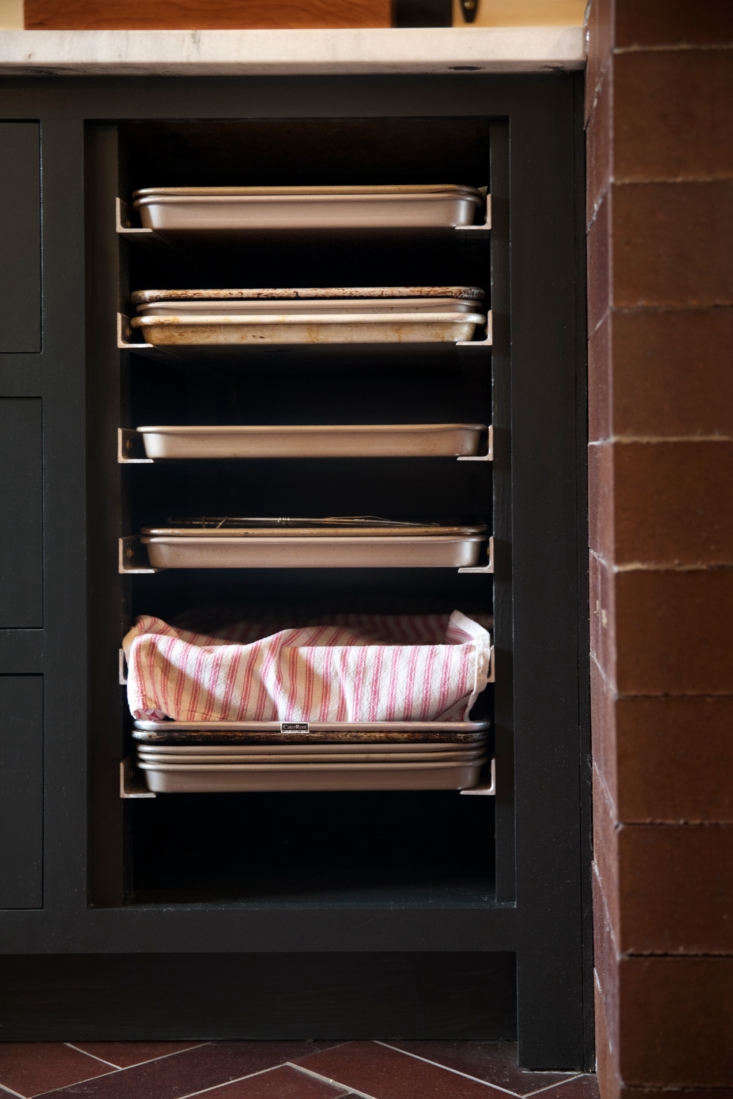
Above: Among the chefs and cooks we’ve talked to over the years, one element pops up over and over: the speed rack. It’s a restaurant efficiency, used to slide sheet pans in and out with ease. “I use it to store my ridiculously large collection of baking sheets and racks, and also finished pans of baked goods,” says Amy Thielen. When I bake a chocolate cake before a dinner party, I slide it into the speed rack where no one will pick at it, though they’re onto me now,” she adds. See more in Amy’s kitchen here—and catch a glimpse of built-in speed racks in the kitchens of Phyllis Grant and chef Jamie Kennedy, too.
7. You can’t beat stainless.
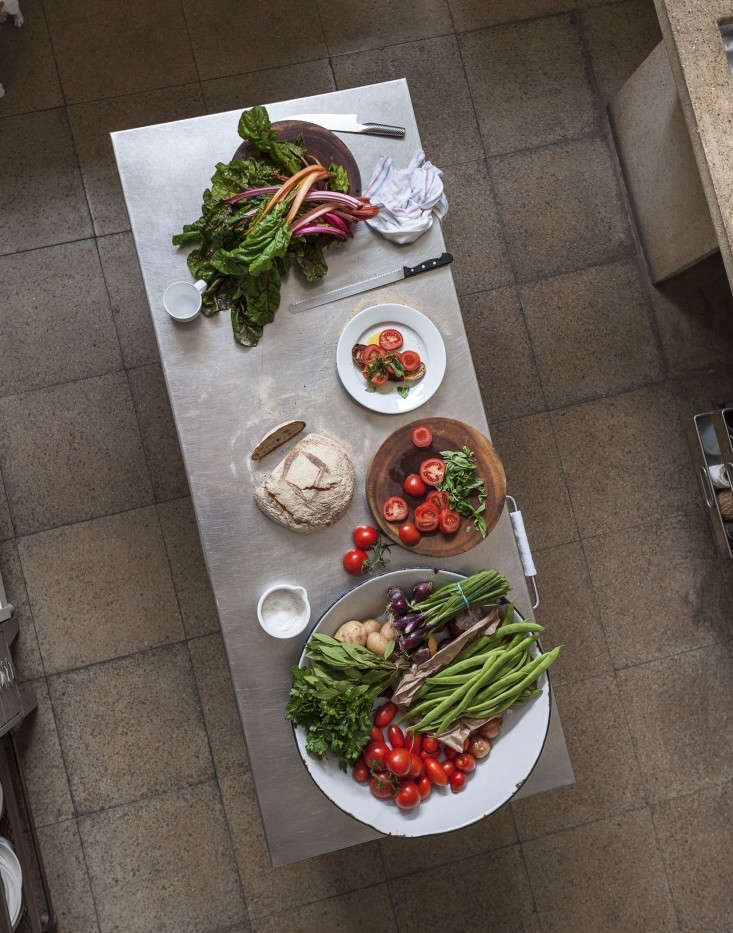
Above: In London, chef Alastair Hendy incorporated industrial elements from professional kitchens into his own place, including stainless steel worktops. “Everything in this space was chosen for efficiency and ergonomics,” he told us. He added a stainless steel top to an old school worktable for easy food prep (and cleanup). And when it’s time to eat? He pulls out stacking stools and the workstation becomes table. Read more of his genius tips in Revolution Road: A Ground-Breaking Kitchen in London. Photograph by Matthew Williams for Remodelista.
This error message is only visible to WordPress admins
Error: No connected account.
Please go to the Instagram Feed settings page to connect an account.
v5.0
×
Join the Remodelista Family of Websites
Become a Member at no charge
When you register as a free Member of the Remodelista family of websites (Remodelista, Gardenista, and The Organized Home), you gain access to all current posts plus 10 archived posts per month, our internal bookmarking tool, and the community bulletin board.
Access 10 archived posts (older than one year) per month on each site
Use of our internal bookmark tool, so you can save products, posts, and other pages for quick reference
Access to our community bulletin board so you can ask and answer design-related questions
Unlimited access to the Product Catalogs, Design Travel sources, and Architect & Designer Directory listings
Choose from our ten newsletters to keep up with the latest on the sites
Or Subscribe for Maximum Value!
For $5/month ($59.99 paid annually) you'll enjoy unlimited, ad-free access to Remodelista, Gardenista, and The Organized Home and all the benefits of Membership.
Annual subscribers pay 50% off the monthly subscription price of $9.99
×
Subscribe to the Remodelista family of websites
For $5/month ($59.99 paid annually) you'll enjoy unlimited, ad-free access to Remodelista, Gardenista, and The Organized Home and all the benefits of Membership.
Annual subscribers pay 50% off the monthly subscription price of $9.99
×
Sorry! As a registered member you get 10 free posts from our archive (posts more than a year old) every 30 days. You have reached your limit for this 30-day period. If you would like to access unlimited posts from the archive (ad free, too), become a subscriber today, and keep reading as many articles as you want.
Full Access Individual Subscription
Benefits include:
Unlimited access to Remodelista, Gardenista, and The Organized Home sites
Ad-free browsing environment
Unrestricted access to 30,000+ archived posts
Receive the full-text daily newsletters
All features that Members have access to
Annual subscribers pay just 50% off the monthly subscription price of $9.99
Sorry! You have reached your limit of three (3) free posts from our archive every 30 days. You can increase this to 10 posts by joining as a free Member, or read unlimited posts with no ads by becoming a paid Subscriber.
Subscribe to the Remodelista family of websites
For $5/month ($59.99 paid annually) you'll enjoy unlimited, ad-free access to Remodelista, Gardenista, and The Organized Home and all the benefits of Membership.
Annual subscribers pay 50% off the monthly subscription price of $9.99
Become a Member at no charge
When you register as a free Member of the Remodelista family of websites (Remodelista, Gardenista, and The Organized Home), you gain access to all current posts plus 10 archived posts per month, our internal bookmarking tool, and the community bulletin board.
Congratulations on becoming a Subscriber to Remodelista, Gardenista and The Organized Home! You now have access to many great features across the sites:
Unlimited access to all three sites
Ad-free browsing environment
Unrestricted access to 30,000+ archived posts
Receive any of the newsletters, including the the full-text daily Remodelista and Gardenista newsletters
Use of our internal bookmark tool, so you can save products, posts, and other pages for quick reference
Access to our community bulletin board so you can ask and answer design-related questions
Congratulations on joining as a free Member of Remodelista, Gardenista and The Organized Home! You now have access to many great features across the sites:
Access to all posts published in the past year
Access 10 archived posts (older than one year) per month on each site
Use of our internal bookmark tool, so you can save products, posts, and other pages for quick reference
Access to our community bulletin board so you can ask and answer design-related questions
Unlimited access to the Product Catalogs, Design Travel sources, and Architect & Designer Directory listings
Choose from our ten newsletters to keep up with the latest on the sites
If at any time you want to become a Subscriber and enjoy unlimited, ad-free access to all our content, just go to the My Account link and choose Subscribe.
We use cookies to ensure that we give you the best experience on our website. If you continue to use this site we will assume that you are happy with it.









Have a Question or Comment About This Post?
Join the conversation