
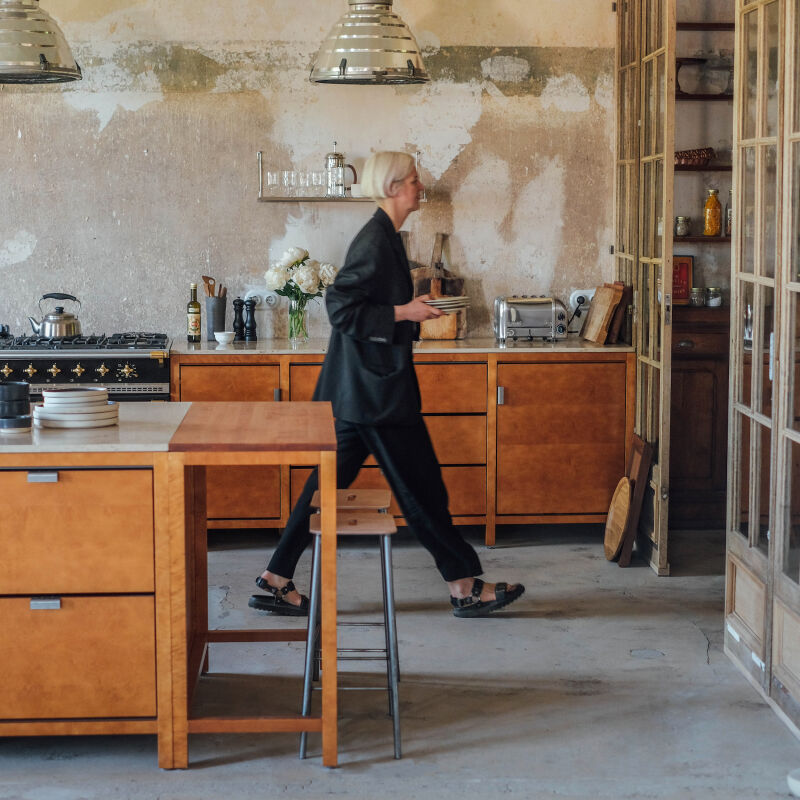


I’ve had an observation on my mind in recent years. It may have emerged in the lockdown era of 2020, when looking inward at one’s home and daily life took the place of outward travel and exploration. Once the world reopened and slowly returned to a regular pace of travel, swapping homes, and booking holiday rentals, I noticed a recurring saying among friends and acquaintances: “That house is so amazing. I would love to stay there.” I know the feeling, but in practice, I’ve always skimped a little on lodging. I’ll happily get a drink at the hotel bar, admire the interiors, or attend an event there, but luxury stays have always felt like too fleeting an indulgence. And yet, I understand the allure.
This summer, rather than traveling around Italy as I have in years past, I’m staying decidedly local, and I’ve been looking around my own home and reconsidering the ways I might adopt some of the sensations of travel from within. It has led me back to the allure of the vacation house. What exactly are we longing for when we look at these spaces?

I suspect it isn’t the house or hotel itself, not entirely. People often speak about vacation rentals as though they’re buying access to a beautiful interior, but what they’re really buying into is a version of life. For a few brief days, time has no bounds: Meals run from one into the next, windows remain open, tables stay clear, and there are fewer possessions, fewer obligations, and fewer visual interruptions competing for our attention.

What interests me is the reframe from “I would love to stay there” to: “What are these spaces doing that my home isn’t”? My own tendency is often to return from a trip and attempt to recreate whatever I loved there. I came home from Mexico City with a giant mirrored orb from Casa Barragán. After Copenhagen, I went through a phase saturated in Liberty prints. Following a trip to Puglia, I ate almost exclusively off splatterware for years. Objects can be powerful carriers of memory, and there is something almost innate about trying to recreate a feeling through things. But increasingly I find myself less interested in what can be bought than in what can be adjusted: not a new home, but a new way of inhabiting the one already in front of me.
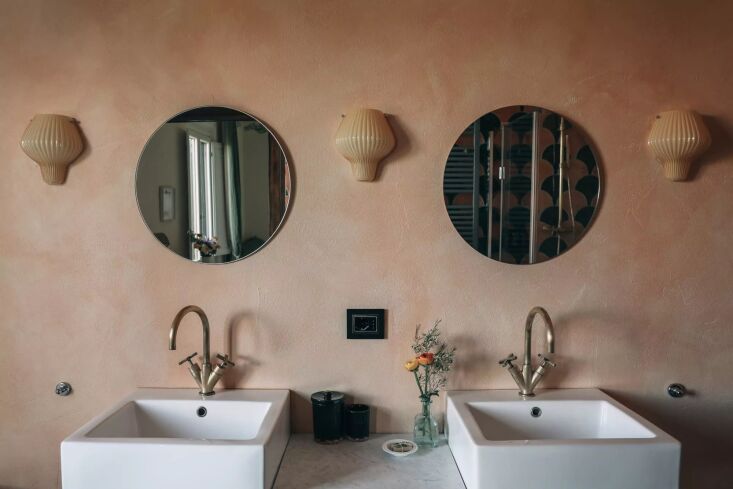
Beautiful vacation houses share a handful of qualities. They are edited from the start. Not sparse, necessarily, but selective. They prioritize experience over accumulation: a reading chair placed where the morning light falls, lightweight linen curtains in front of a breezy window, a large table that invites a lingering meal, a bench at the foot of the bed, a particularly special soap in the bathroom, a vase of flowers beside the sink. They also leave room for emptiness. Empty shelves. Empty corners. Mostly bare walls. They are rooms that leave room for living.

None of this is to suggest that we shouldn’t long for stays elsewhere. But maybe the lesson of the vacation rental is that many of its most appealing qualities are surprisingly attainable. Not the view, the town, or the architecture, but the conditions that allow us to inhabit our lives more fully.
It’s a reminder that the best vacation stays don’t simply offer escape. They remind us how little is actually required for a home to feel restorative.
– Anticipate yourself the way a hotelier would a guest. Make your bed with a tightly tucked top sheet. Place house slippers where feet meet the cold—beside the bed or on the bathroom tile. Set a glass and carafe of water on the bedside table. Roll fresh towels and leave them within easy reach.
– Clear off the surfaces of your home. Keys in a dish or tucked away, books on shelves rather than stacked in piles. A clear surface offers a surprising sense of relief.
– Consider stripping back what’s on the walls. Thoughtfully chosen artwork or a few family heirlooms? Certainly. Anything beyond may be competing for your attention more than you realize.
– Take your meals outdoors whenever possible—on a terrace, in a garden, on a deck, or even a small front porch. It’s something we instinctively do on holiday and surprisingly rarely at home.
– Bring flowers indoors. This sounds obvious, but it’s often overlooked. Consider them part of a full sensory experience. Have you ever placed a vase of lilacs beside the bed and woken to their fragrance? It’s hard to imagine a more romantic start to the day. While I’m all for supporting local florists and flower farmers (I’m a former florist myself), flowers needn’t be purchased. Spring weeds, flowering branches, and garden cuttings are often just as lovely.
– Observe the light in your home across the seasons. Does the morning sun fall in a particular spot in the kitchen each spring? Move the breakfast table a foot closer. Does the low autumn light warm a corner of the living room? Pull a reading chair into its path. Let your home respond to the shifting light throughout the year.
– Take a lesson from Kettle’s Yard, where Jim Ede arranged the house around the experience of living with art. Place artwork or small collections of objects somewhere they can be appreciated—at eye level from a favorite armchair or on a windowsill you pass daily. The point is not to own more beautiful things but to notice the ones you already have.
Alexa Hotz is a longtime editor at Remodelista and the writer of a weekly Substack newsletter called Innere—full of similar observations, offbeat design obsessions, and deep dives.
For more thoughts on design from our editorial team, see our posts:

Error: No connected account.
Please go to the Instagram Feed settings page to connect an account.
Have a Question or Comment About This Post?
Join the conversation