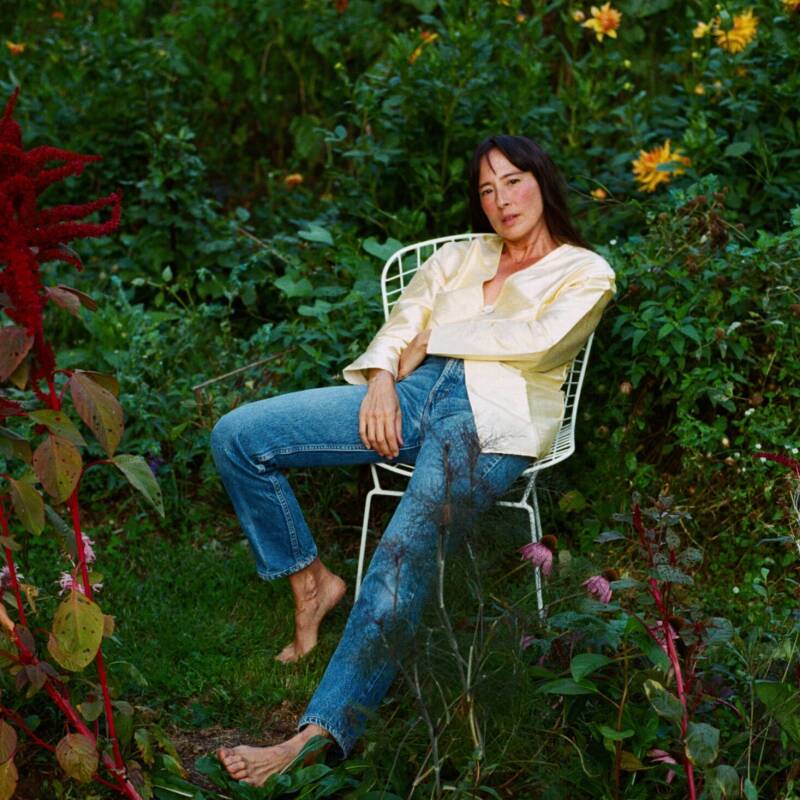


I recently went on a magazine assignment covering a British landowner whose large, private walled garden provided flowers for the local inn, which he also owned. Having heard all about the virtues of this system, I had dinner in the restaurant and remember nothing about the meal except for the tiny vase of half-dead flowers. This made me wonder about why floral arrangements in public places are either dismal or spectacular but are rarely allowed to be just a jolly bunch of flowers.
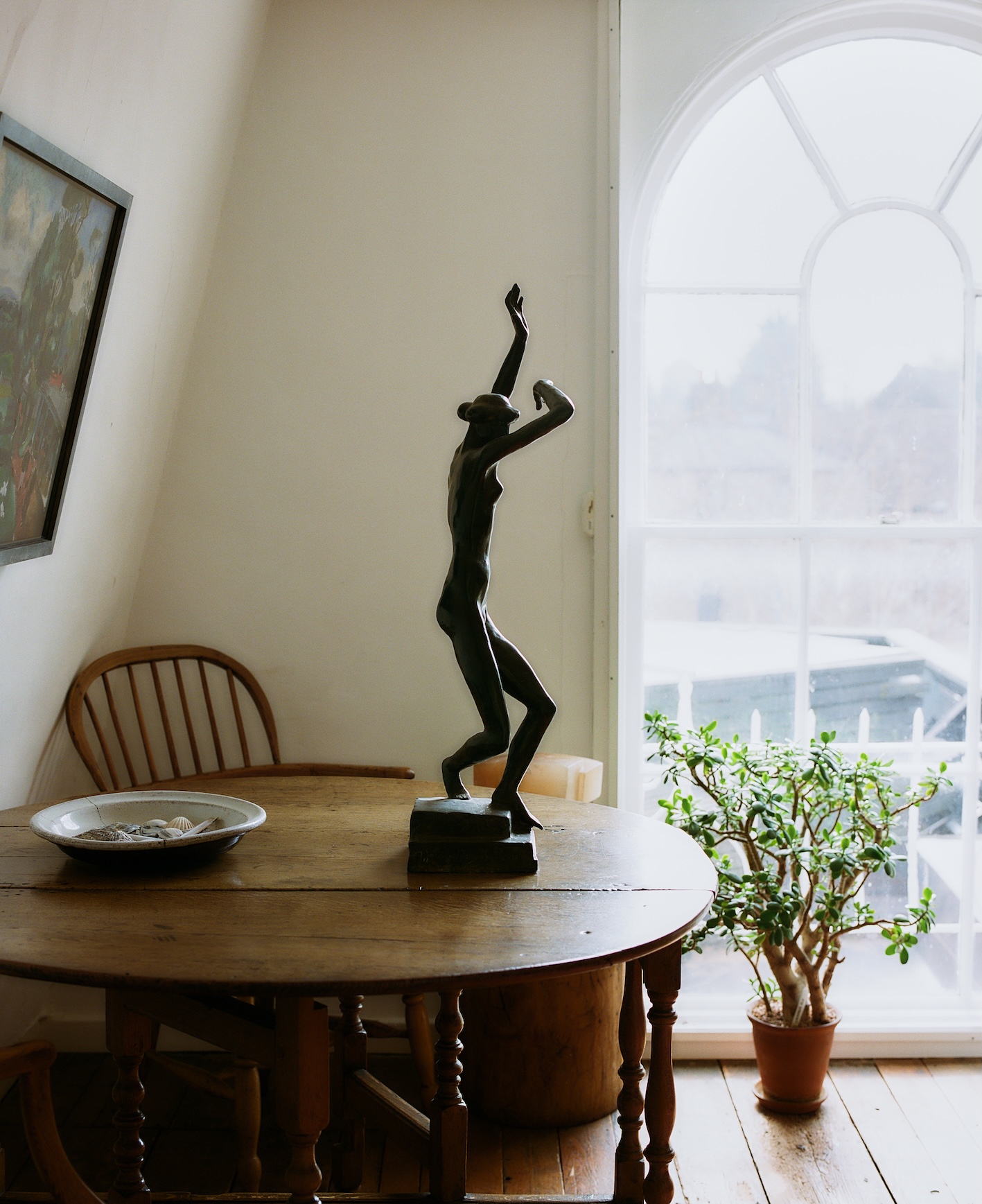
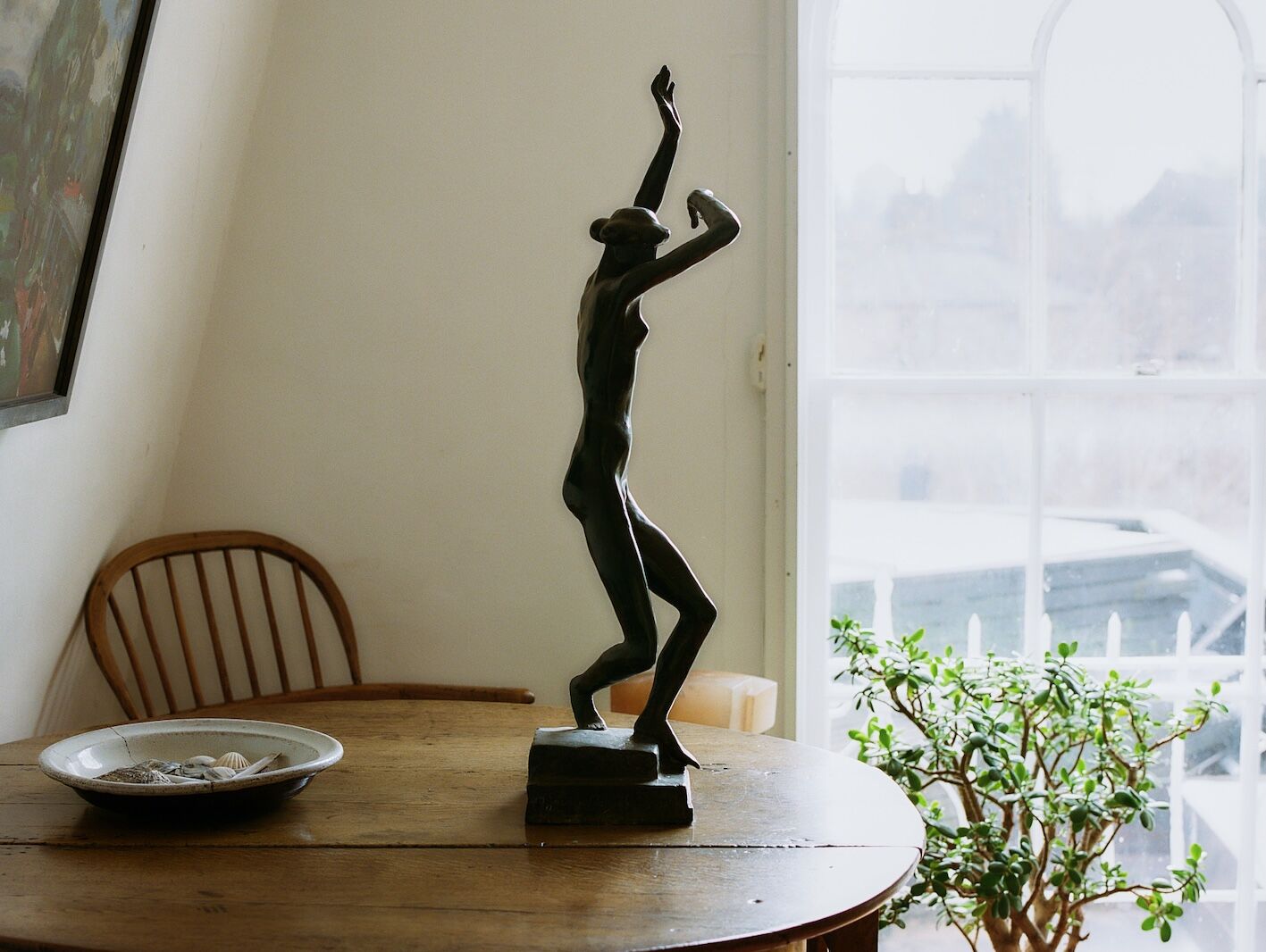
By contrast, a visit to Kettle’s Yard in Cambridge the other week (admittedly a house museum and not a pub) had the opposite effect: All was balanced, everything was considered. Each room had a different bunch of fresh flowers, casually arranged in a well-chosen vase. Without them the effect would have been quite different, given that the house, once lived in by Jim Ede and his wife Helen, has not been inhabited for 54 years. Kettle’s Yard is the most vital art collection I know. How much of this is because of flowers?
Photography by Jasper Fry, except where noted.
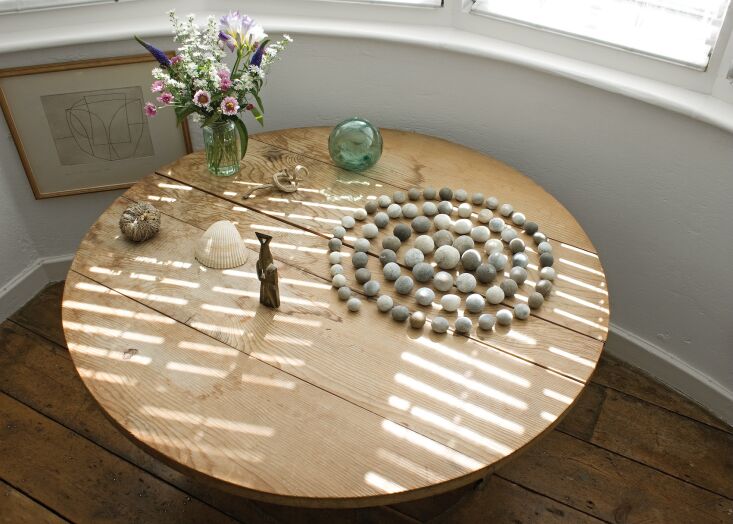
Part of the reason people love Kettle’s Yard is because it’s so personal and alive. The interiors don’t change, but the flowers do, and they are put together by visitor assistants. Picked in Murray Edwards College gardens, their own gardens, or bought from the flower stall at Cambridge Market, flowers are set in a natural and unassuming way between arrangements of glassware, shells, and pebbles, corresponding with these objects and with the artworks on the walls. White slipcovers on chairs might get shabbier, but the flowers bring life.
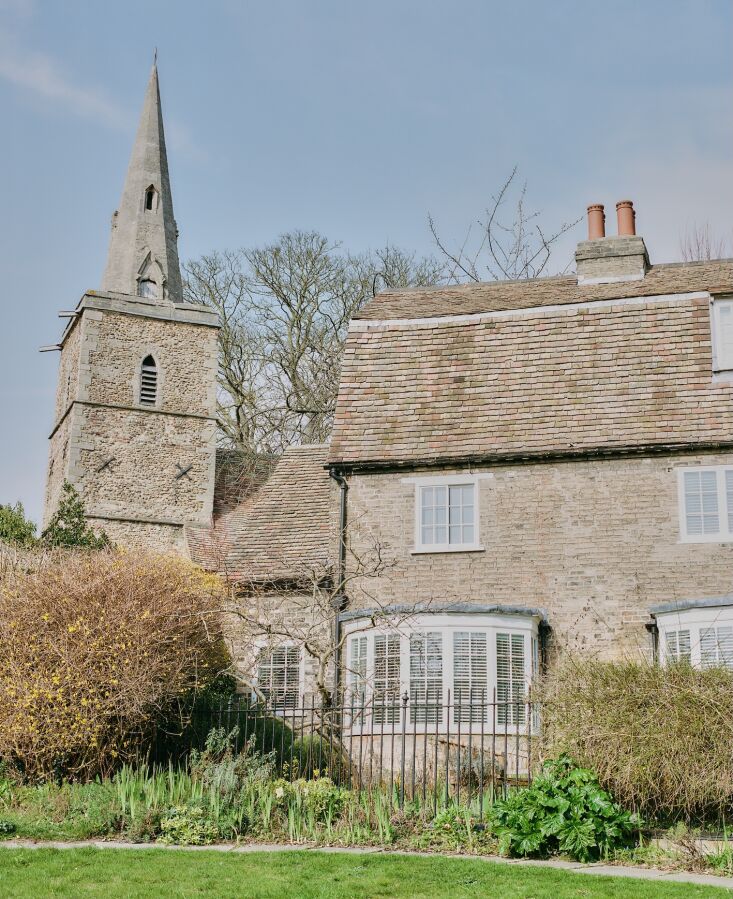
The Edes lived in Kettle’s Yard for only about 16 years. Jim Ede remodeled the row of condemned cottages to share his collection of art, amassed over decades of curating, traveling, writing, and being a “friend to artists.” His knack for friendship, mixed with an ability to appreciate talent where others failed, meant that he was able to get a lot for very little. The displays that he put together were carefully balanced, a mixture of valuable art and invaluable found objects.
Flowers added to the dynamic; he gave floral paintings the prominence he felt they deserved in a modern art collection, and cut flowers were given his equal curatorial attention. “This beauty will cost us nothing,” he said. In setting out his vision for the new kind of art gallery that was Kettle’s Yard, he wrote: “Its special feature would…be one of simplicity and loved qualities.”
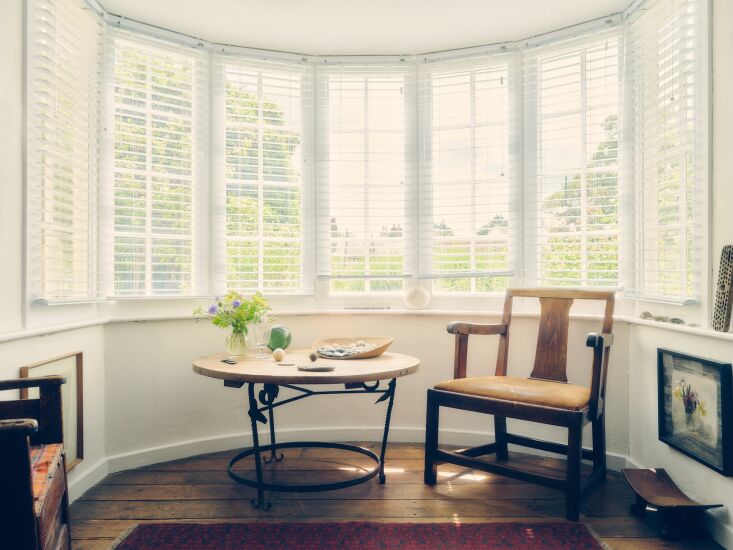
The Edes shared Kettle’s Yard and its contents during “open afternoons,” in which students, and anyone interested, were encouraged to not only sit down and make themselves comfortable amid the only collection of modern art in Cambridge but to take some back to their rooms. An art loan system is still in place. This couldn’t have been further away from conventional notions of art appreciation at the time, so it was with irony that the Scottish artist Ian Hamilton Finlay described Kettle’s Yard as “the Louvre of the pebble.”
There is a similarity between Kettle’s Yard and Finlay’s garden, Little Sparta, near Edinburgh: Both places display art as a permanent collection in which the artworks are animated by ephemeral living material—flowers in one, and evolving scenery of a living landscape, affected by light and weather, at Little Sparta. In both cases, the experience of the place is in itself a work of art.
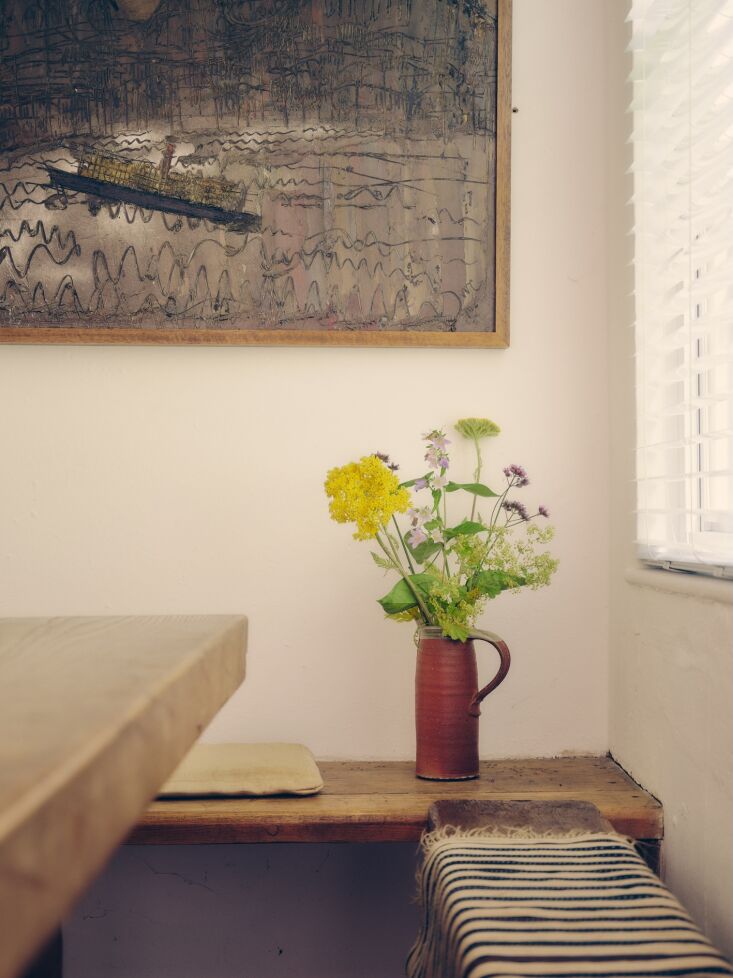
In the dining room at Kettle’s Yard, a tall jug sitting on a built-in bench is as good a place as any for an arrangement (leaving more room on the narrow refectory table). Flowers in this room also tend to be tall, reaching up to the painting shown here, part of William Congden’s Istanbul No.2 (1953). Roses are generally avoided as they can seem too formal, and Jim Ede had an aversion to tulips, probably for the same reason.
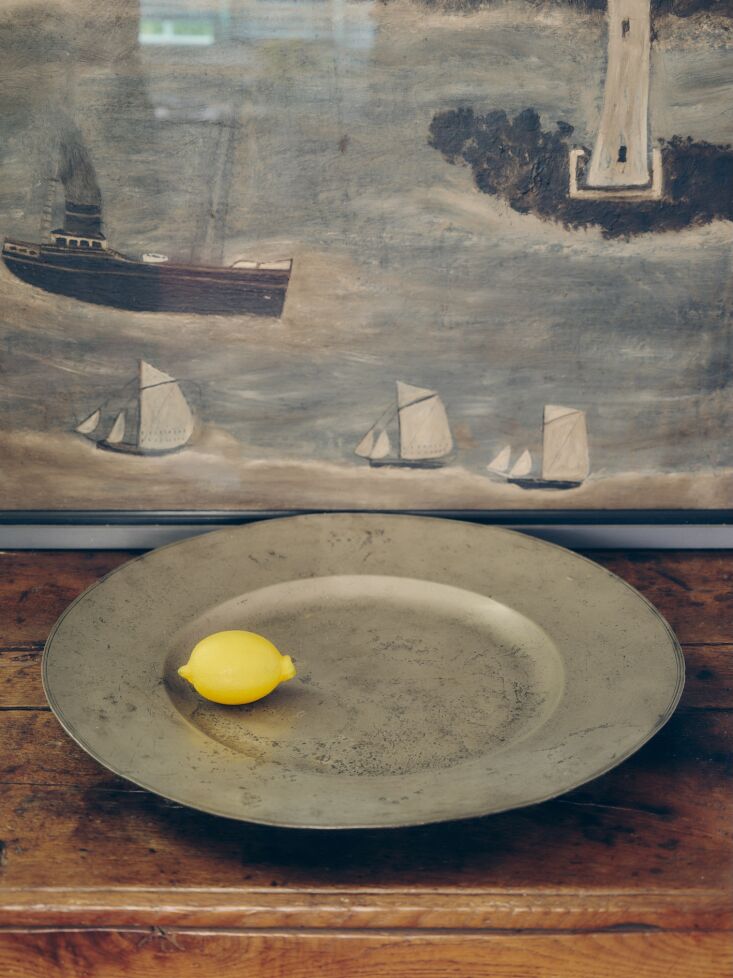
Placed on a pewter dish and burning through the gloom of Alfred Wallis’ Seascape (circa 1928) just above, a ritual lemon draws the eye to a yellow accent in a Miró painting (Tic Tic, 1927) on the adjacent wall. A final note: Jim Ede insisted that reflections in the pictures’ glass frames, revealing windows, some room details, and silhouettes of people, added to the experience of seeing that painting in that place.
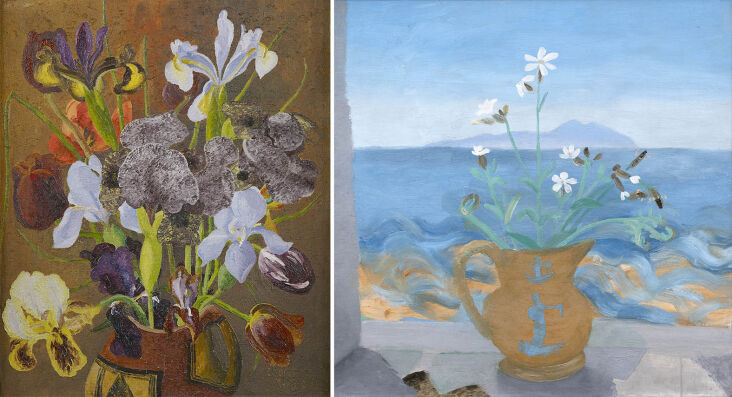
The appealing mixture of fresh flowers, and some very good paintings of flowers, at Kettle’s Yard inspired the current show in the gallery across the courtyard, Handpicked: Painting Flowers from 1900 to Today. Two of the most popular pictures at Kettles Yard are Winifred Nicholson’s Cyclamen and Primula (circa 1923) and Christopher Wood’s Flowers (1930), and both are represented in the show along with work by other friends and contemporaries of Jim Ede, including Cedric Morris, Eric Ravilious and his wife Tirzah Garwood. Some of the atmosphere of the old house has been brought into the contemporary gallery space, too: a small shelf near the entrance, fora time used for anti-bacterial hand wash, is now a plinth for a fresh display to accompany whatever paintings are on the walls.
N.B.: For more on Kettle’s Yard, see 12 Design Lessons from Kettle’s Yard in Cambridge.

Have a Question or Comment About This Post?
Join the conversation