

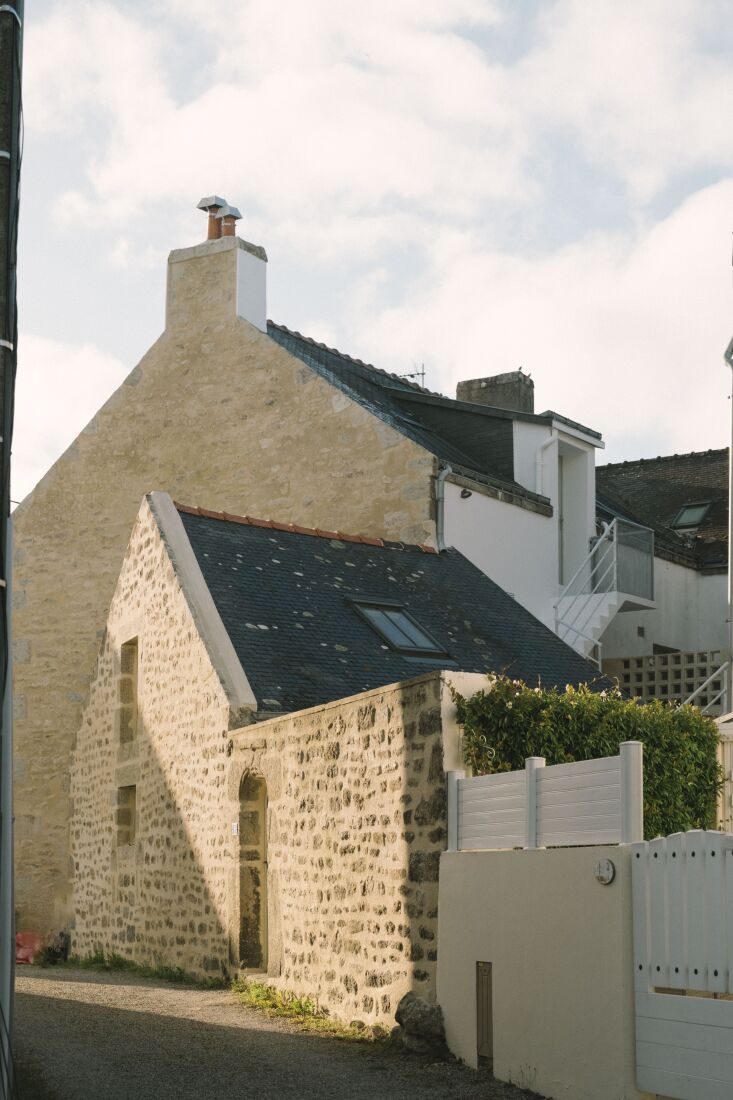
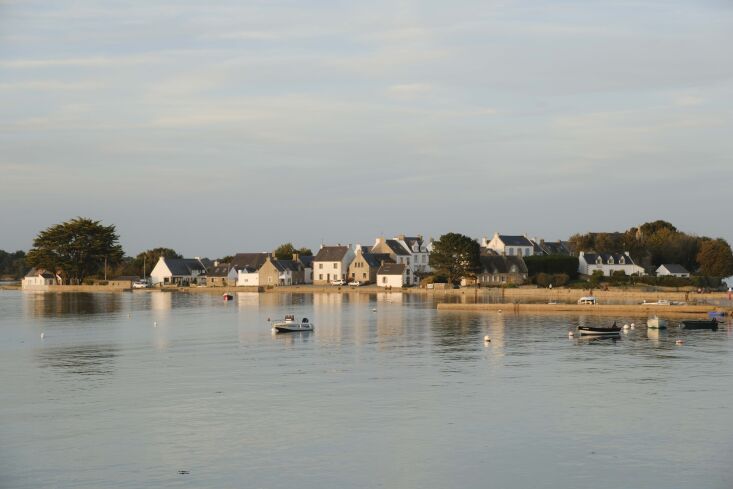
On the small island of Saint-Cado in South Brittany, a former fisherman’s house has been reworked as a pair of pared-back holiday rentals. The project, named Sardineta, is the work of Charly Derouet, a photographer from Normandy, and Ceris Harris, originally from Wales, who left Paris in search of a more rural life and found themselves, by chance, in a village of historic stone houses with ties to both France and Wales.
The house itself predates modern records, appearing on the Napoleonic cadastre and believed to date to ate least the mid-19th century. It previously served as dwelling and a carpenter’s workshop; like much of the island, it carries traces of Saint-Cado’s sardine fishing industry. When the couple purchased it, the structure was intact but compromised by damp—a common condition in the region’s older buildings. Their approach to the renovation was self-directed, informed by earlier work restoring a cabin in Normandy, and focused on addressing existing issues while preserving its character.
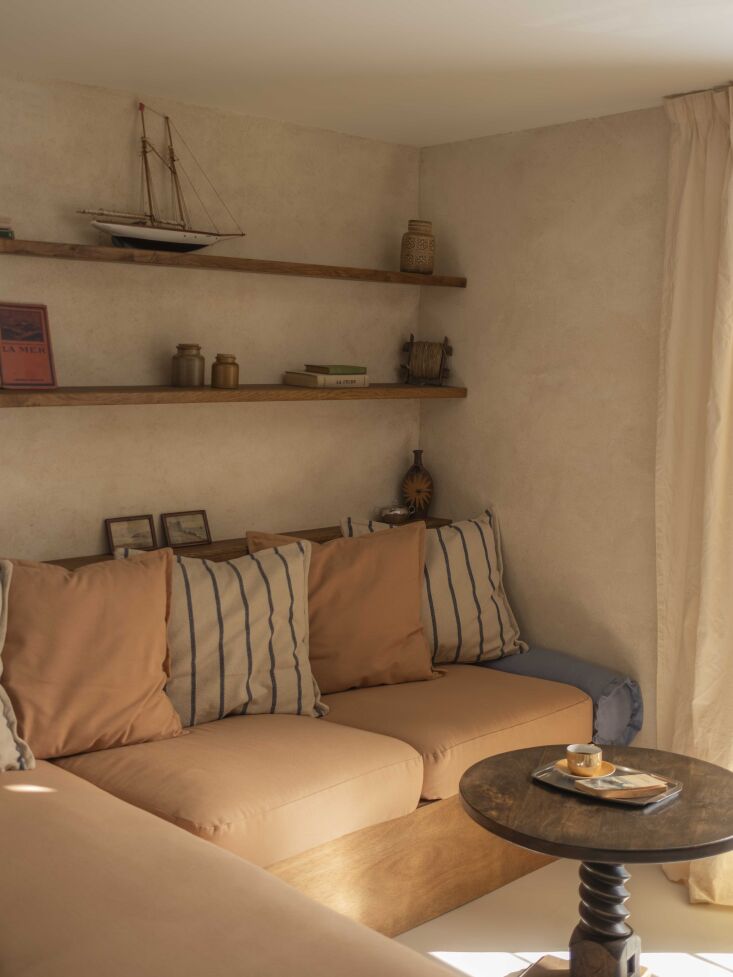
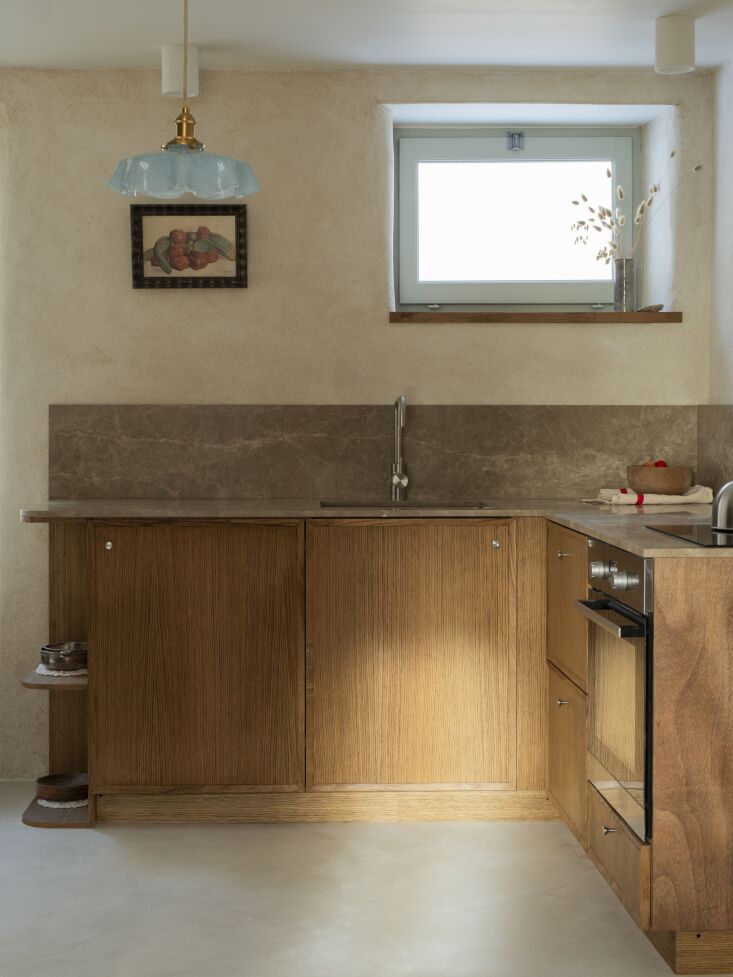
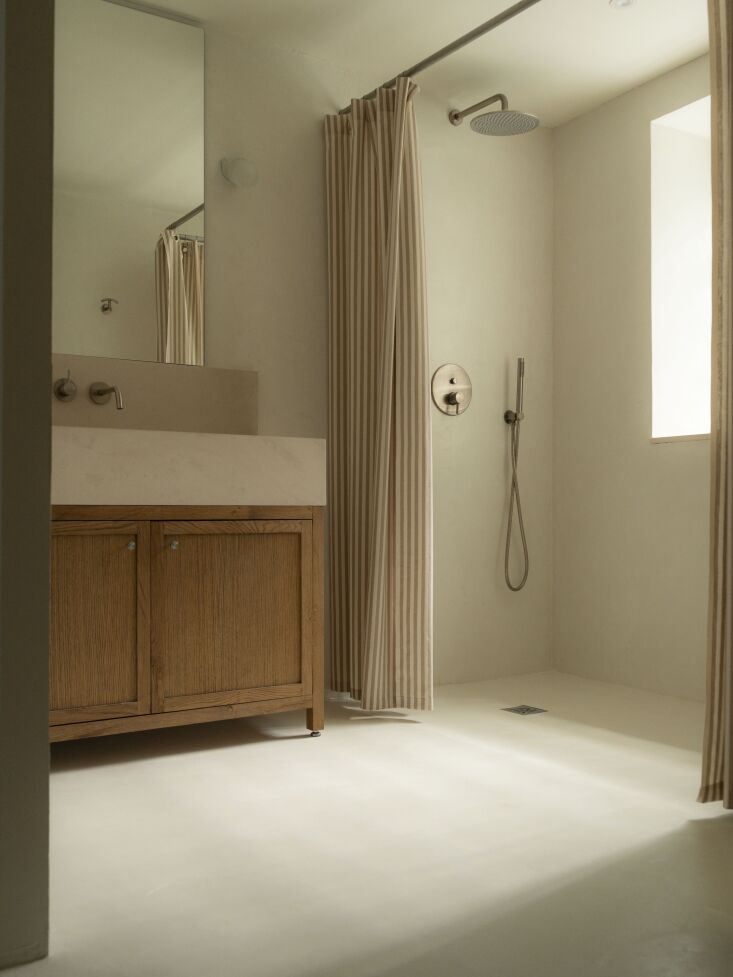
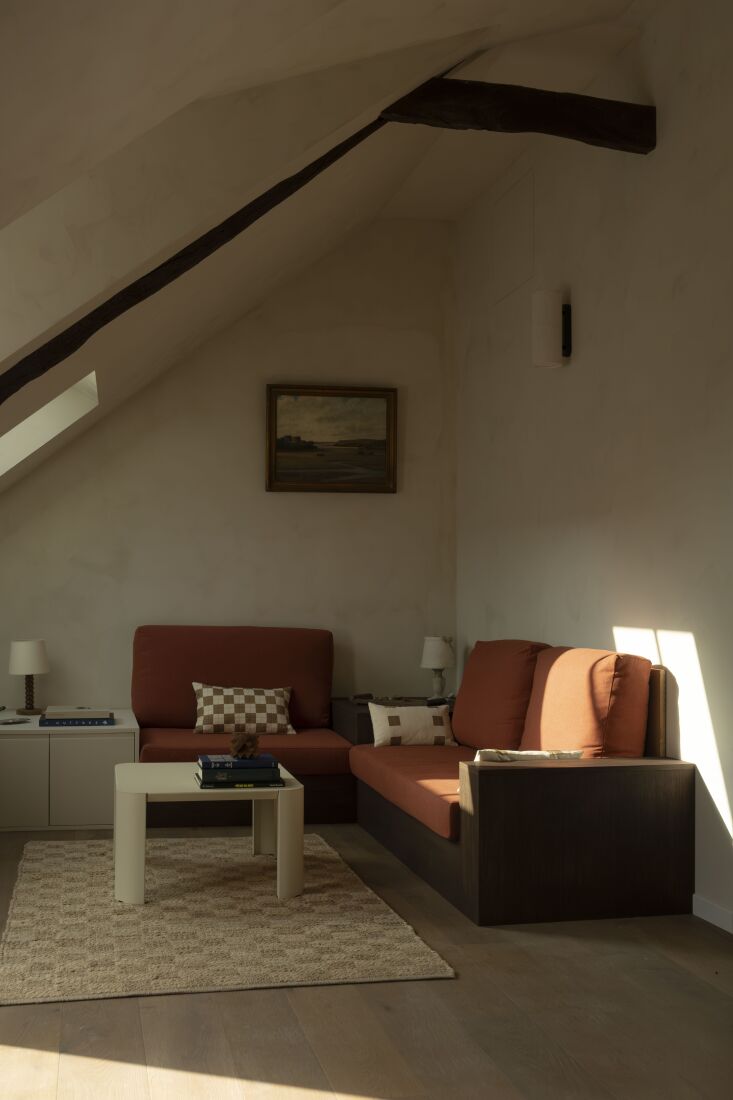
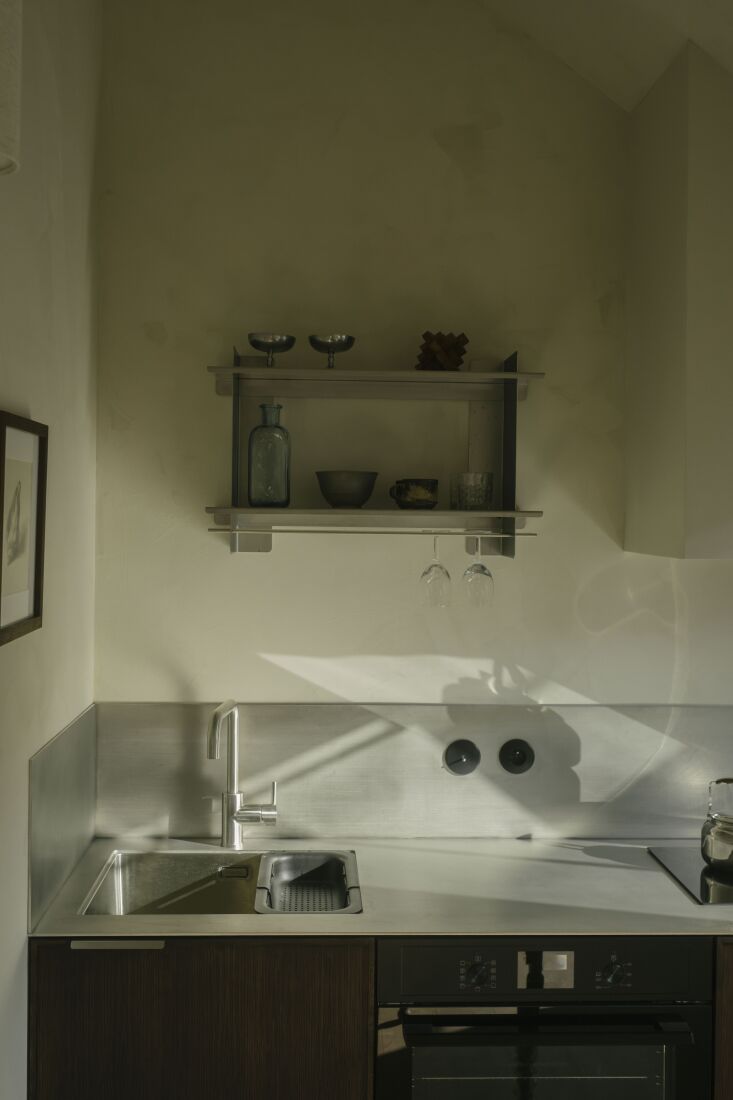
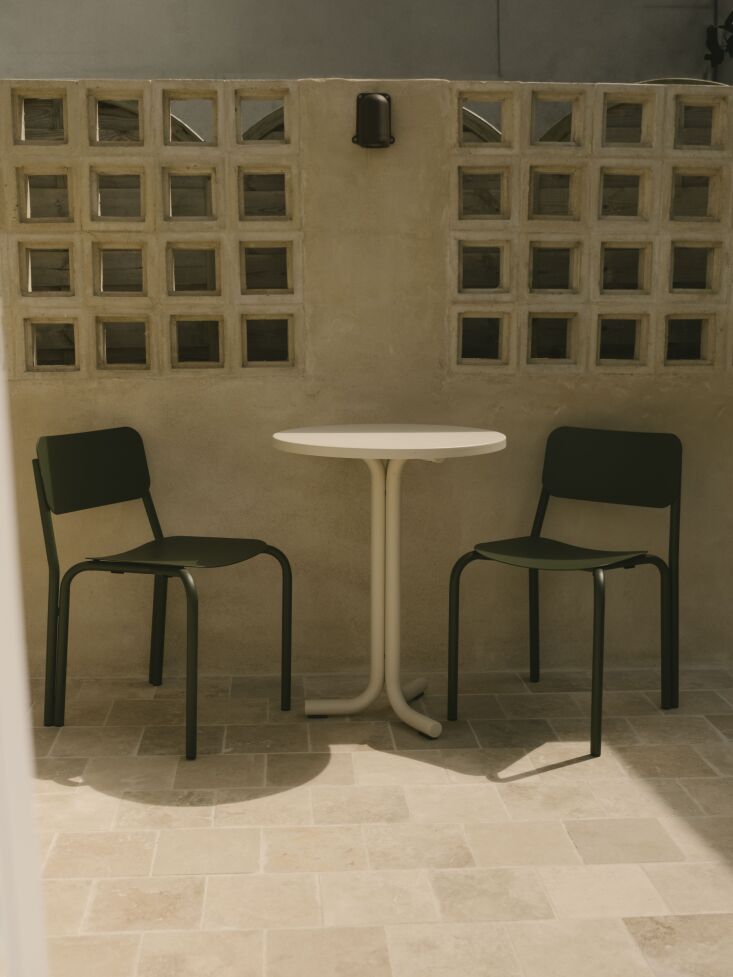
To that end, they reworked the walls using a breathable insulation system: a 5-6 cm layer of hemp and hydraulic lime, left to dry over several months before being finished with aerial lime. The result is a set of interiors with improved thermal performance, balanced humidity, and better acoustics. Across the two 43-square meter apartments—each designed for two guests—the owners build much of the furniture themselves, supplementing it with sourced pieces from flea markets and Leboncoin. Materials are simple and durable: waxed concrete floors, oak cabinetry, raw stainless steel, and a blend of utilitarian and one-off elements that reflect the building’s working past.
Photography by Charly Derouet.
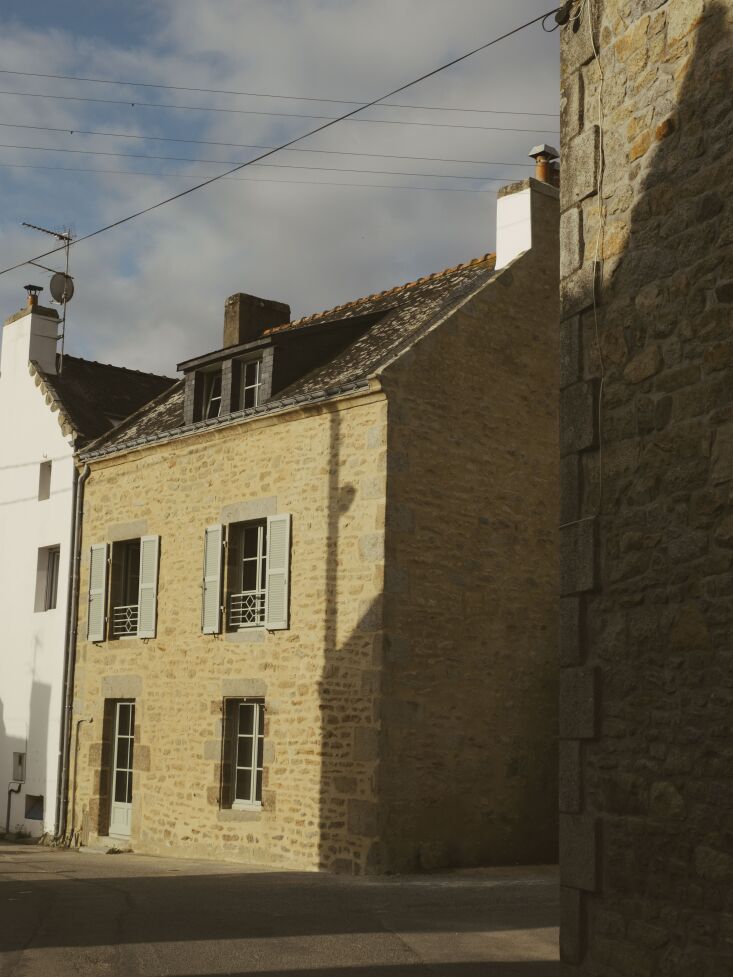
While exploring Saint-Cado, Ceri began to notice traces of her Welsh home: Place Glamorgan, a Welsh flag in the chapel. Further investigation revealed that Saint Cado—also known as Cadoc or Catwg in Welsh—was born in Glamorgan and is the same figure who gave Ceri’s hometown of Cadoxton its name.
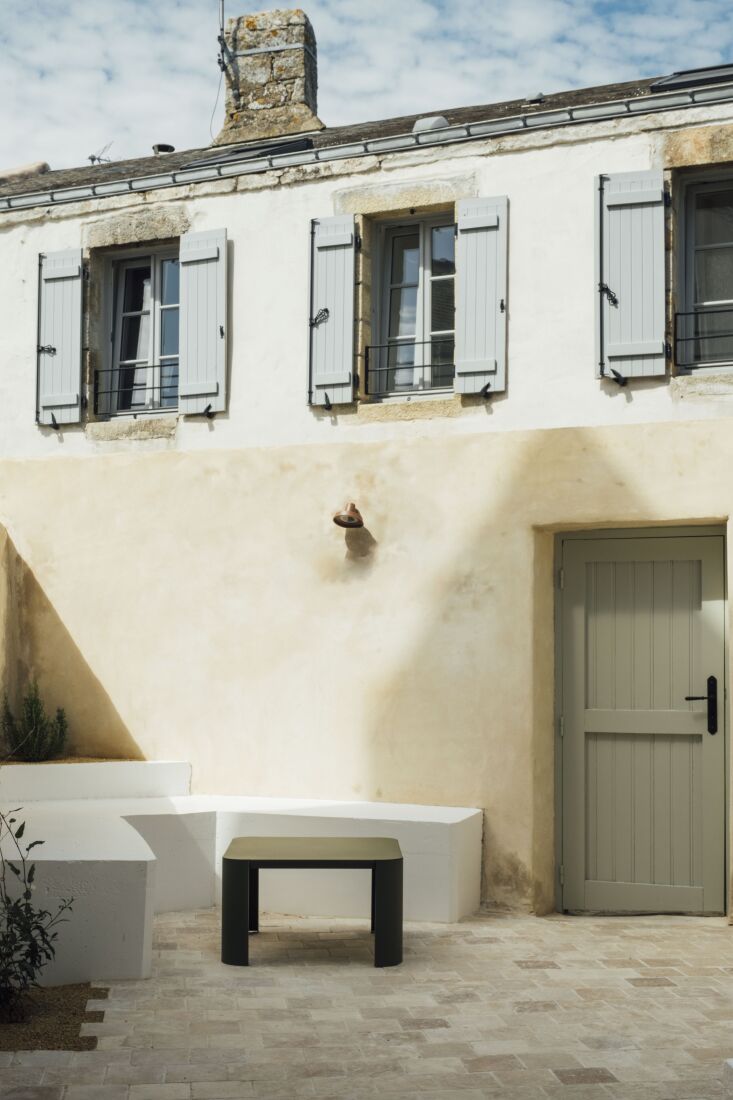
The owners had to consult Les Architectes des Bâtiments de France on the color of shutters—as well as redoing the joints and changing the doors and windows—who oversee renovations in areas surrounding historic monuments. Sardineta is within the perimeter of the Saint-Cado chapel dating back to the 11th century. “In some places, the color palette allowed is quite limited, but we were lucky. The color here is mixed by a local paint shop.”
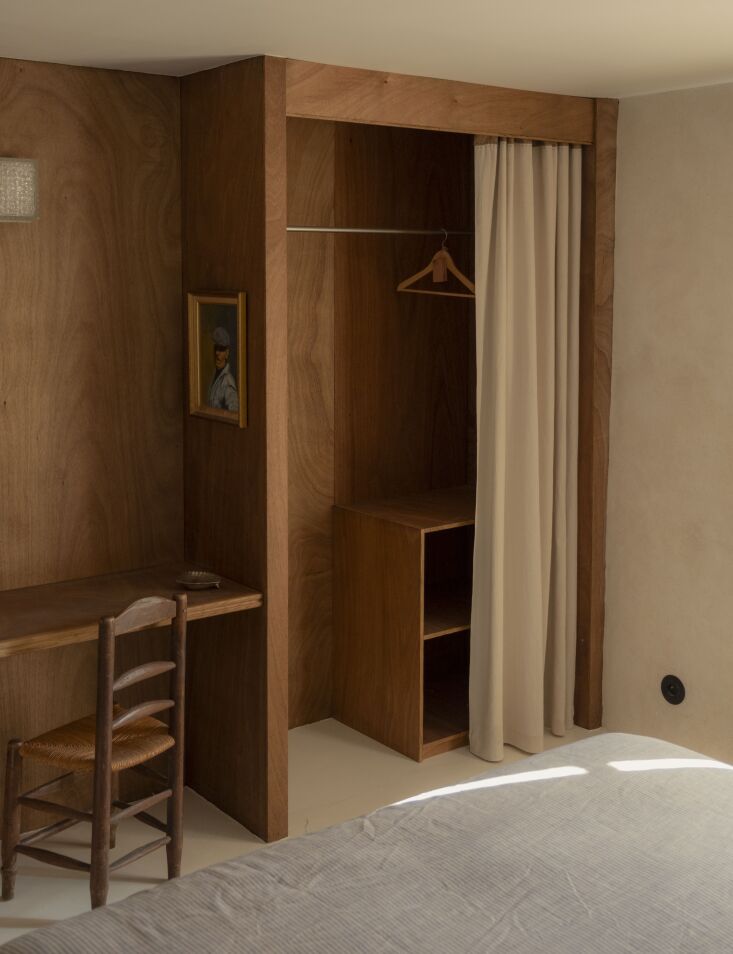
“The house was not unlivable—but it was far from comfortable,” recounts Charly. “Like most old houses here, damp was the main issue. The previous owners had only used it as a summer home, and there were pots of clay powder dotted around the house to absorb moisture.”
He goes on: “The issues were likely caused by renovations done in the 1970s and again in the 90s. As was common at the time, the joins in the stone walls were redone with concrete. This was seen as a modern solution back then, but it actually traps moisture inside the walls. We knew that if we didn’t address the root problem, we’d be managing rather than resolving the dampness. So we tore everything down to its bare walls and roof and redid the electrics and plumbing. The advantage to all this was that we could rebuild it however we wanted.”
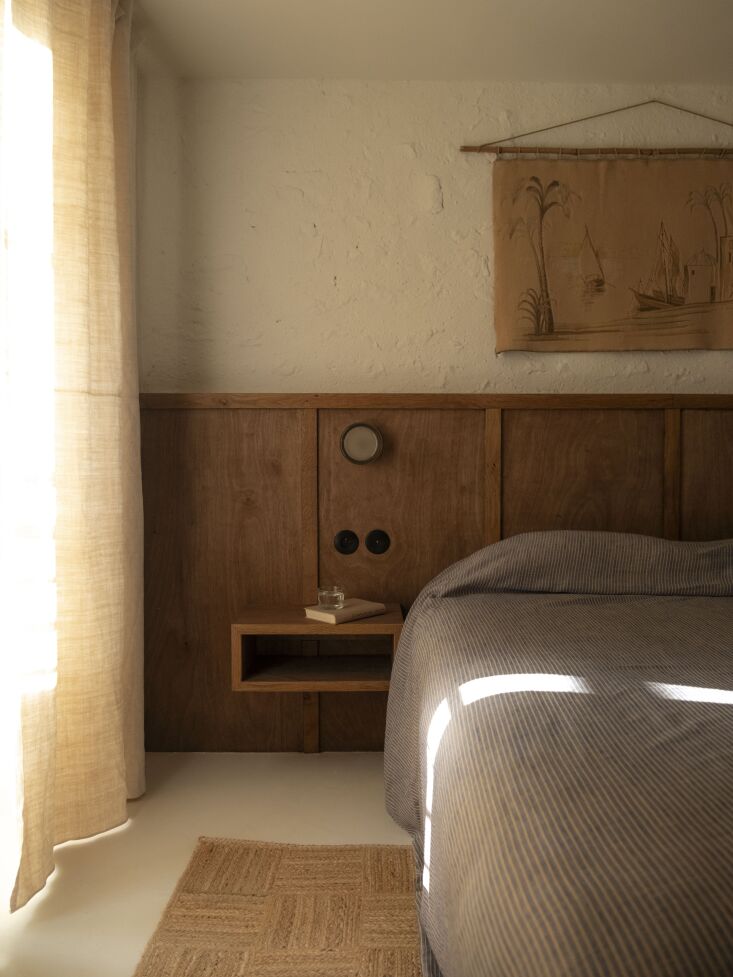
Rather than sealing the building further, Charly and Ceri worked with specialists in traditional methods to restore the building’s permeability. “Lime is perfect for damp buildings as it lets moisture pass through and evaporate, and hemp provides natural insulation,” they explain. They applied a 5cm layer of hemp and hydraulic lime by hand—an intensive, multi-step process that required days of drying between coats—before finishing with a finer lime layer that hardens naturally through calcification. The result is a breathable envelope that stabilizes humidity while insulating the house.
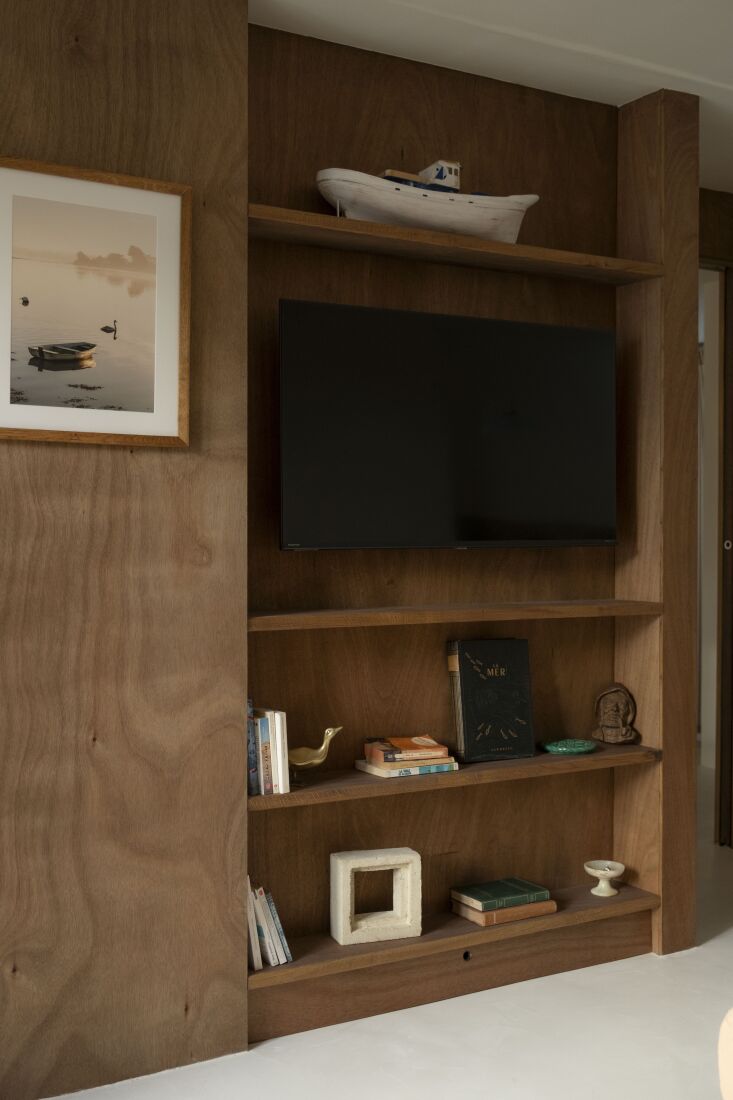
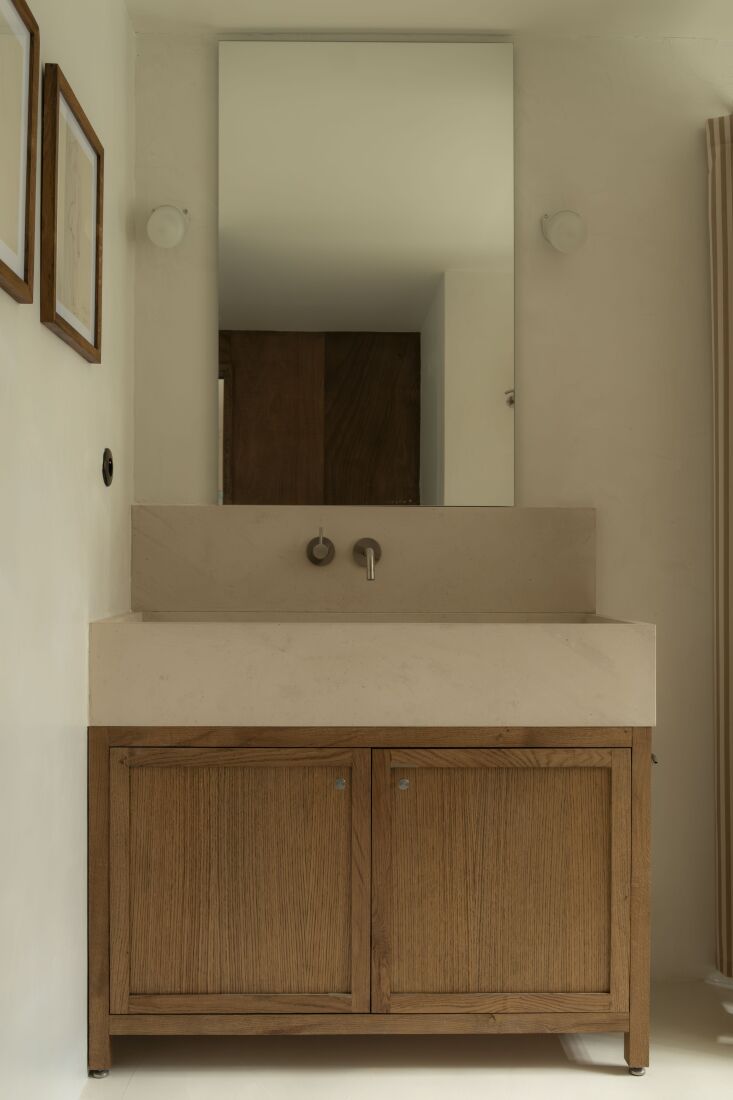
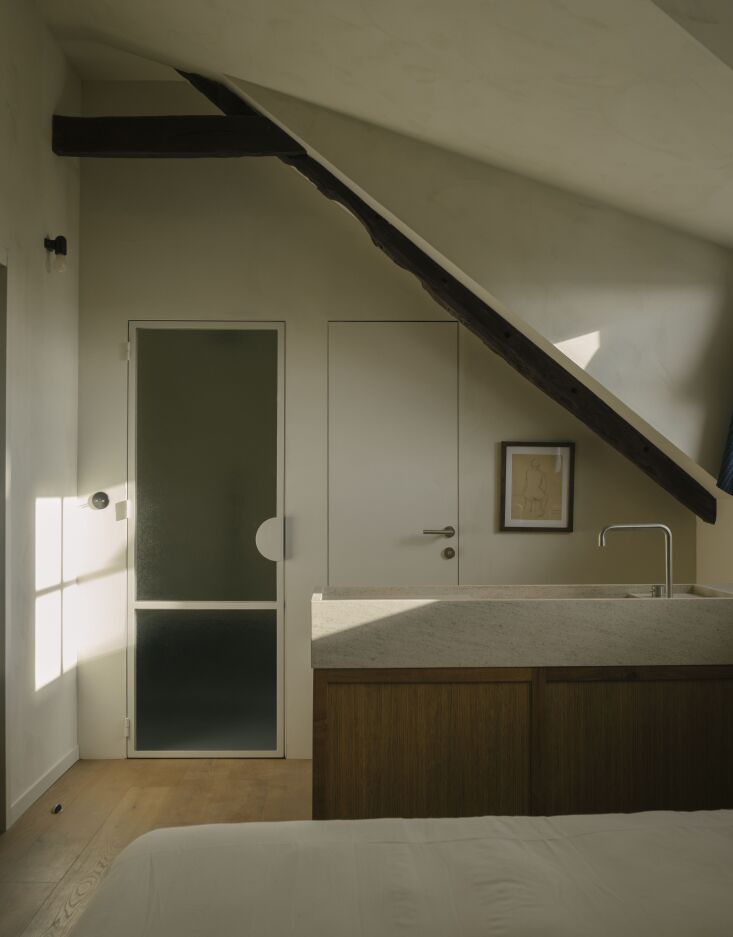
After stripping the walls back to its bare bones, the owners chose natural wood wool insulation for its ability to regulate both cold and heat. “We used plasterboard here as the main wall cover, despite our aversion to it. At this height, the walls are less damp, so we could use it here. And the access up two flights of stairs made it impossible to use the tools and materials for the lime hemp as on other floors.” They then applied their own blend of limewash paint—lime, water, pigment, and casein—to the plaster for a cohesive and charmingly unfinished look.
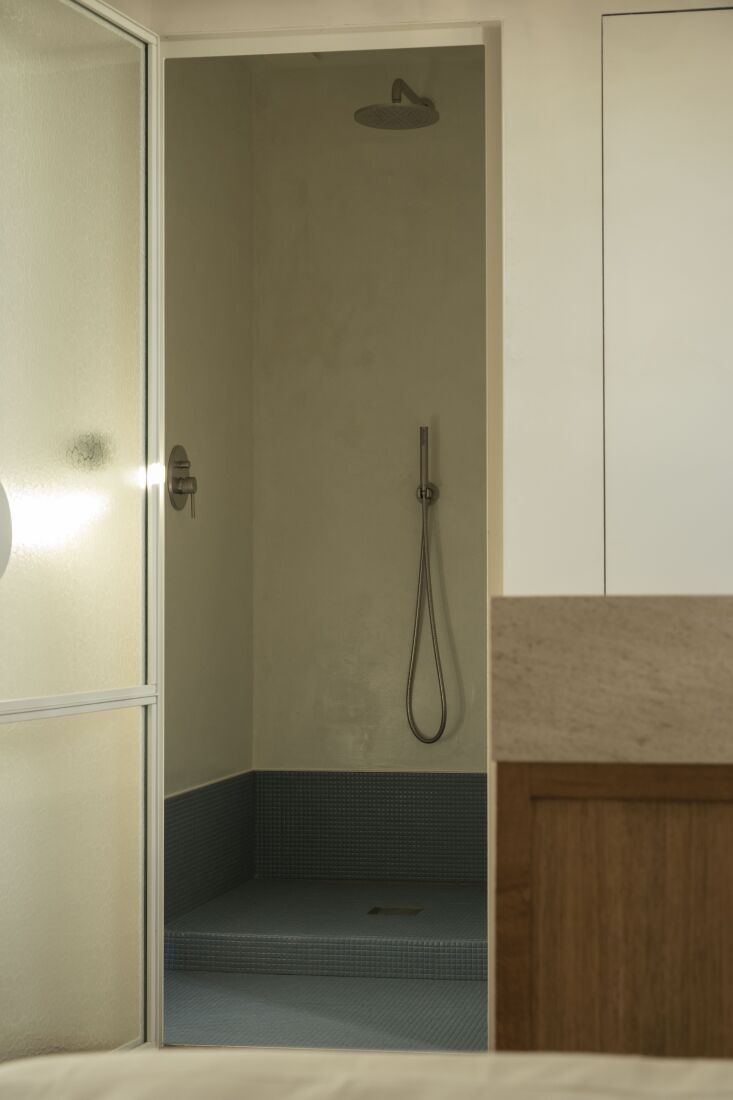
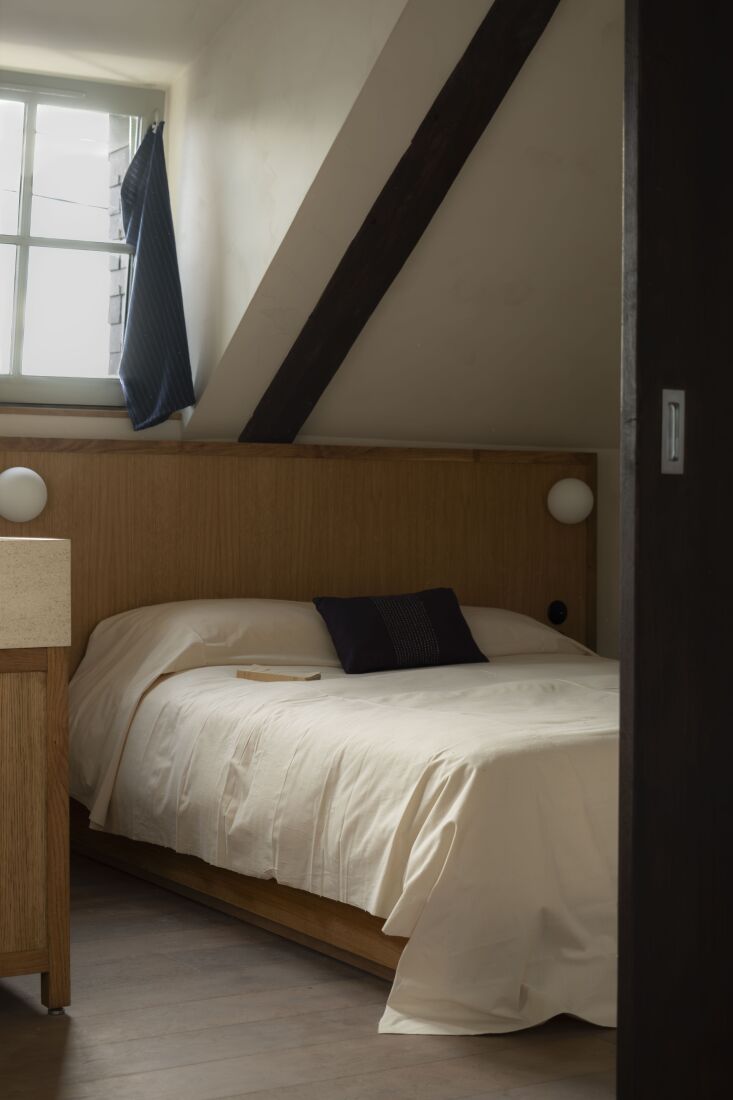
For rental information, see the two listings for separate apartments—the First Floor Apartment and the Second Floor Apartment—at Sardineta on Airbnb.
For more Breton interiors, see our posts:
- Atelier Vime in Brittany: An 18th-Century Childhood Home Lovingly Updated
- Otonali, a Japanese-Inspired Restaurant in Brittany


Have a Question or Comment About This Post?
Join the conversation