Rehabilitating Adapting Transforming A Medieval House in Aurignac France portrait 2 Icon - Arrow LeftAn icon we use to indicate a rightwards action. Icon - Arrow RightAn icon we use to indicate a leftwards action. Icon - External LinkAn icon we use to indicate a button link is external. Icon - MessageThe icon we use to represent an email action. Icon - Down ChevronUsed to indicate a dropdown. Icon - CloseUsed to indicate a close action. Icon - Dropdown ArrowUsed to indicate a dropdown. Icon - Location PinUsed to showcase a location on a map. Icon - Zoom OutUsed to indicate a zoom out action on a map. Icon - Zoom InUsed to indicate a zoom in action on a map. Icon - SearchUsed to indicate a search action. Icon - EmailUsed to indicate an emai action. Icon - FacebookFacebooks brand mark for use in social sharing icons. flipboard Icon - InstagramInstagrams brand mark for use in social sharing icons. Icon - PinterestPinterests brand mark for use in social sharing icons. Icon - TwitterTwitters brand mark for use in social sharing icons. Icon - Check MarkA check mark for checkbox buttons.
You are reading

Rehabilitating, Adapting, Transforming: A Medieval House in Aurignac, France

Search

Rehabilitating, Adapting, Transforming: A Medieval House in Aurignac, France

March 23, 2026

The project began as a near-ruin in Aurignac, France: an uninhabited medieval house, pared back to its stone structure. When a Paris-based artist discovered the village by chance and decided to stay, he enlisted Les Ateliers Permanents—founded by Chloé Morin and Enzo Fruytier, with an office in Aurignac—to rebuild it as a working home. “We work where people live, where everyday life has taken root: in the margins, the outskirts, the countryside, small urban centers,” Morin explains. “Everywhere, the task is to listen to what the territory tells us—and to respond with precision and care.”

Here, the intervention was extensive by necessity. The house had sat empty for nearly 20 years and was in poor condition, so the architects worked from the edges inward. Only the walls and part of the existing structure remained, with one section formerly used as a barn. The roof was rebuilt and insulated; floors excavated and insulated; and the interior levels reworked into a stepped sequence. The main living area, once outdoors with packed earth flooring, is now organized around a double-height volume that draws light into the plan. Bathrooms were added where there had been none.

It’s a modern layer that aligns with the studio’s broader ethos: “Building no longer necessarily means constructing a new, but intervening with care in what is already there. Rehabilitating, adapting, transforming—not by default, but by choice.” Here’s a look.

Photography by Sandrine Iratcabal for Les Ateliers Permanents.
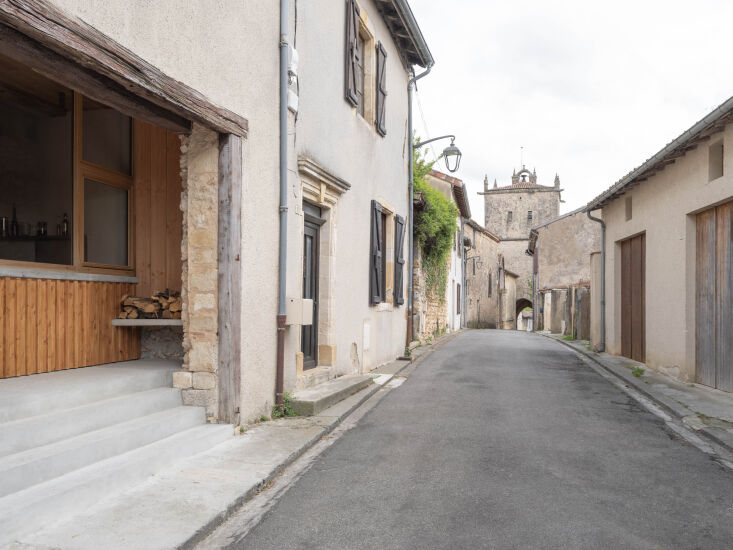
on the street, the entry is set back from the façade to create a shallow loggi 17
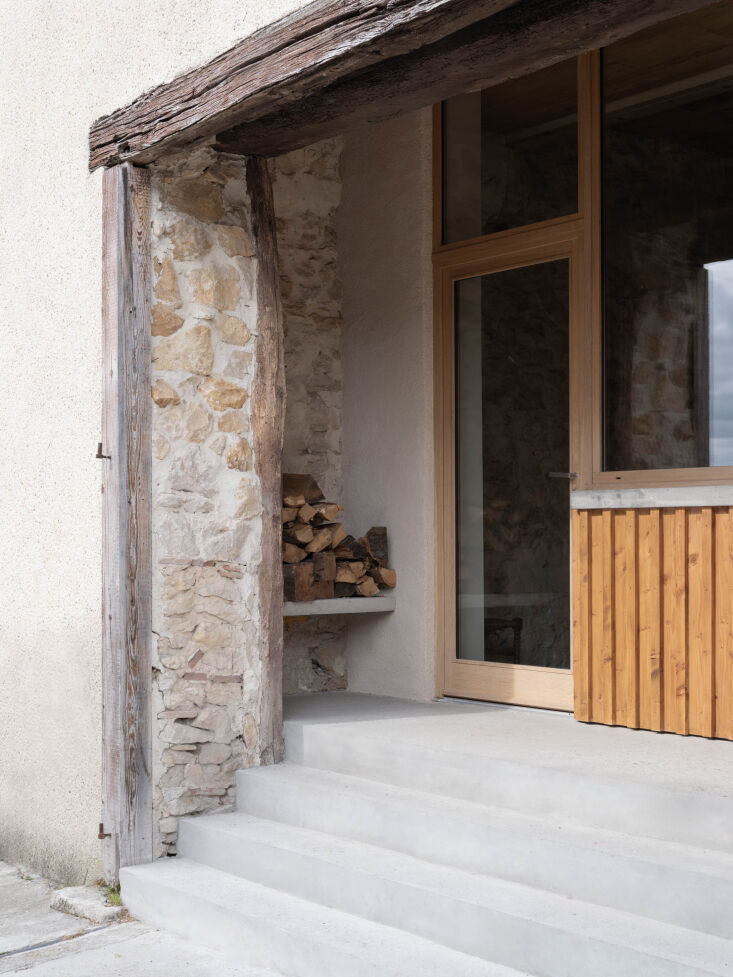
Above: On the street, the entry is set back from the façade to create a shallow loggia—a small buffer from passersby that shades the glazing while allowing in light.
oak framed windows and front entry with an integrated concrete shelf for wood s 18
Above: Oak-framed windows and front entry with an integrated concrete shelf for wood storage.
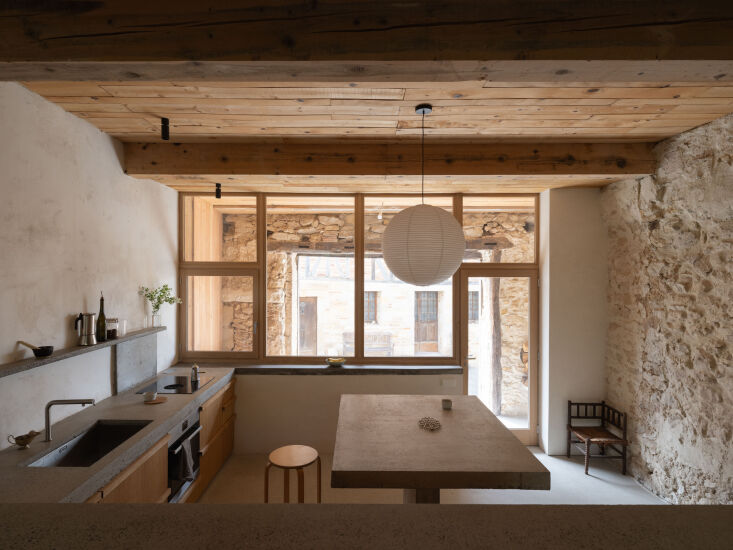
the entry opens into a kitchen constructed with oak cabinet fronts and a concre 19
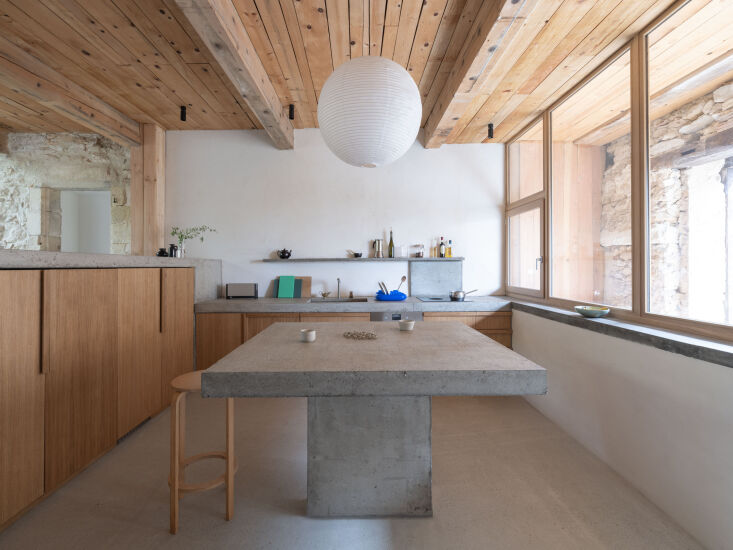
Above: The entry opens into a kitchen constructed with oak cabinet fronts and a concrete worktop sealed with an eco-friendly pore sealer. A central concrete table serves as both casual dining and workstation.
the electric cooktop is a bora appliance and the oven is aeg. 20
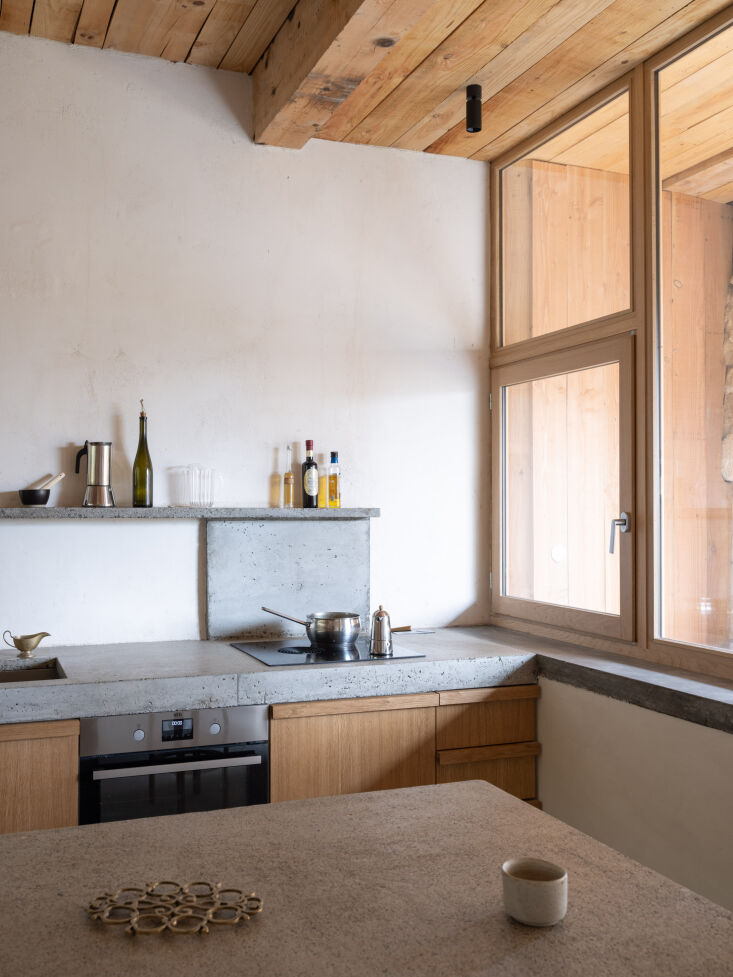
Above: The electric cooktop is a Bora appliance and the oven is AEG.
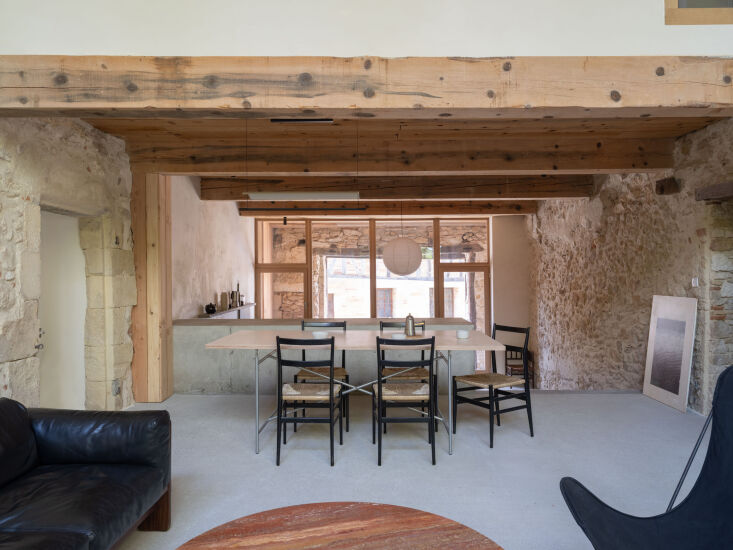
stepping into the living area at left, the dining table base is designed by ric 21
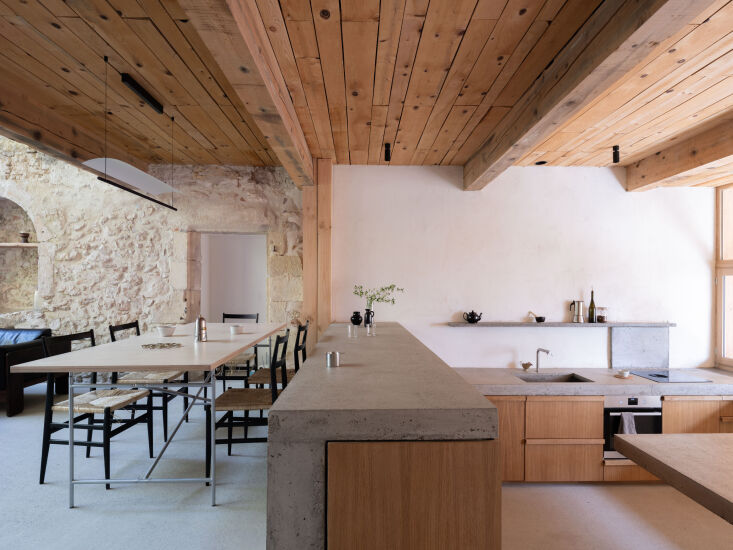
Above: Stepping into the living area at left, the dining table base is designed by Richard Lampert—paired with a plywood top. The chairs are Gio Ponti Superleggera Chairs.
with the living/dining area elevated, the view from the dining table looks out  22
Above: With the living/dining area elevated, the view from the dining table looks out to the street.
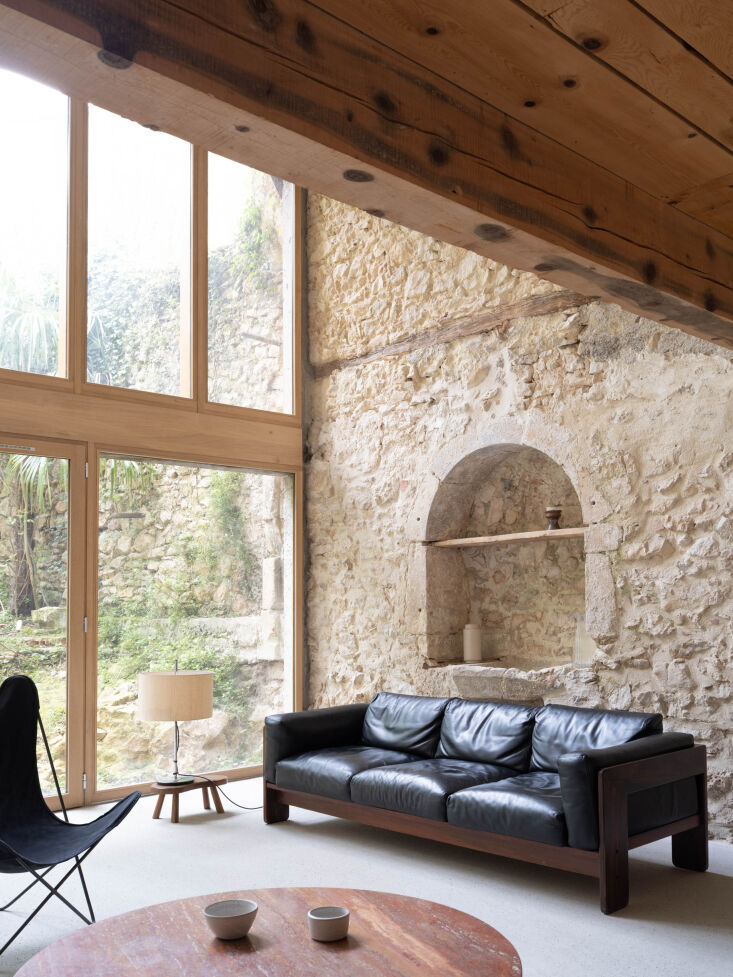
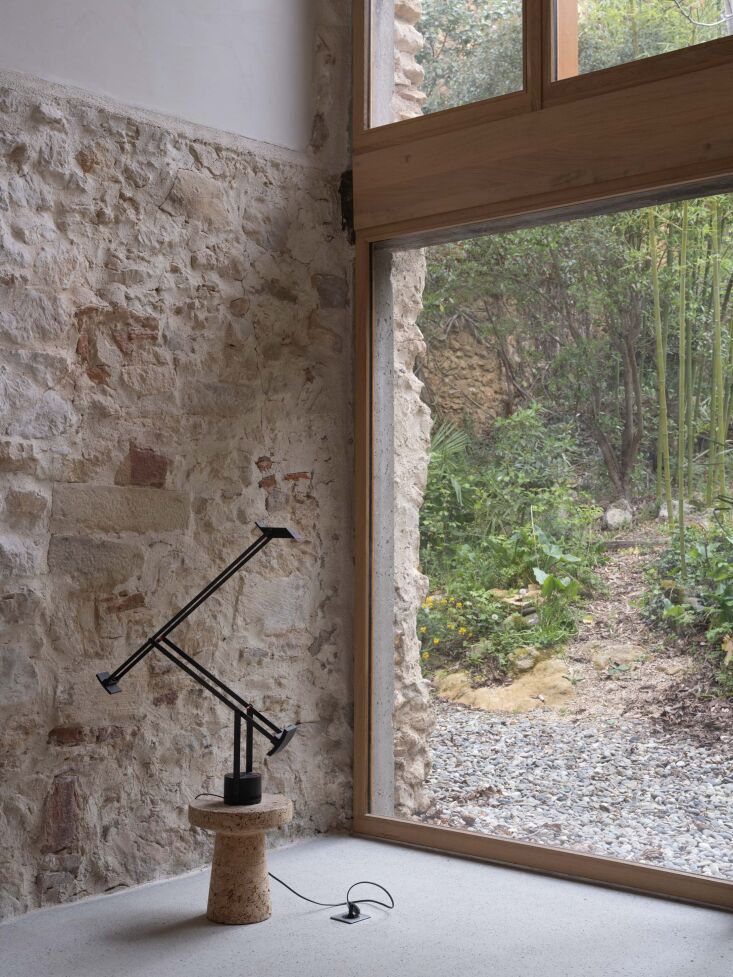
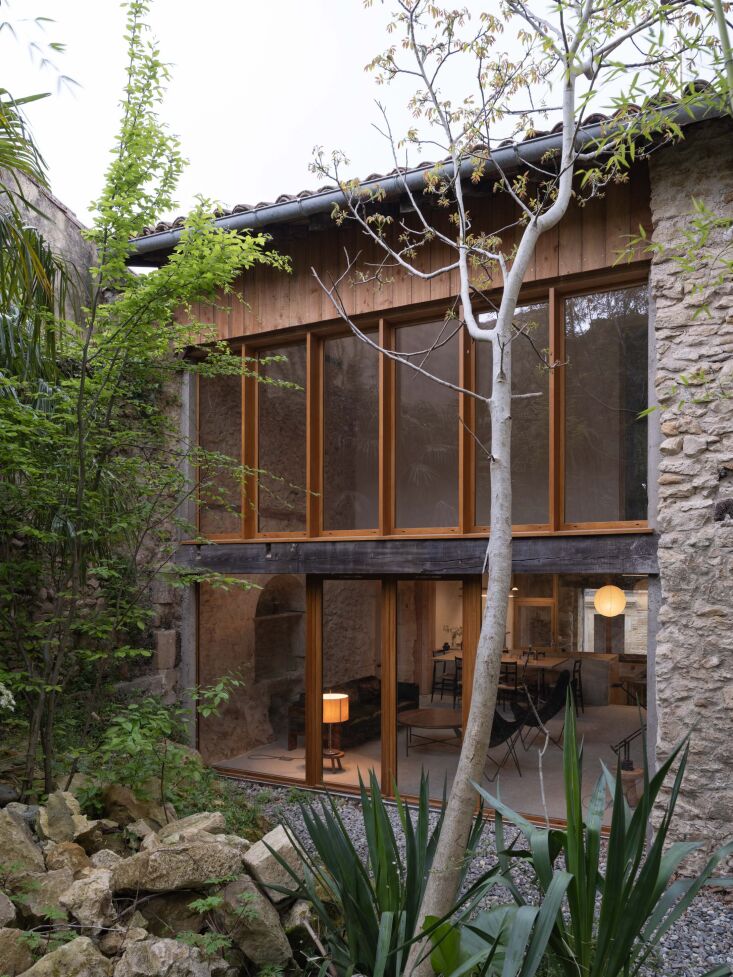
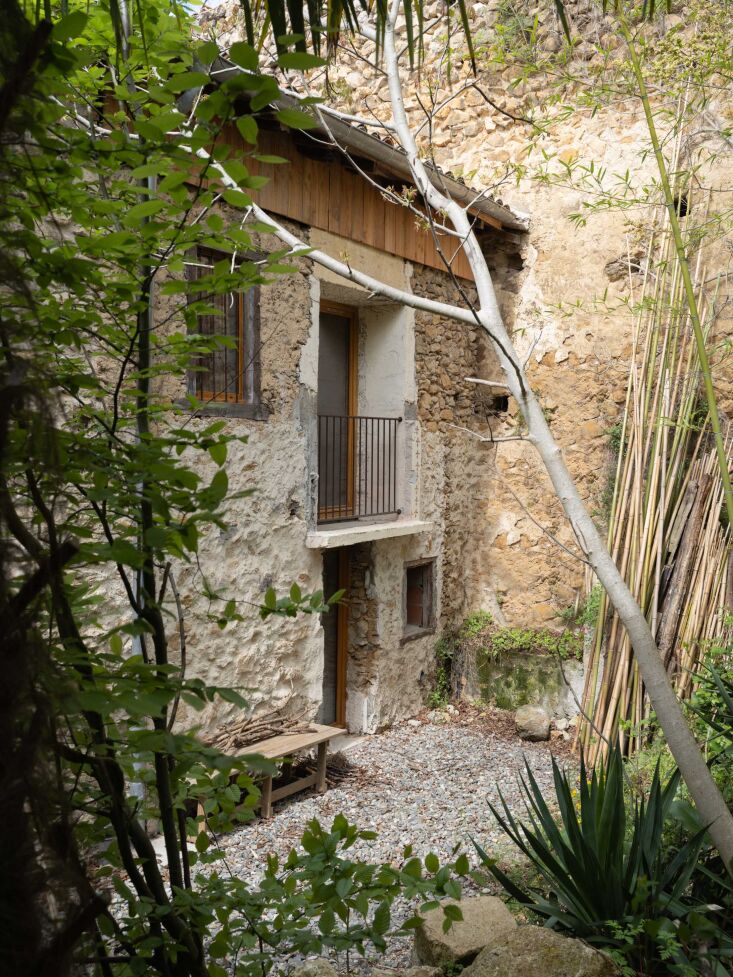
the remaining walls of the house date back to the \13th century. the additional 23
Above: The remaining walls of the house date back to the 13th century. The additional stones throughout were sourced from the village quarry.
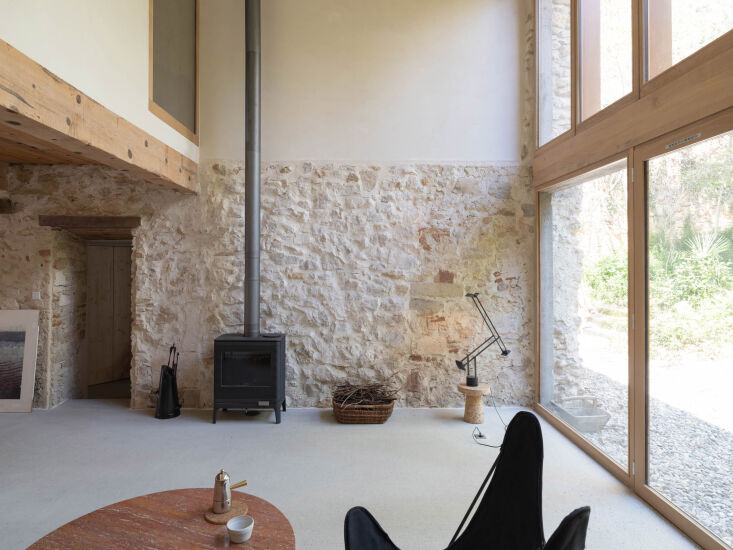
a wide view of the double height volume. the freestanding stove is an invicta k 24
Above: A wide view of the double height volume. The freestanding stove is an Invicta Kiara model.
the sofa is a bastiano sofa by tobia & afra scarpa with jorge ferrari hardo 25
Above: The sofa is a Bastiano Sofa by Tobia & Afra Scarpa with Jorge Ferrari-Hardoy Butterfly Chair. The lamp is a vintage Staff Leuchten Table Lamp.
the lamp is the artemide tizio task lamp on a jasper morrison cork model c stoo 26
Above: The lamp is the Artemide Tizio Task Lamp on a Jasper Morrison Cork Model C Stool. It plugs in via a floor outlet integrated into the polished concrete flooring.
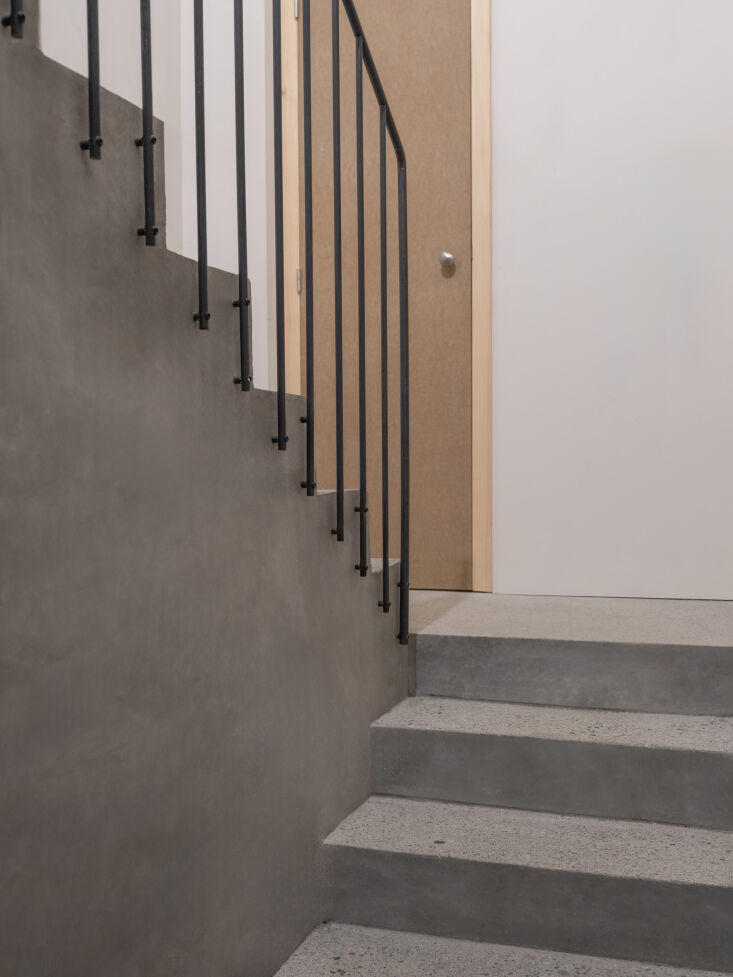
the central concrete stairs are newly built. 27
Above: The central concrete stairs are newly built.
insulation was approached case by case, with wood wool in some areas, lime hemp 28
Above: Insulation was approached case by case, with wood wool in some areas, lime-hemp in others, and select sections of exposed stone. “These choices were made depending on the orientation, the function of the room, and the architectural composition,” Morin says.
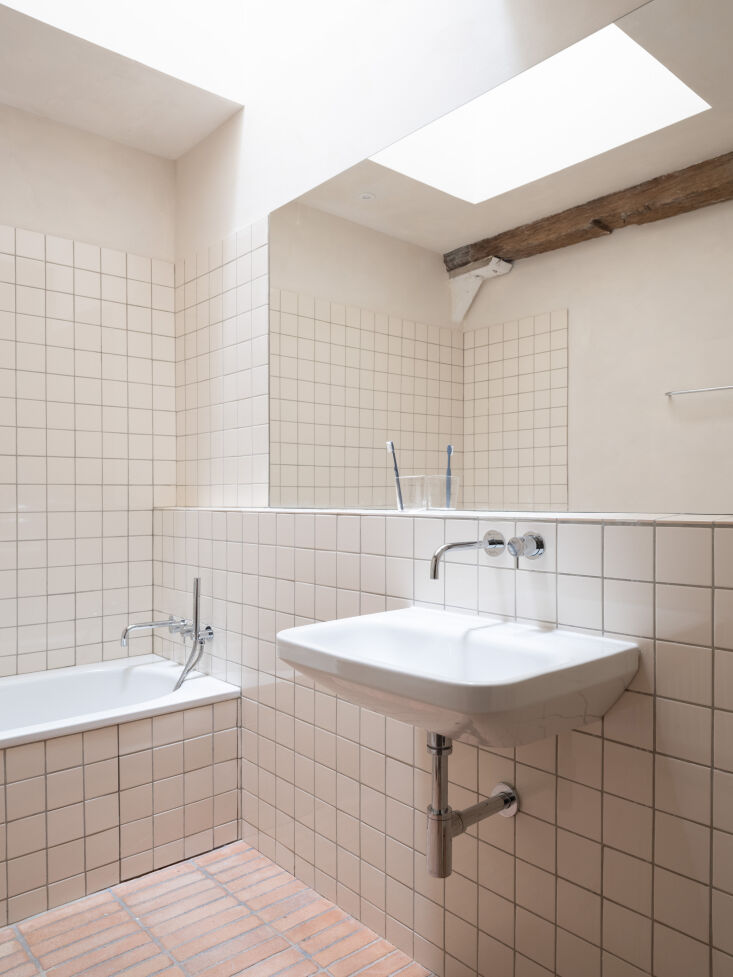
square tiles in the bathroom are from primus vitoria in portugal. the floor til 29
Above: Square tiles in the bathroom are from Primus Vitoria in Portugal. The floor tiles are from a workshop in the Spanish Pyrenees. The taps are both from Iconico; the sink is a Roca sink; the tub is from Bette.
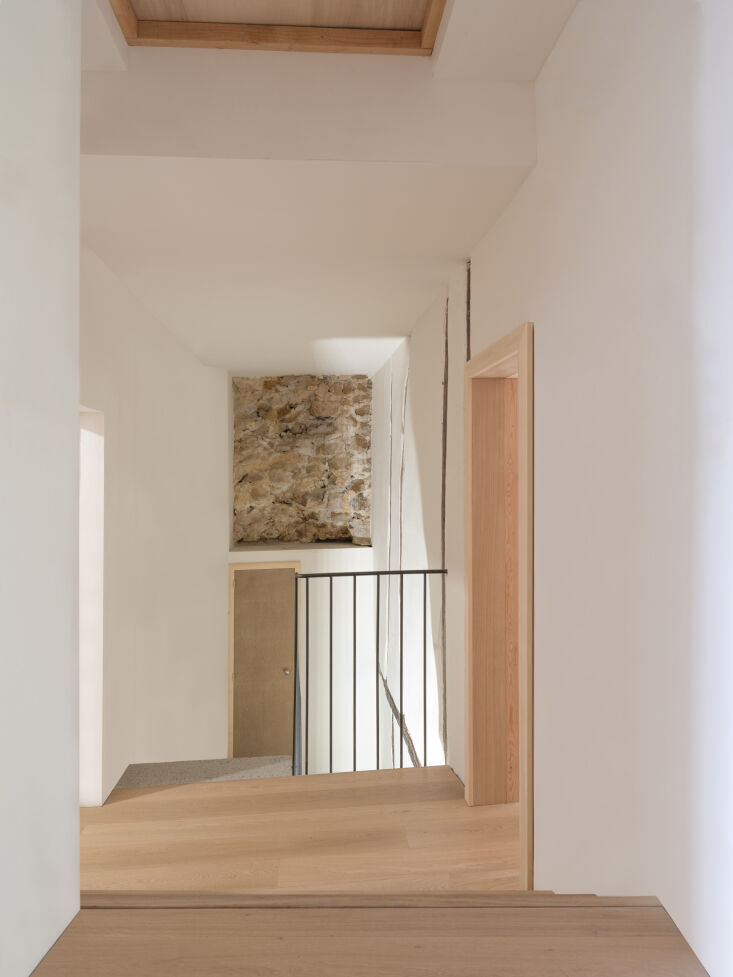
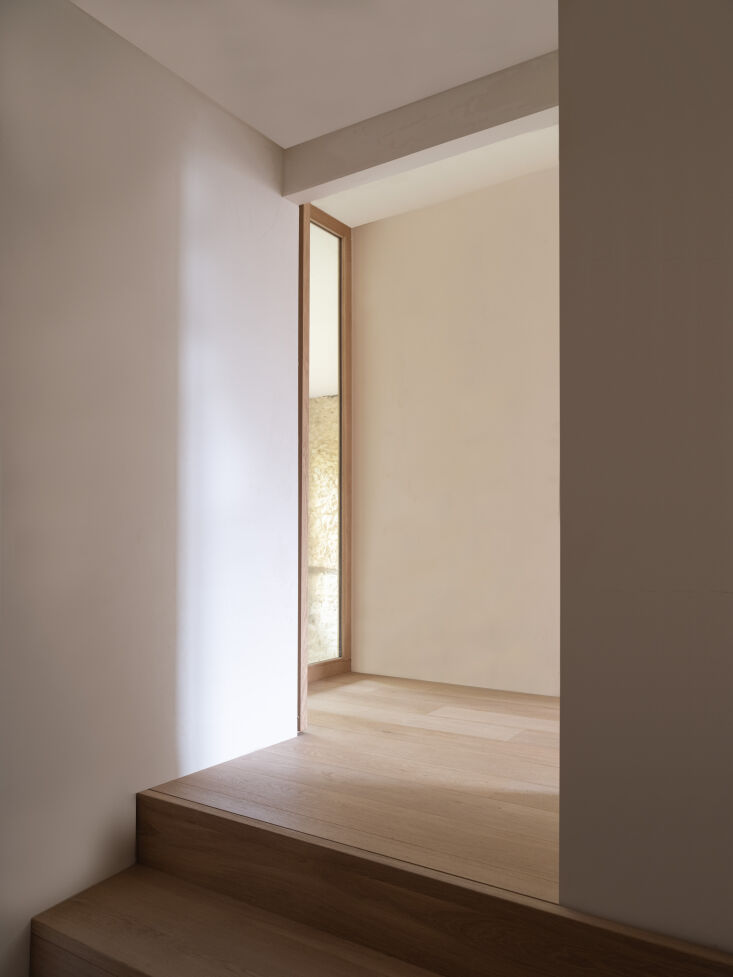
the second story is defined by oak flooring and white walls and tunnels—or sk 30
Above: The second story is defined by oak flooring and white walls and tunnels—or skylights—of light.
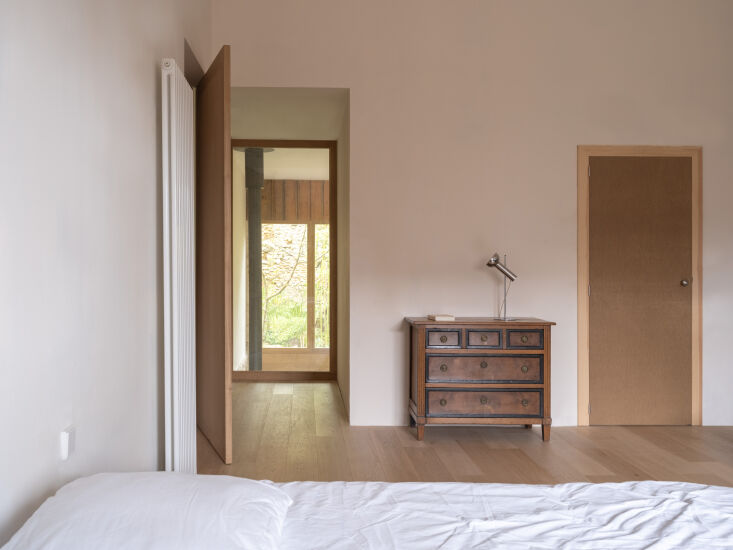
the doors were designed by the architects and made custom by a local carpenter: 31
Above: The doors were designed by the architects and made custom by a local carpenter: “We chose to keep the raw MDF look on the doors,” Morin explains.
a dynamic garden was built beyond the living room windows. 32
Above: A dynamic garden was built beyond the living room windows.
the landscape design here echoes the rocky terrain of the southern haute garonn 33
Above: The landscape design here echoes the rocky terrain of the southern Haute-Garonne region in front of the Pyrenees mountains.
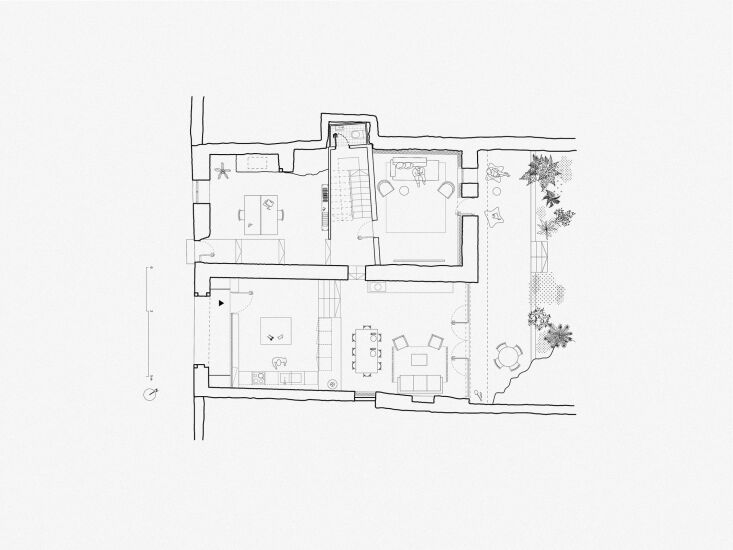
the architectural plans showing the ground floor inclusive of the garden in bac 34
Above: The architectural plans showing the ground floor inclusive of the garden in back.
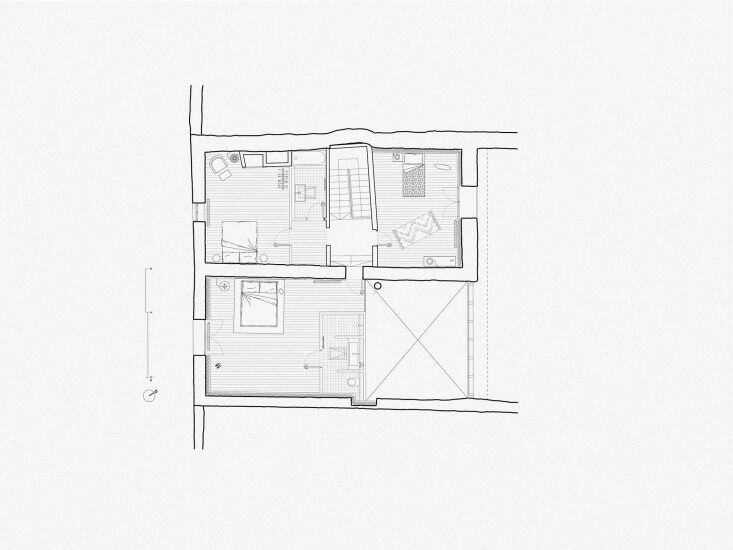
plans show the design of the top floor bedrooms and bathrooms. 35
Above: Plans show the design of the top floor bedrooms and bathrooms.

For more modernized French interiors, see our posts:

(Visited 7,622 times, 80 visits today)
You need to login or register to view and manage your bookmarks.

Have a Question or Comment About This Post?

Join the conversation

v5.0