Villa Rezek Restored Now On View 1930s Viennese Modernism by Architect Hans Glas portrait 2 Icon - Arrow LeftAn icon we use to indicate a rightwards action. Icon - Arrow RightAn icon we use to indicate a leftwards action. Icon - External LinkAn icon we use to indicate a button link is external. Icon - MessageThe icon we use to represent an email action. Icon - Down ChevronUsed to indicate a dropdown. Icon - CloseUsed to indicate a close action. Icon - Dropdown ArrowUsed to indicate a dropdown. Icon - Location PinUsed to showcase a location on a map. Icon - Zoom OutUsed to indicate a zoom out action on a map. Icon - Zoom InUsed to indicate a zoom in action on a map. Icon - SearchUsed to indicate a search action. Icon - EmailUsed to indicate an emai action. Icon - FacebookFacebooks brand mark for use in social sharing icons. flipboard Icon - InstagramInstagrams brand mark for use in social sharing icons. Icon - PinterestPinterests brand mark for use in social sharing icons. Icon - TwitterTwitters brand mark for use in social sharing icons. Icon - Check MarkA check mark for checkbox buttons.
You are reading

Villa Rezek Restored, Now On View: 1930s Viennese Modernism by Architect Hans Glas

Search

Villa Rezek Restored, Now On View: 1930s Viennese Modernism by Architect Hans Glas

January 26, 2026

There’s a quality to a well-restored historic work of architecture that is unmatched—the marriage of early twentieth century materials where edges are refined with an updated structure and surfaces refinished with real consideration. Villa Rezek, built between 1933 and 1934 in Vienna for physician couple Anna and Philipp Rezek by the largely unknown Jewish Viennese architect Hans Glas, is one such example. Set on Windmühlhöhe in Währing, Vienna’s 18th district, near works by Adolf Loos and Josef Frank, the house exemplifies Viennese Modernism in the interwar period: a reinforced concrete structure with generous openings, clean lines, and expansive terraces. It’s a building that is both staunchly modern and unmistakably humane—an architecture of optimism amid a turbulent era.

Its recent restoration, undertaken between 2020 and 2024 by Maximilian Eisenköck Architektur, approaches the house as a layered document. The firm’s research-driven approach combines archival study, material analysis, and the precise attention to building history, chemical composition, and traces of original use. This allowed the villa to be returned to its 1930s condition without erasing its past. That past is substantial: the forced flight of the Jewish Rezek family in 1938; postwar occupation by American military generals; partial destruction; and the eventual protection by the Federal Monuments Office in 2010. Newly reopened as a temporary museum in spring of 2025, Villa Rezek offers a rare, intimate encounter with modernist domestic life—rooms restored with original furniture, photographs, and plans, where even absences feel present. It is also a quiet corrective: a reintroduction of Hans Glas, long overlooked in Austria, into the architectural lineage he helped shape.

Photography by Julius Hirtzberger for Maximilian Eisenköck Architektur.
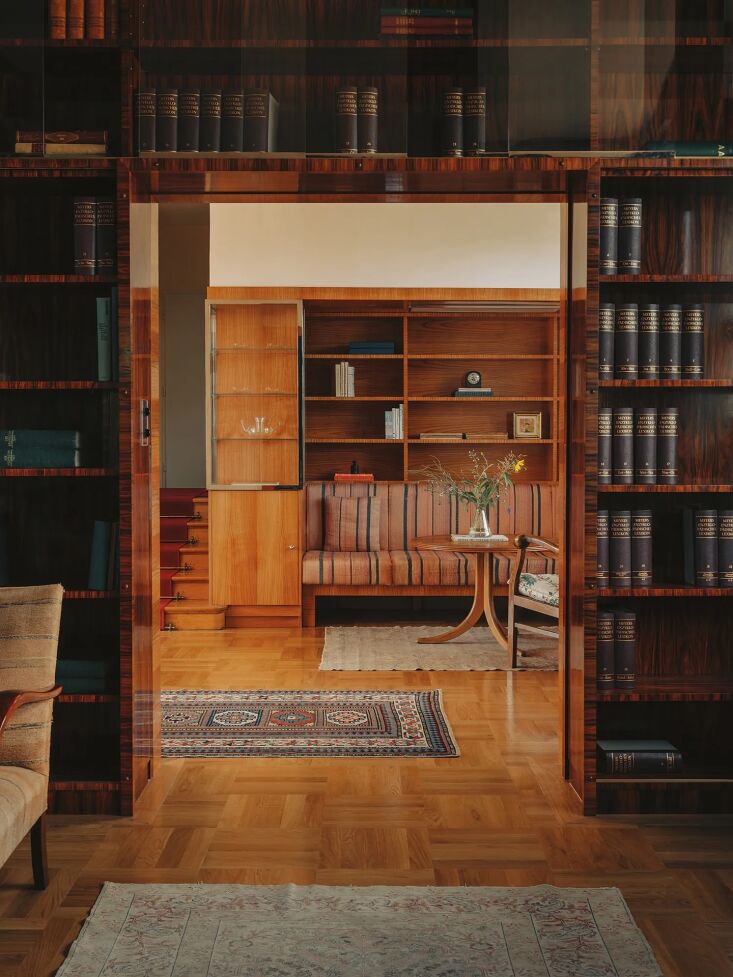
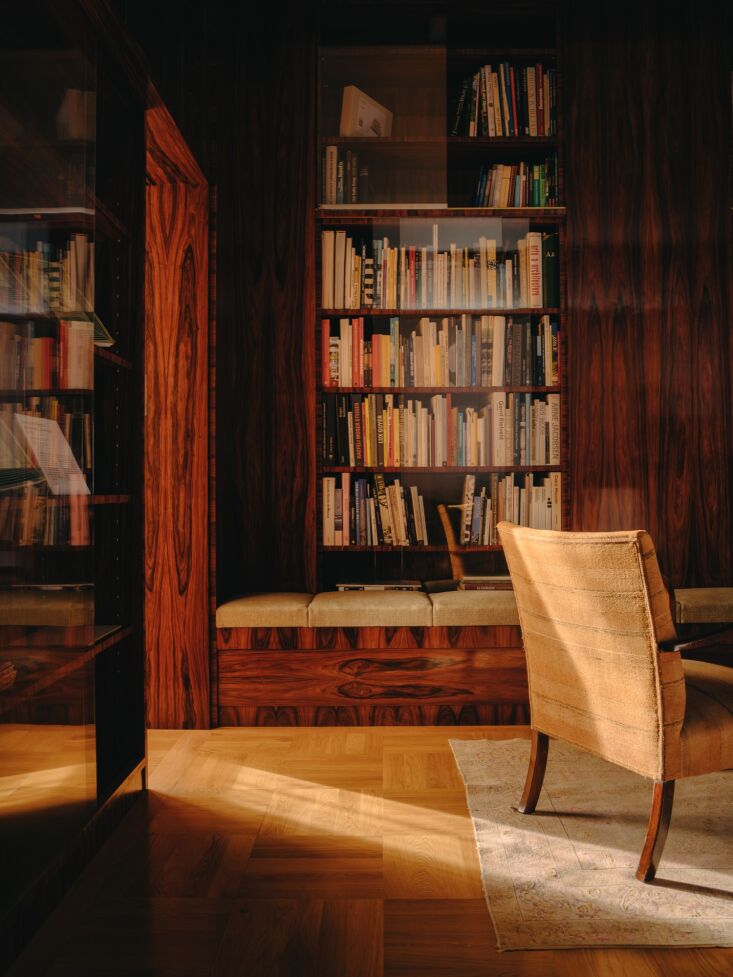
original bookshelf lined walls of the more social spaces in villa rezek were ca 17
Above: Original bookshelf-lined walls of the more social spaces in Villa Rezek were carefully restored and decorated with 1930s Wilhelm Wagenfeld glassware, upholstery textiles, and design books referential to the time.
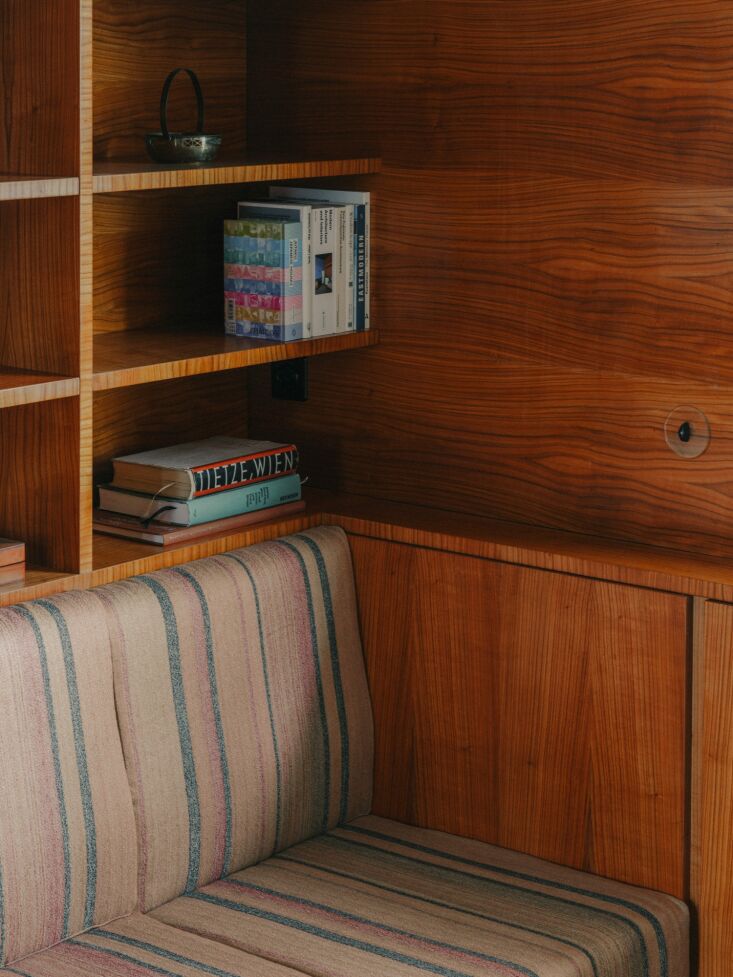
noble wood varieties were used on the built in cabinets and bench. 18
Above: Noble wood varieties were used on the built in cabinets and bench.
glass front bookshelves and oak parquet floors. 19
Above: Glass-front bookshelves and oak parquet floors.
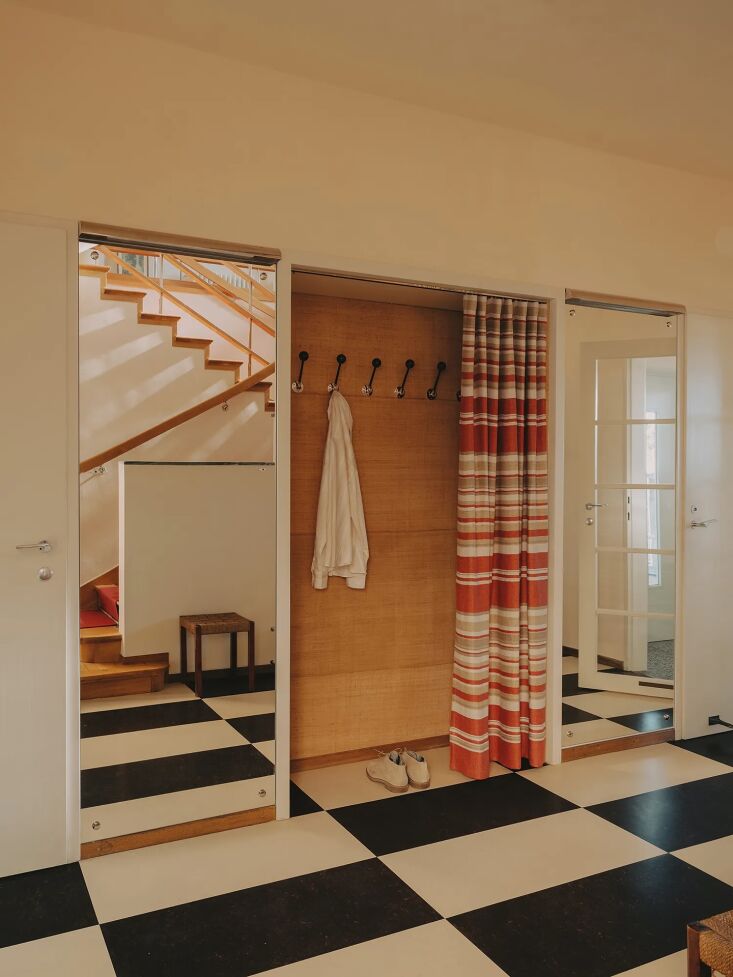
a curtained storage entryway and rectangular black and white floor tiles. 20
Above: A curtained storage entryway and rectangular black-and-white floor tiles.
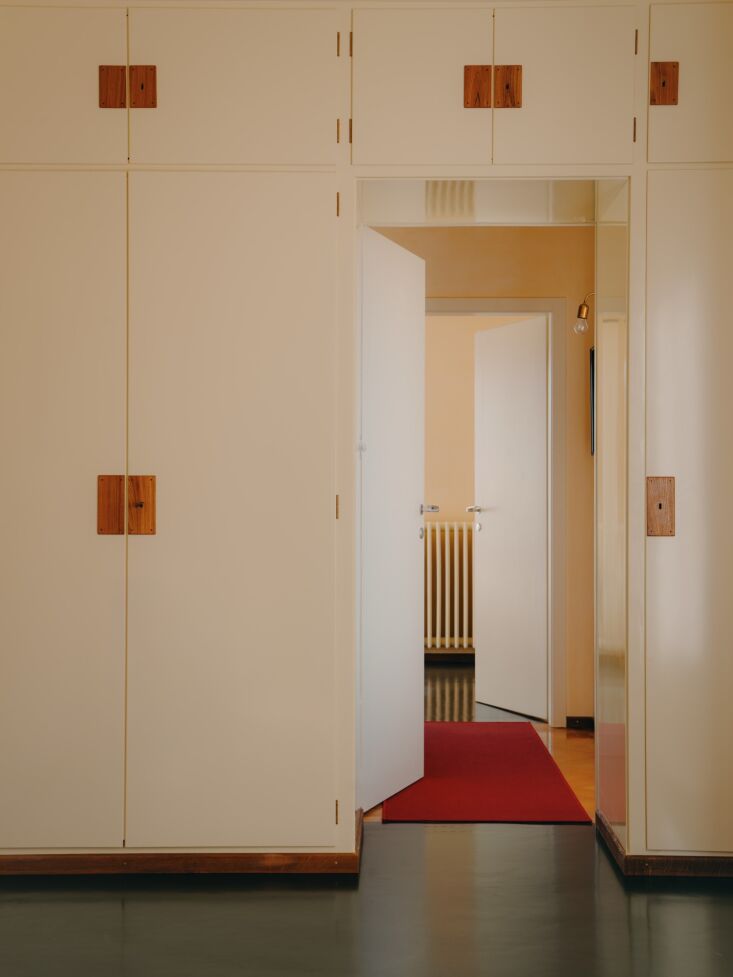
original built in storage with custom key lock hardware. 21
Above: Original built-in storage with custom key lock hardware.
the children&#8\2\17;s bedroom was originally designed for the rezek&#8 22
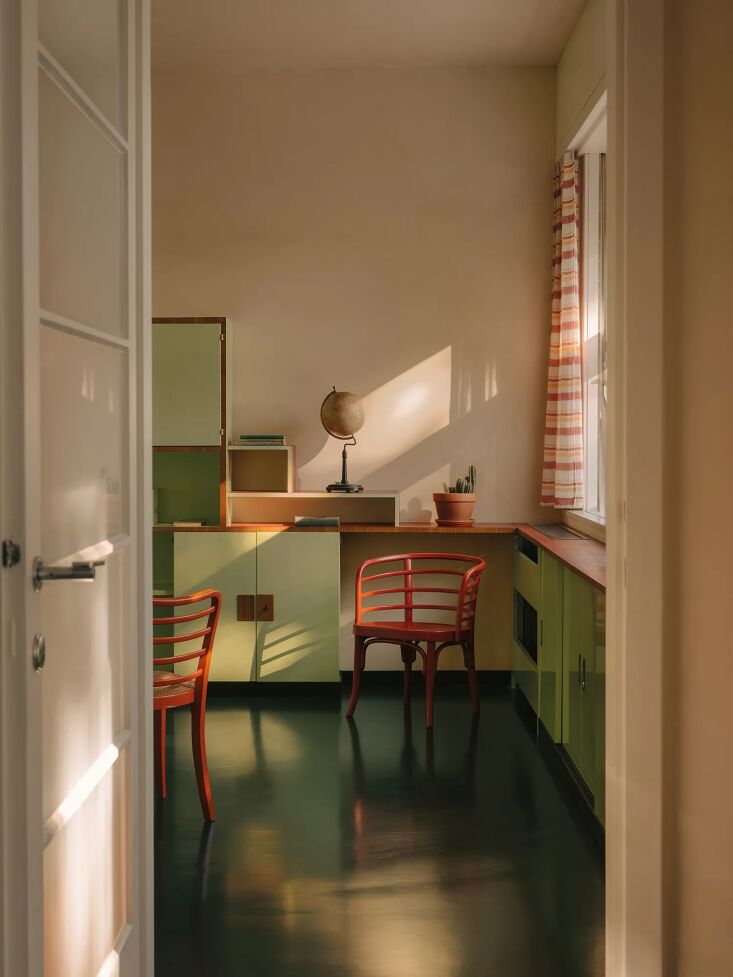
Above: The children’s bedroom was originally designed for the Rezek’s two daughters. It’s defined by a more colorful palette and was restored and decorated with Josef Frank B 246 Armchairs in red.
weighty door handles that withstand the test of time. 23
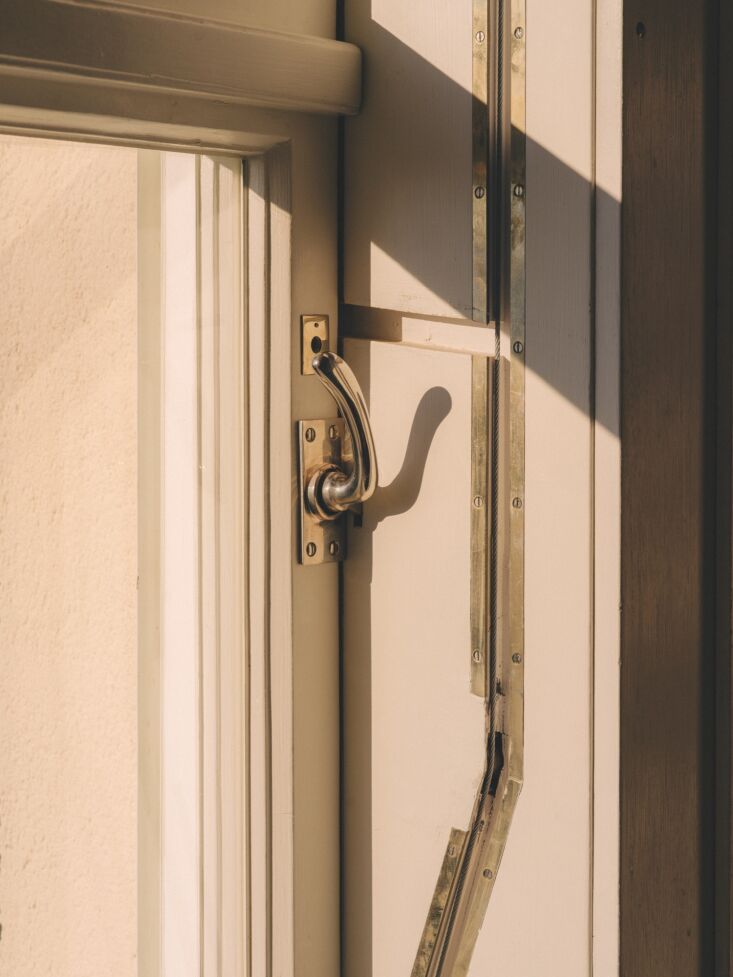
Above: Weighty door handles that withstand the test of time.
a view of the custom cabinetry and razor thin wood topped detail on the desk ri 24
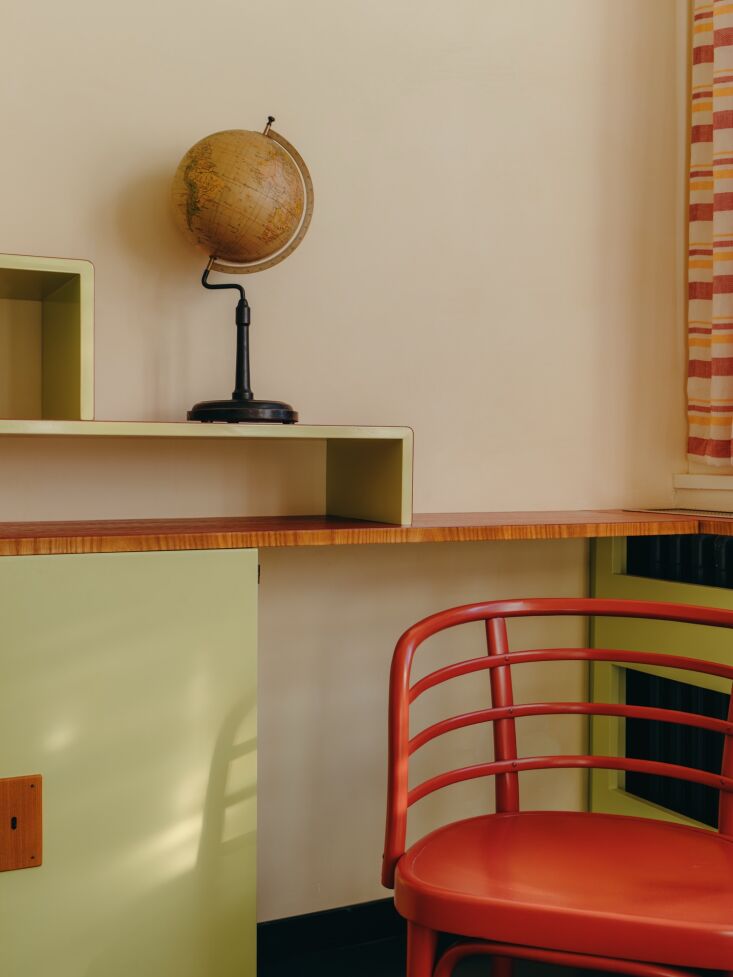
Above: A view of the custom cabinetry and razor-thin wood topped detail on the desk risers.
showcasing \1930s storage considerations, a tiny compartment for keeping person 25
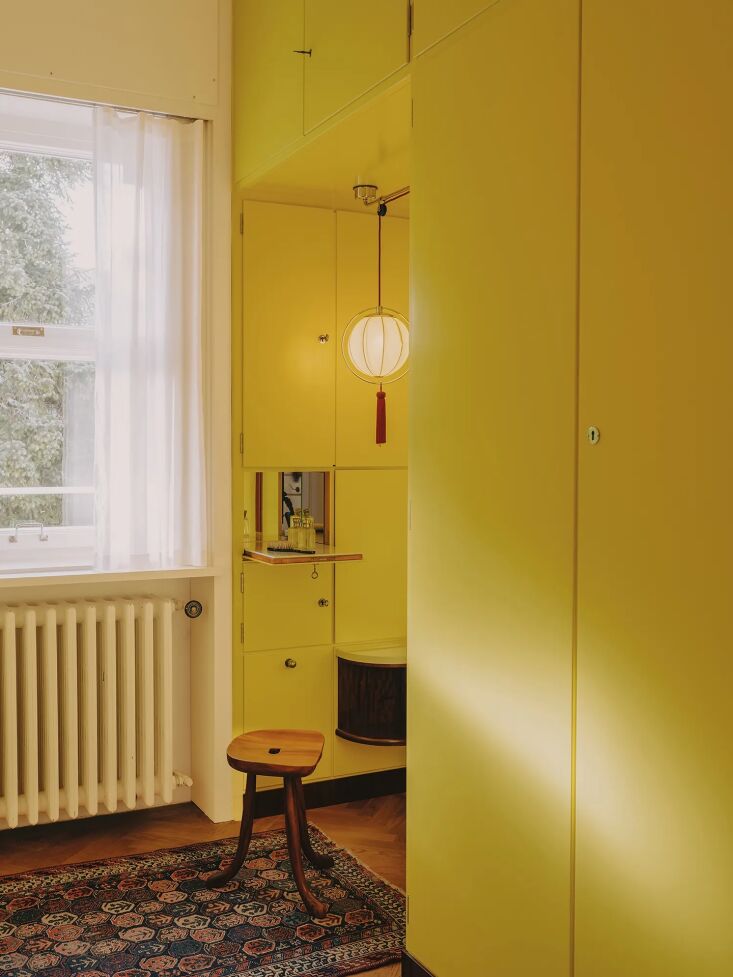
Above: Showcasing 1930s storage considerations, a tiny compartment for keeping personal items folds down out of the built-in closet cabinets. An Egyptian Stool from 1925 by Josef Frank sits beneath.
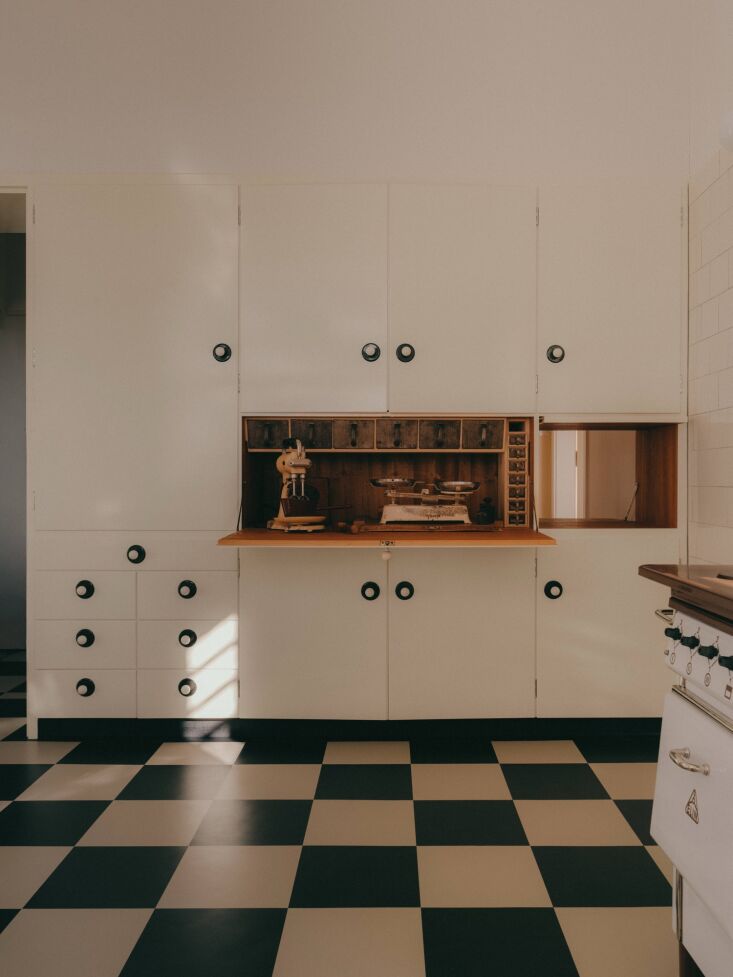
the characterful black and white kitchen features a fold out table with aluminu 26
Above: The characterful black-and-white kitchen features a fold-out table with aluminum dry goods bins, typical of the time in Germany and Austria, is designed with a vintage stand mixer and baking scale.
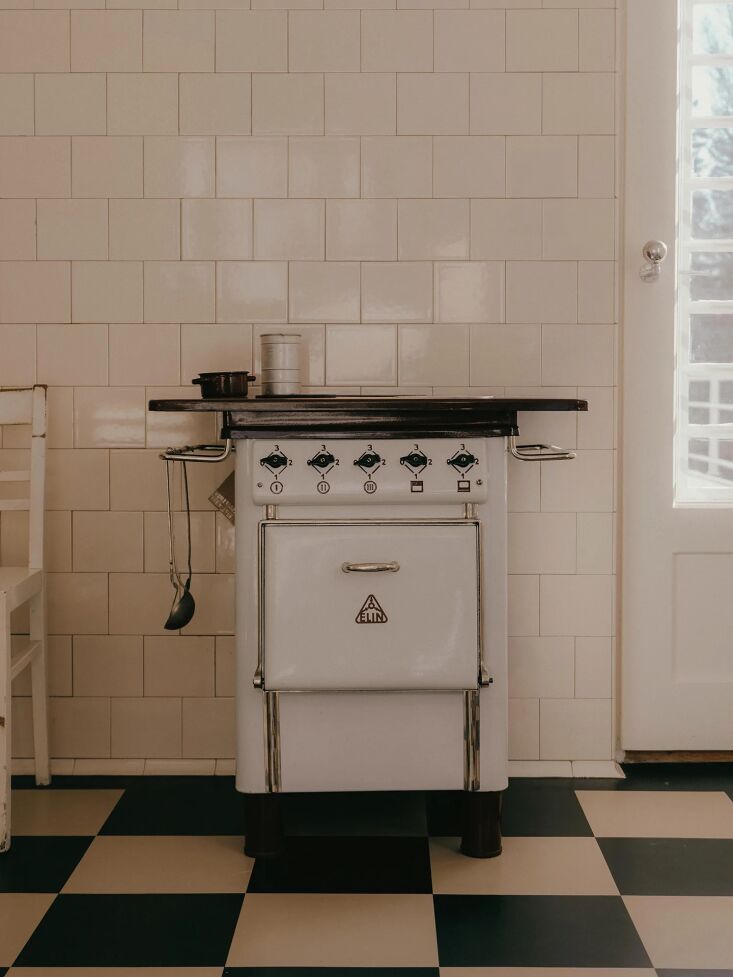
an original \1930s elin electric range. 27
Above: An original 1930s Elin electric range.
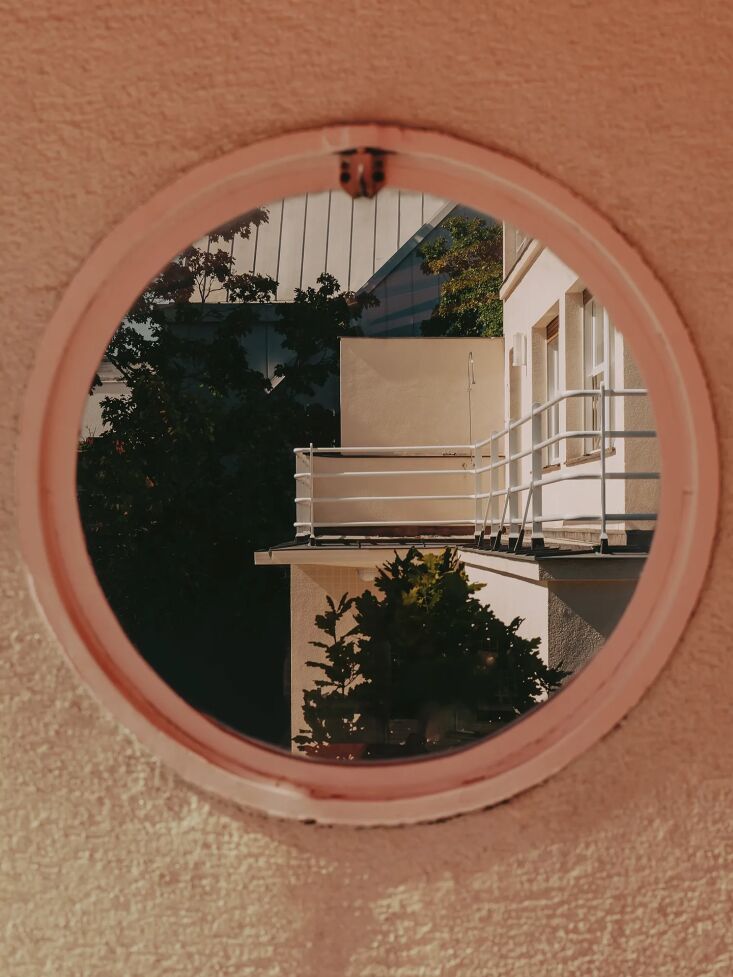
reminiscent of ship building and the sanatoriums of the era, a porthole window  28
Above: Reminiscent of ship building and the sanatoriums of the era, a porthole window looks out onto the villa terrace.
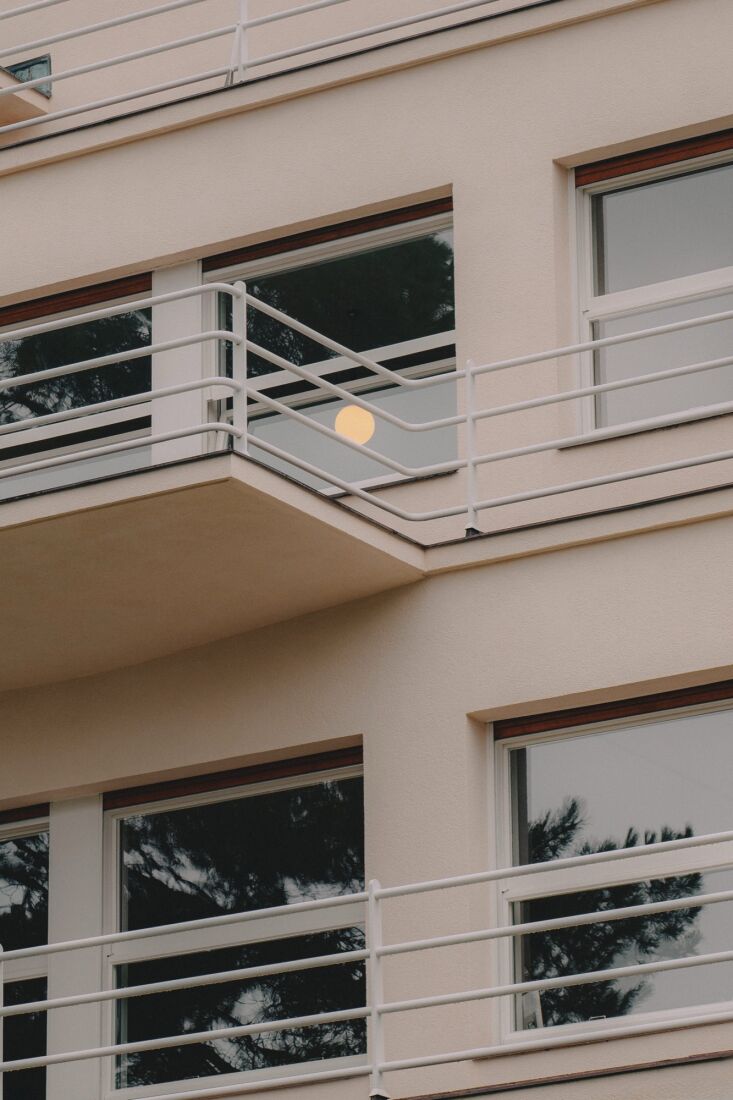
a view of the modernist terraces of villa rezek. 29
Above: A view of the modernist terraces of Villa Rezek.
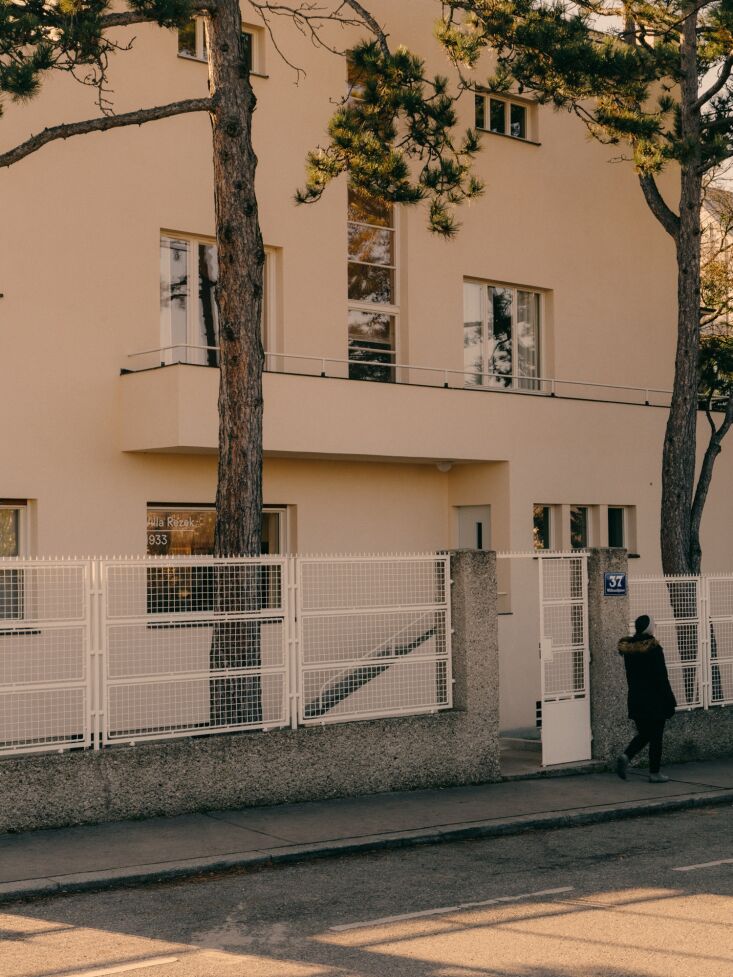
the exterior at 37 windmühlhöhe in vienna. the building is available to tour  30
Above: The exterior at 37 Windmühlhöhe in Vienna. The building is available to tour by booking through Villa Rezek.

For more profiles on historic architecture, see our posts:

(Visited 10,077 times, 2 visits today)
You need to login or register to view and manage your bookmarks.

Have a Question or Comment About This Post?

Join the conversation

v5.0