

Will Green is a fourth-generation antiques dealer and designer based in Towcester, Northamptonshire, where his family has run shops since 1955. He grew up in a house where furniture was always coming and going—nothing static, everything handled, assessed, and sent back out into the world. That early training now informs both the antiques he sources and the bespoke pieces he designs under his own name.
A few years ago, he and his wife, Hayley, creative director of The Plant School, took on a manor house whose origins stretch back into the late 18th and 19th centuries. Sized just under 5,700 square feet, the house is generous but not unwieldy; the restoration is slow and incremental, working room by room.
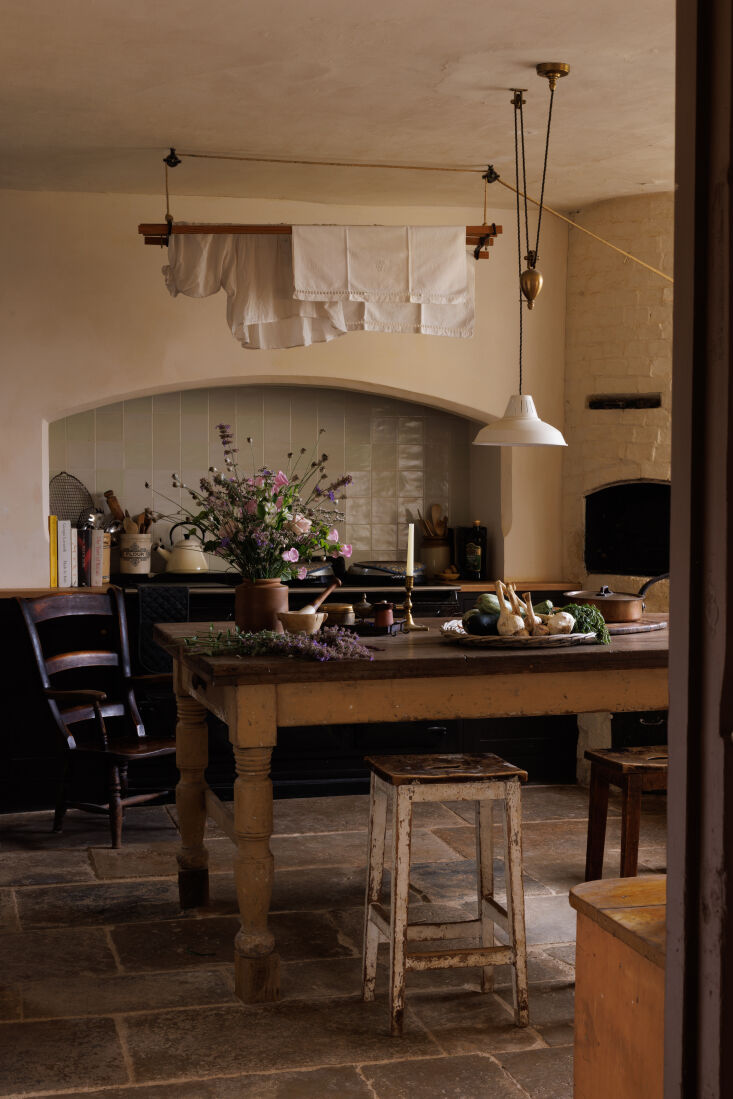
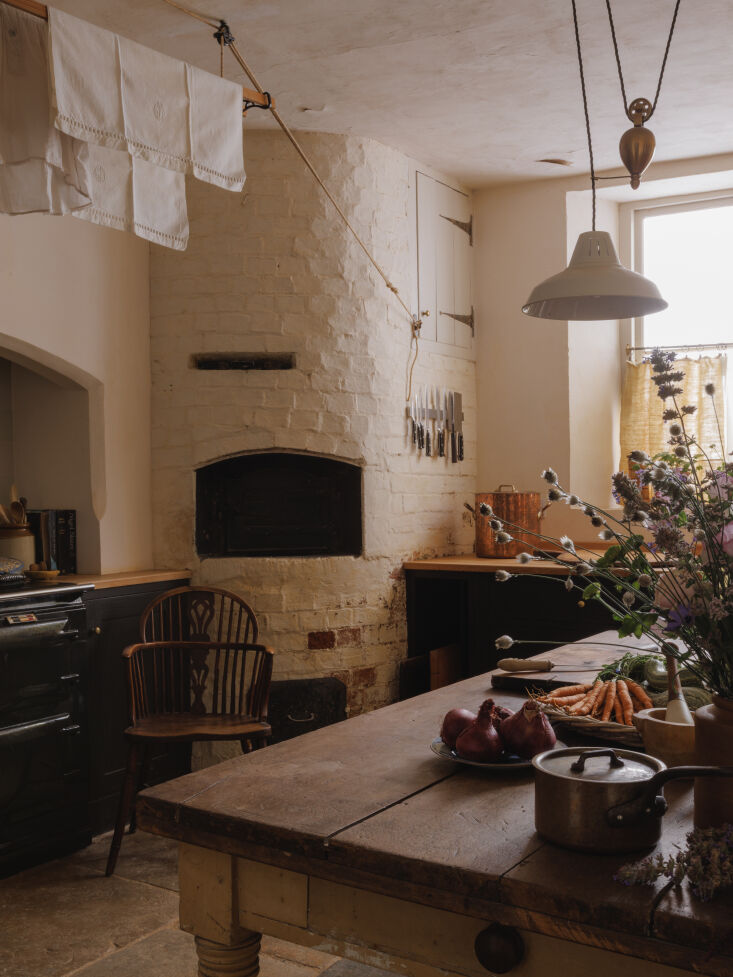
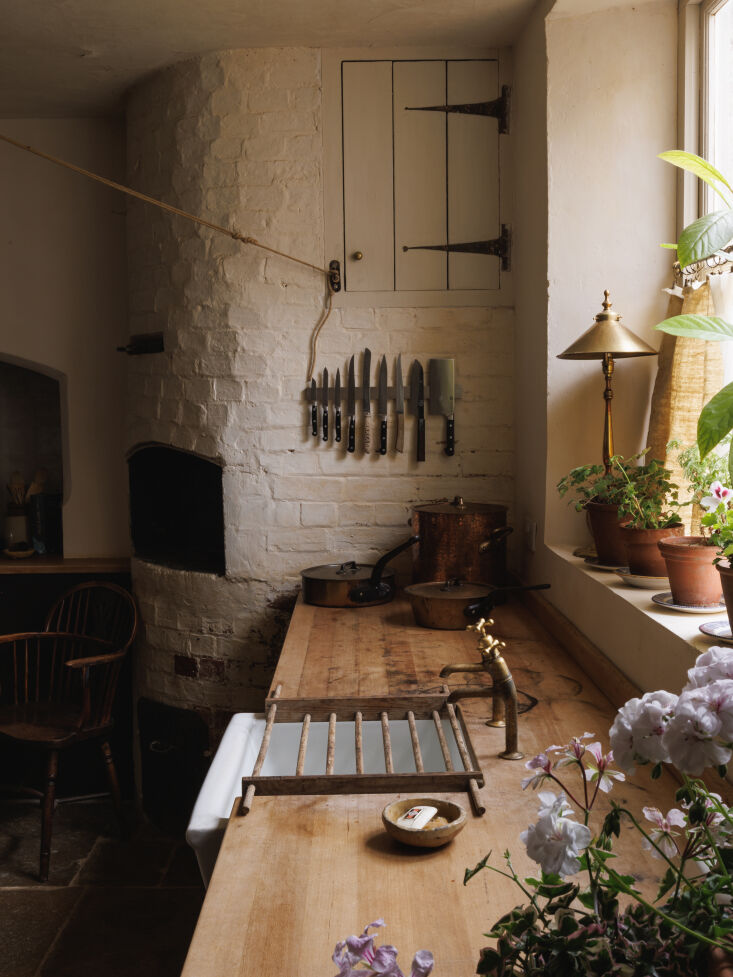
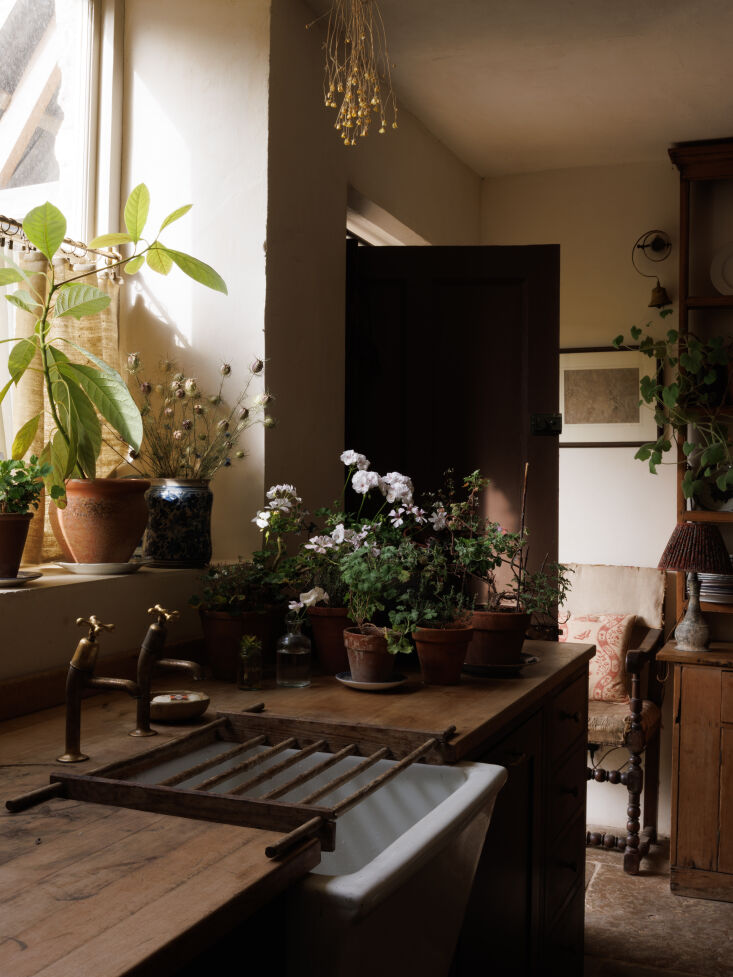
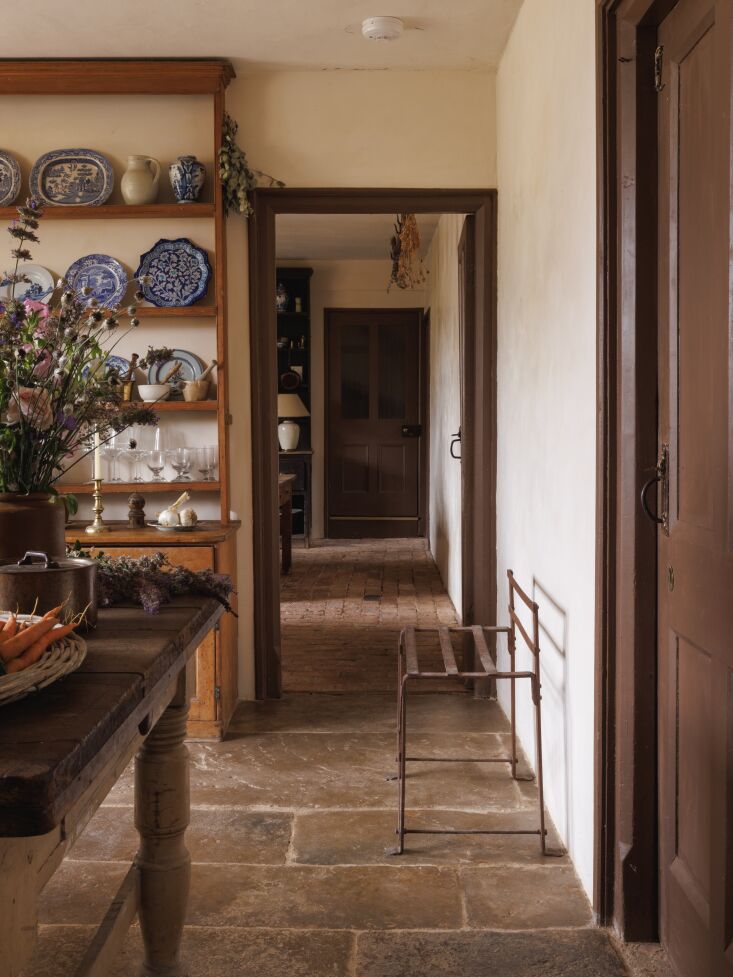
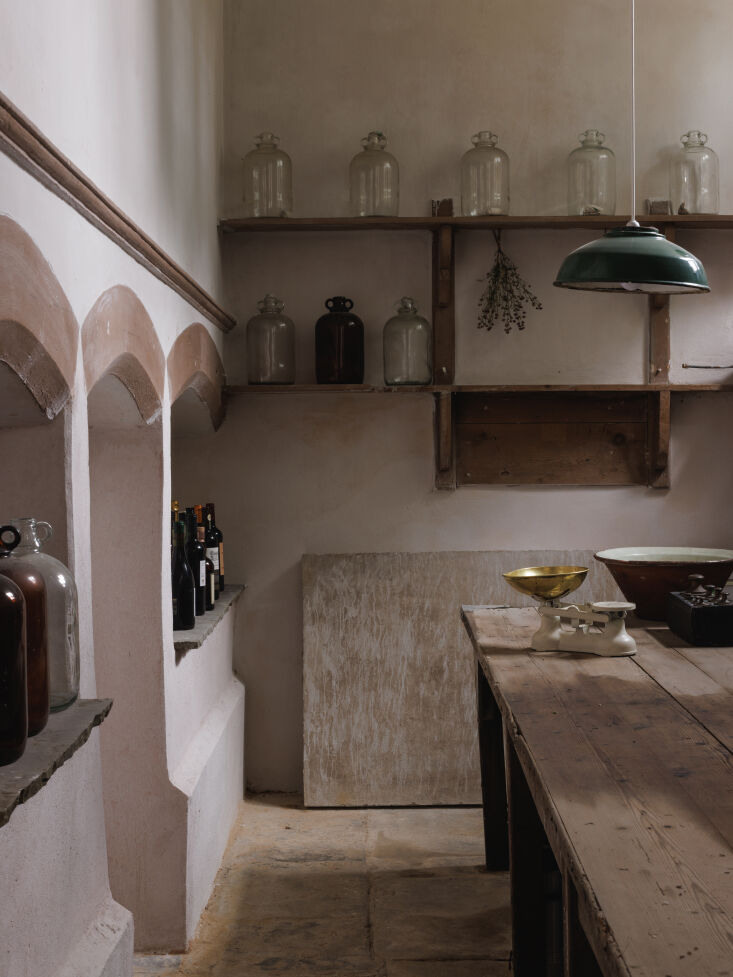
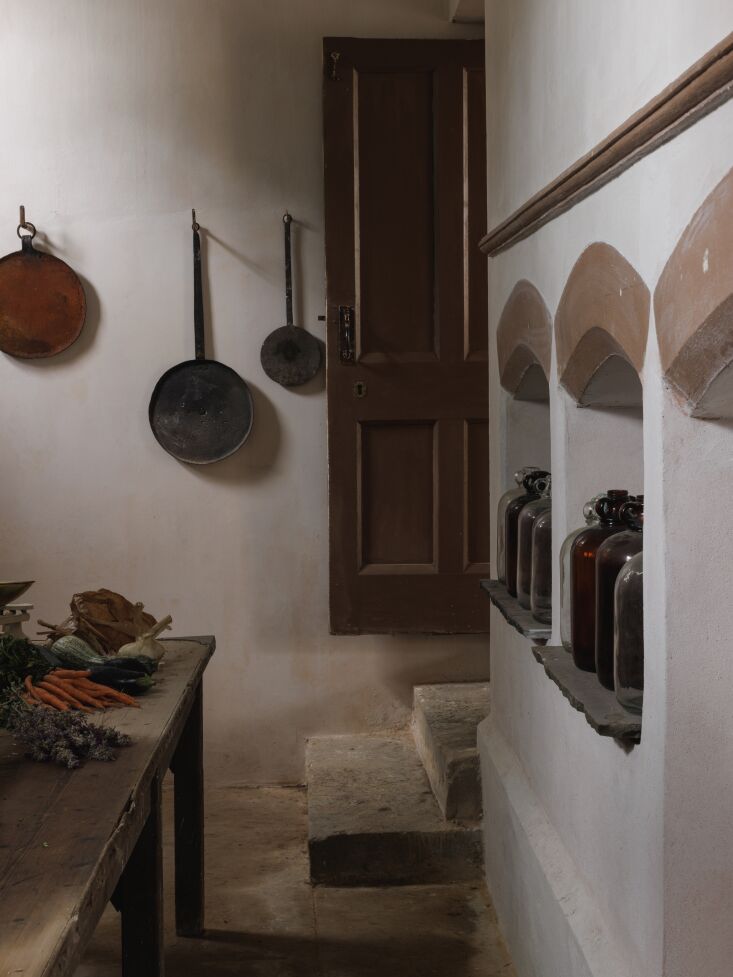
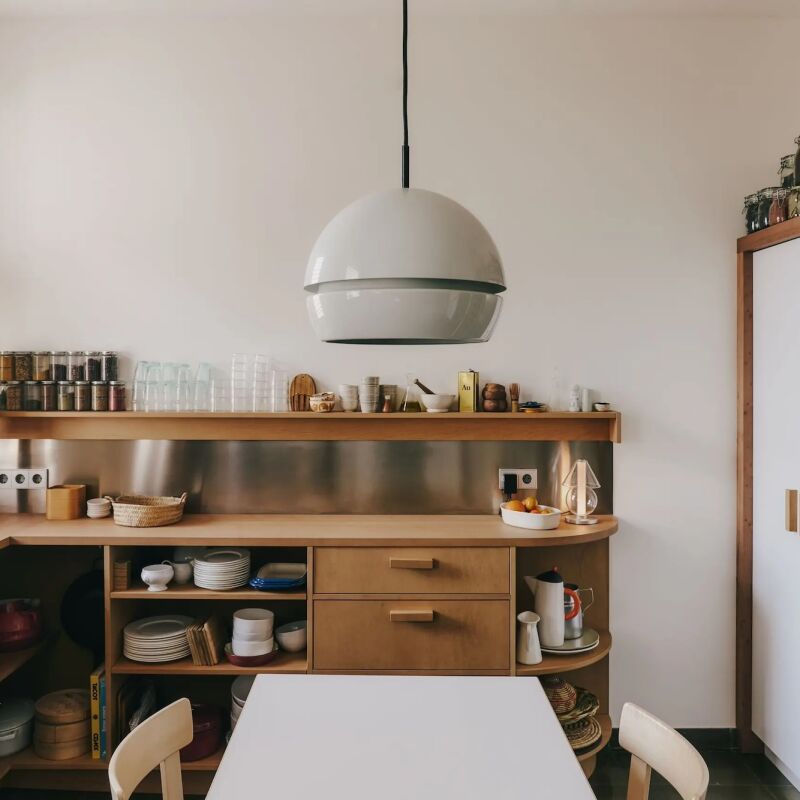
The kitchen, formerly the scullery, was the first major undertaking. “The previous owners used it as a storeroom, almost like a shed. But all the right bones were there for us to transform it into a kitchen: the flagstone floor, the original layout, and the step-down pantry/dairy.” Original flagstones were lifted and re-laid after installing underfloor heating—some weighing as much as 200kg.
For the walls, they used a mix of clay pigment dug from beneath the flagstones: the wet clay was sieved multiple times to remove impurities, spread the clay on a baking tray in the warming oven of the AGA, and once dry, ground to a fine powder with a mortar and pestle. They gradually added this to the lime wash until they achieved the desired tone. Today, the room is shared with their two black labs and baby. “The benefit of having a slow project is that it feels as though the house is growing with us,” Will says. “The dynamic of the house is changing with every room we work on. It’s a nice process.”
Photography by Geordie Barrie for Will Green.
“When we first encountered the house, it was one of those rare properties that has worn its years well,” Will explains. “It had been altered in the mid-19th century. The top floor was substantially extended to provide staff accommodation, and a scullery and game larder were added to the north side. Those additions are part of its story, and we were keen to respect them rather than erase them.”
The following hundred years saw “a succession of farming families who looked after it with a practical, rather than sensitive hand,” says Will. “They didn’t embark on much renovation, and in some ways that was a blessing: the original bones of the house, the moldings, the floor-to-ceiling heights, the fireplaces and the rhythm of the rooms, were almost entirely untouched.”
“What struck us most was how little had been lost. There were no misguided 20th-century ‘modernizing’ schemes that stripped away character. The house had simply aged with dignity,” says Will.
For more historic kitchen spaces in the UK, see our posts:
- Kitchen of the Week: Red, Pink, and Lace in a Former Victorian Lacemaker’s Grange
- Kitchen of the Week: A 305-Year-Old Cellar Kitchen, Redone (and Ready for Its Moment of TV Fame)
- Kitchen of the Week: An Unexpected Palette in a Custom Kitchen Designed by Inglis Hall
- Kitchen of the Week: A New Century-Old-Looking Kitchen in a Grand Elizabethan Manor



Have a Question or Comment About This Post?
Join the conversation